

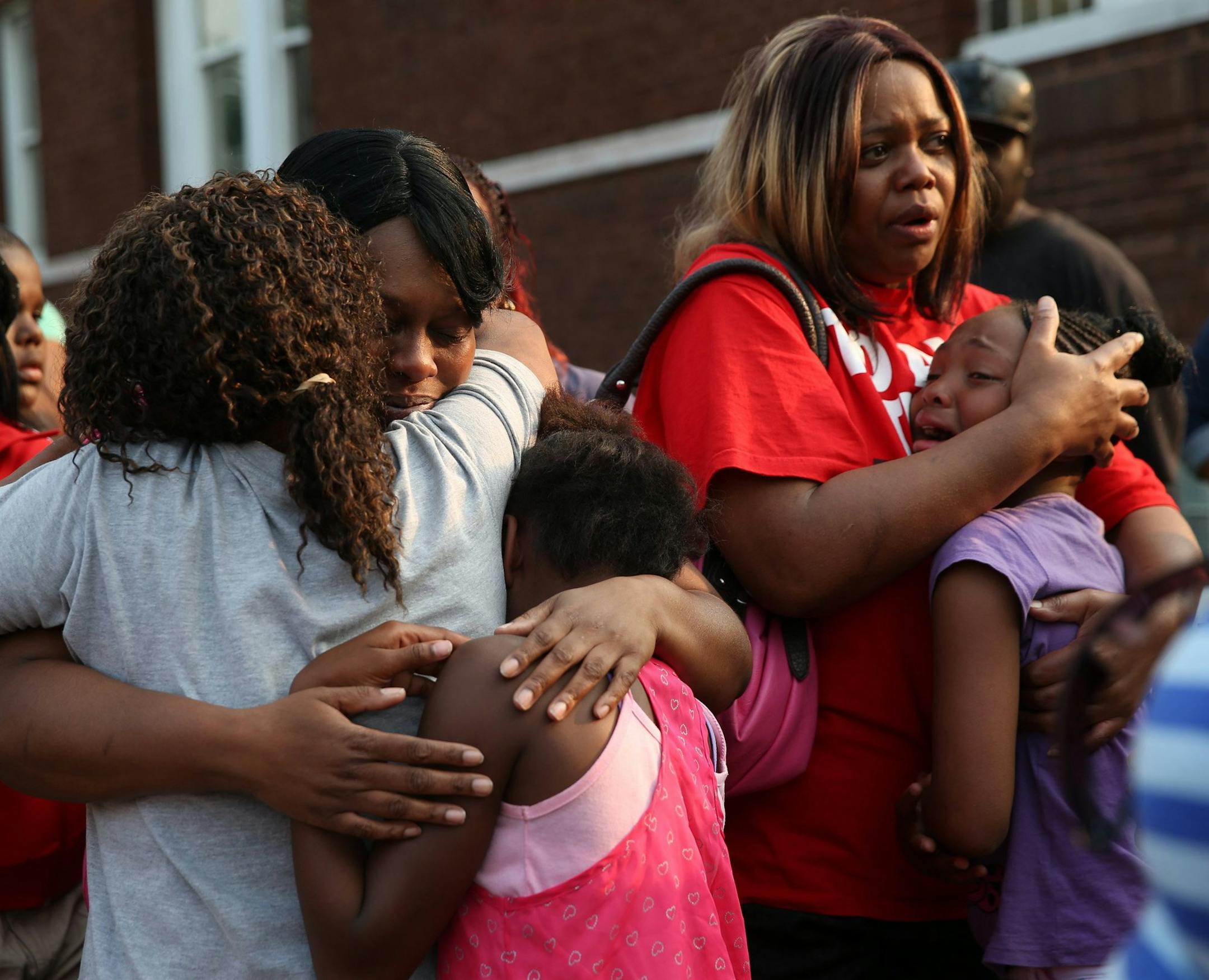
Living in a city that had 82 shootings over the Fourth of July weekend, Chicagoans could be forgiven for envying the residents of Indianapolis.
Imagine living in a place where homicides have been reduced by more than half in the past two decades, where robberies are less common than they've been in nearly half a century — where car theft is at levels not seen since "The Dick Van Dyke Show" was still in production.
Actually, that's where Chicagoans do live. I was only pretending to talk about Indianapolis. Those developments have all occurred right here.
Right now, the city is getting national attention for outbreaks of bloodshed, which reinforce its reputation as the murder capital of America. In terms of total homicides, it may be. But that figure fails to account for population.
In the overall rate of violent crime, Chicago ranks 19th — slightly worse than Minneapolis and better than Kansas City, Indianapolis and Nashville. It has half as much violent crime, per capita, as Detroit or Oakland, Calif.
Even when it comes to homicide, Chicago is enjoying, relatively speaking, a golden age. In 1992, it had 943 murders — 2.6 per day. Last year, it had 415 — 1.1 per day. Two decades ago, such progress was the stuff of dreams.
In 2013, the murder rate (homicides per 100,000 residents) was the lowest it had been since Lyndon Johnson was in the White House. So far, the homicide total for 2014 is 206, a bit below last year's pace.
Taken as a whole, the city has not gotten more dangerous. It has gotten less dangerous — much less. Nor does it stand out among its peers. "Chicago's overall violent crime rate is not exceptional when compared to other large cities," writes Yale University sociologist Andrew Papachristos in a recent study.


