

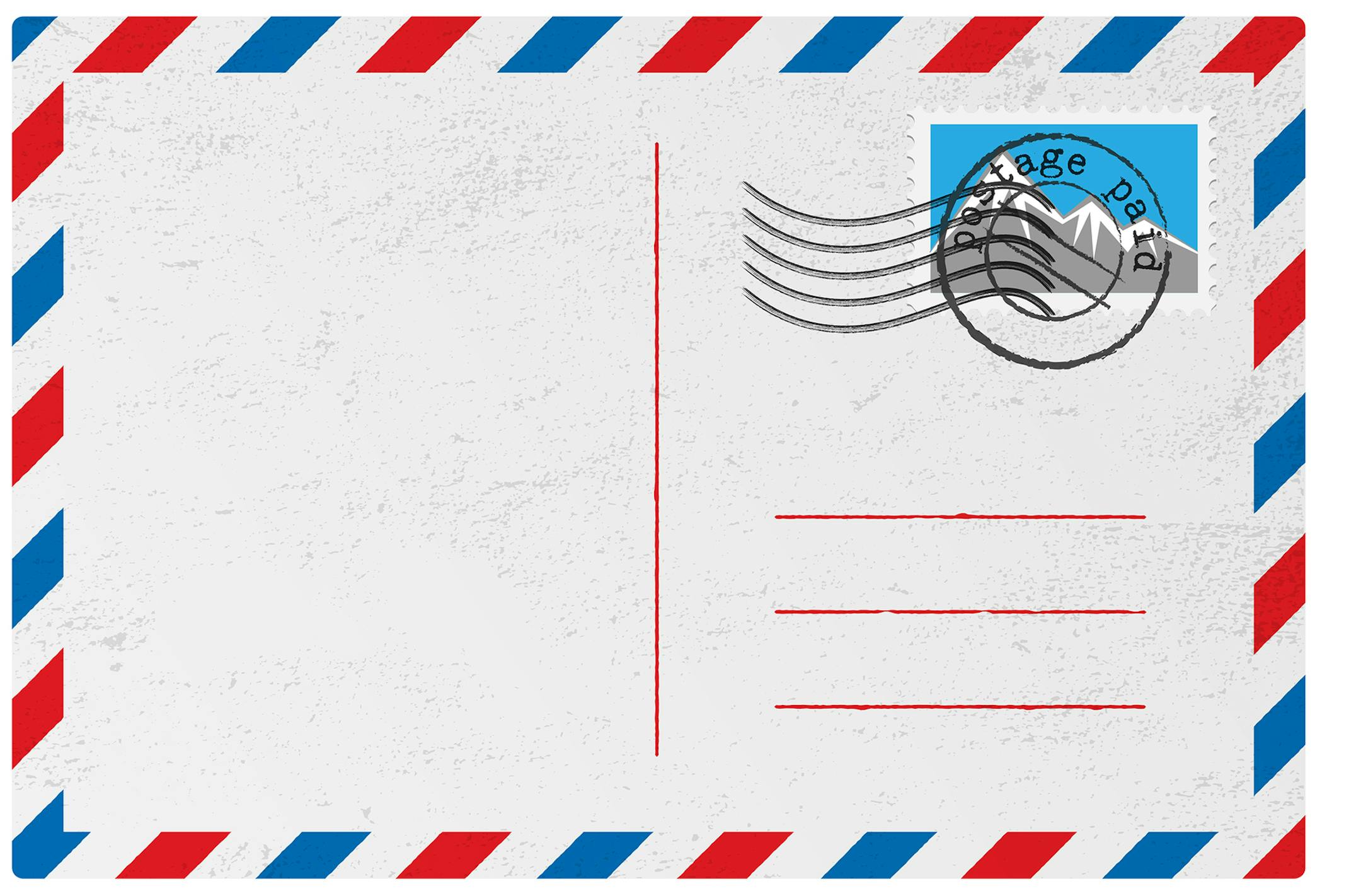
In this age of Instagram and Twitter, it is easy to forget how recently postcards were a principal way of sending images and short messages. Nothing about postal communication seems appropriate for that today: Someone once confessed to me that he hand-delivers postcards after he returns from a trip because they arrive more quickly that way.
Yet when postcards were invented, they were revolutionary technology — and caused their own uproar.
It was 1865 when German postal official Heinrich von Stephan was the first to propose the adoption of what he described as an "open post-sheet" made of stiff paper. One side would be reserved for the recipient's address, and the other side would have just enough space for a brief message. It would circulate at the cheapest rate possible.
Von Stephan's proposal was rejected as too radical.
It seemed economically unworkable to the other delegates of the Austro-German Postal Conference. Who would forgo their privacy, even for the sake of convenience and frugality?
Four years later, when a similar proposal was accepted by the Austrian post office, the public answered that question. Three million postcards passed through the Austrian post within the first three months. Nations around the world quickly issued their own official postcards. Seventy-five million were sent in Britain in 1870, the year it adopted the new medium.
The postcard's popularity baffled and even appalled the cultural elite. On one hand, it seemed ridiculous and highly inappropriate to write anything remotely personal on a postcard, where postal workers, neighbors or servants could read the message. On the other hand, if one lacked anything substantial to write, why write at all? The smaller format inhibited sustained thought. Some even blamed the postcard for a decline in literacy and argued that its shorter format led to poor grammar.
Postcard enthusiasts became just as extreme in their pronouncements. They saw it as a symbol of democracy itself and a revolution in interpersonal communication. Affordable to all, the postcard was hailed as the most important postal advancement since the penny post. It created more points of contact between family members and friends, regardless of class. It was even credited with facilitating global understanding through the establishment of international postcard exchange clubs.


