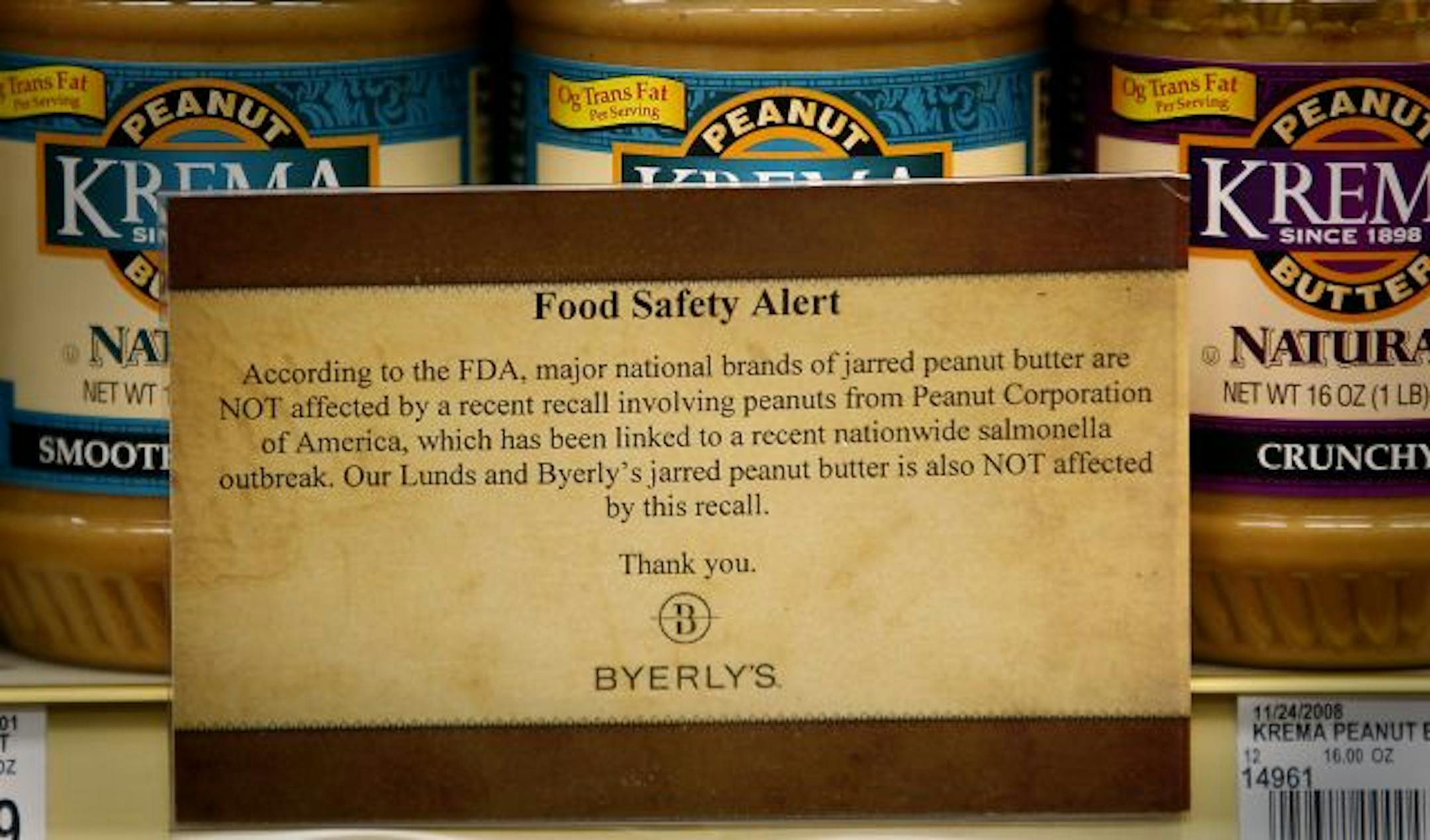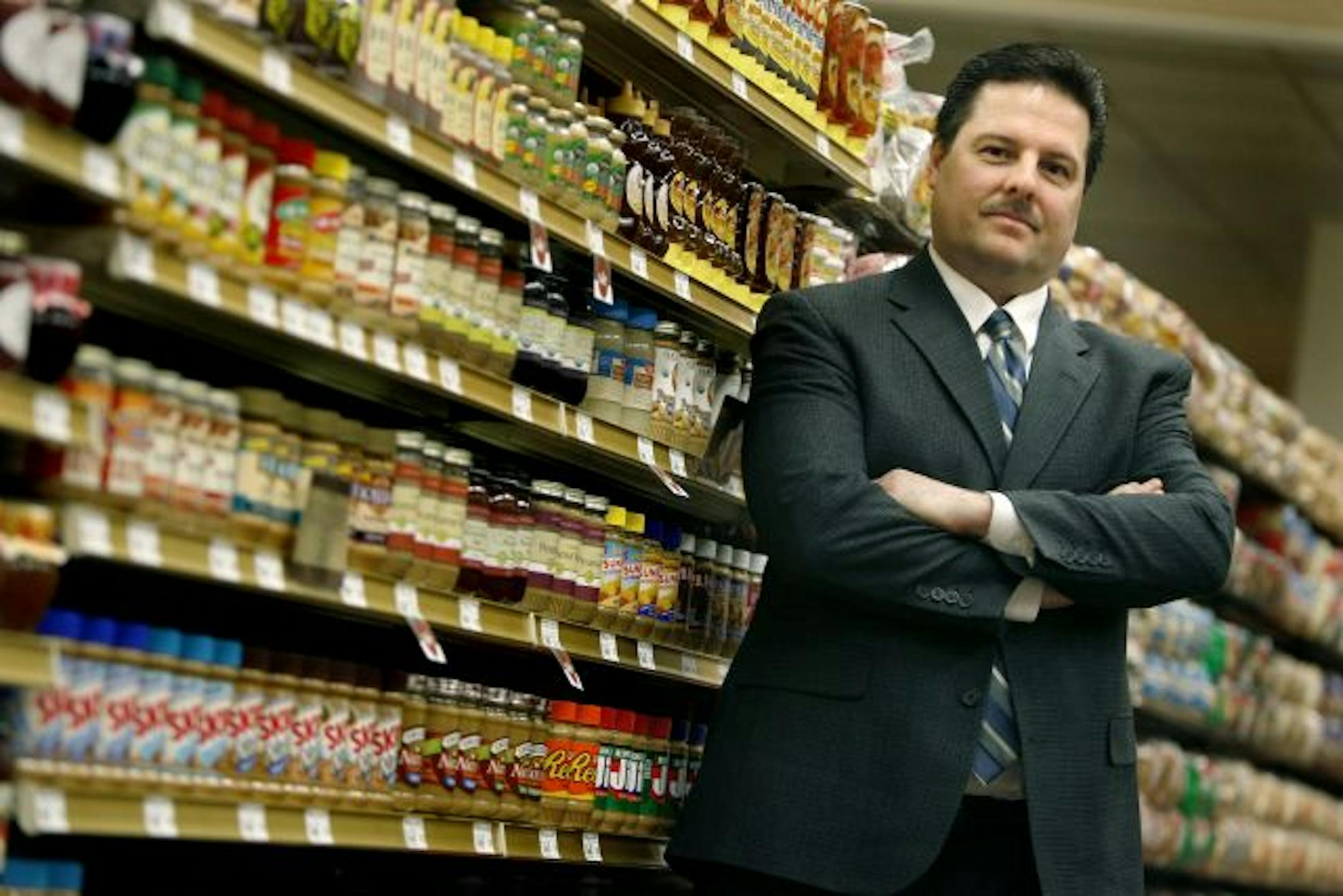
When food goes bad, it's Chris Gindorff's job to get it off the shelf of every Lunds and Byerly's supermarket. He's the person at Lund Food Holdings Inc. who orchestrates a food recall, and when the Food and Drug Administration sent an e-mail last month about a peanut butter plant in Georgia, Gindorff took notice.
"I knew this was going to be big," he said.
What happened next was part detective novel, part military campaign, as Gindorff and a team of managers hunted down the infected peanut butter among the tens of thousands of things sold through the company's supermarkets.
The urgency of their task grew as the recall expanded to cover not just institutional-size buckets of peanut butter, but peanut products that could have ended up anywhere: on the shelves in brand-name products, in the cookies made in store bakeries or in Lunds' own packaged foods.
Behind any item in a supermarket is a web of food plants, suppliers, manufacturers. Each ingredient may have come from a separate location, or even multiple locations, mixed together somewhere else and then, finally, delivered to the store.
The arrangements that deliver food from a manufacturer to a retailer allow for much fluidity within the food chain, a benefit for most people involved. It also complicates recalls. In some moments of the Peanut Corp. of America recall, Gindorff manually typed in thousands of product codes from various foods into his office computer, searching a Lunds database of everything on its shelves.
Lunds agreed to share with the Star Tribune a behind-the-scenes account of how it responded to one of the largest and most complicated food recalls in recent memory.
It began with an e-mail.