

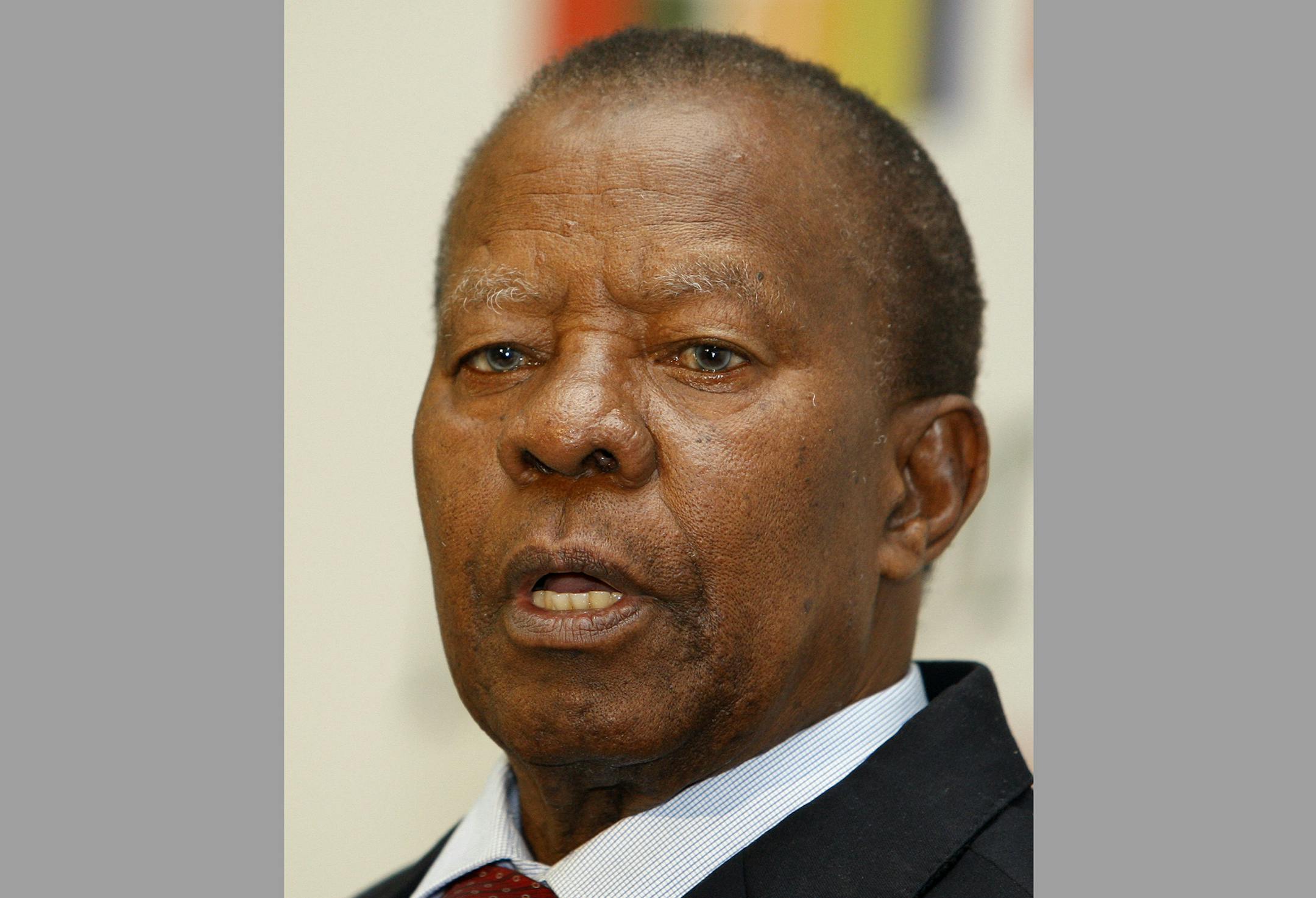
The world lost a remarkable leader on June 22, when Sir Ketumile Masire, Botswana's second president, died at the age of 91. Masire held leadership positions from the beginning of modern politics in the Bechuanaland Protectorate to his retirement in 1998. During those years, the country was transformed both economically and politically, from a backwater to a beacon.
Colonial administrators had ruled indigenous citizens through the tribal chiefs, so a national identity had to be created. In 1966, independent Botswana was surrounded by repressive white-ruled regimes in South Africa, Rhodesia and South West Africa. It was among the 20 poorest countries in the world, and half of its meager budget came from British grants (requiring London's approval of spending); the vast majority of citizens who had paid employment had jobs in South Africa. The Texas-size country had fewer than 5 miles of paved roads; the first government secondary school opened just before independence. Eighty-five percent of senior civil servants and secondary school teachers were expatriates. The future looked grim, the challenge overwhelming.
Masire was elected to the first Legislative Council in 1961, became the organizing secretary of the Botswana Democratic Party and was instrumental in constitutional talks leading to independence. Vice president and minister of finance beginning in 1966, Masire became president in July 1980 when Sir Seretse Khama died. The self-taught economist led a group of civil servants in creating Botswana's public finances and administration and its approach to international negotiations with De Beers, South Africa and aid agencies. Quett, as he was universally known, was Botswana's combination of Jefferson, Madison and Hamilton. He was a democrat (small "d"), through and through.
Successful negotiations with De Beers (diamonds) and South Africa (Customs Union revenues) resulted in budgetary independence from Britain. Those revenues plus international aid were reinvested in what Botswana's voters wanted most: education, health care, potable water and roads. By Masire's retirement in 1998, Botswana had achieved the world's fastest growth rate of per-capita income over the previous 35 years. It had provided services to the vast majority of its citizens. International surveys also consistently showed low levels of corruption; revenues went to public priorities, not private pockets.
Botswana held multiparty elections every five years; opposition parties came close but never achieved a majority in Parliament, though they control important urban areas.
Botswana's reputation for integrity and nonracial, multiparty democracy allowed Khama and Masire to play important roles in Southern Africa in the struggle to liberate black majorities in Rhodesia, South West Africa and South Africa. Botswana received political refugees from every country in Southern Africa; Botswana itself produced no refugees. Botswana relied on diplomacy, and Masire assured that his ministers and civil servants were always well-prepared for international meetings, whether with friends or antagonists.
In "retirement," Masire chaired the international inquiry into the Rwanda genocide and was facilitator of the Inter-Congolese Dialogue that ended one phase of bloodshed in the Democratic Republic of Congo; his many mediation assignments included Lesotho, Swaziland, Zambia and Kenya. He was active and in demand until the end.
Masire visited Minnesota both as president and in retirement, speaking at Carleton and Macalester colleges and at Global Minnesota events. He and Walter Mondale reunited — two great models of public service who'd been vice presidents at the same time.


