

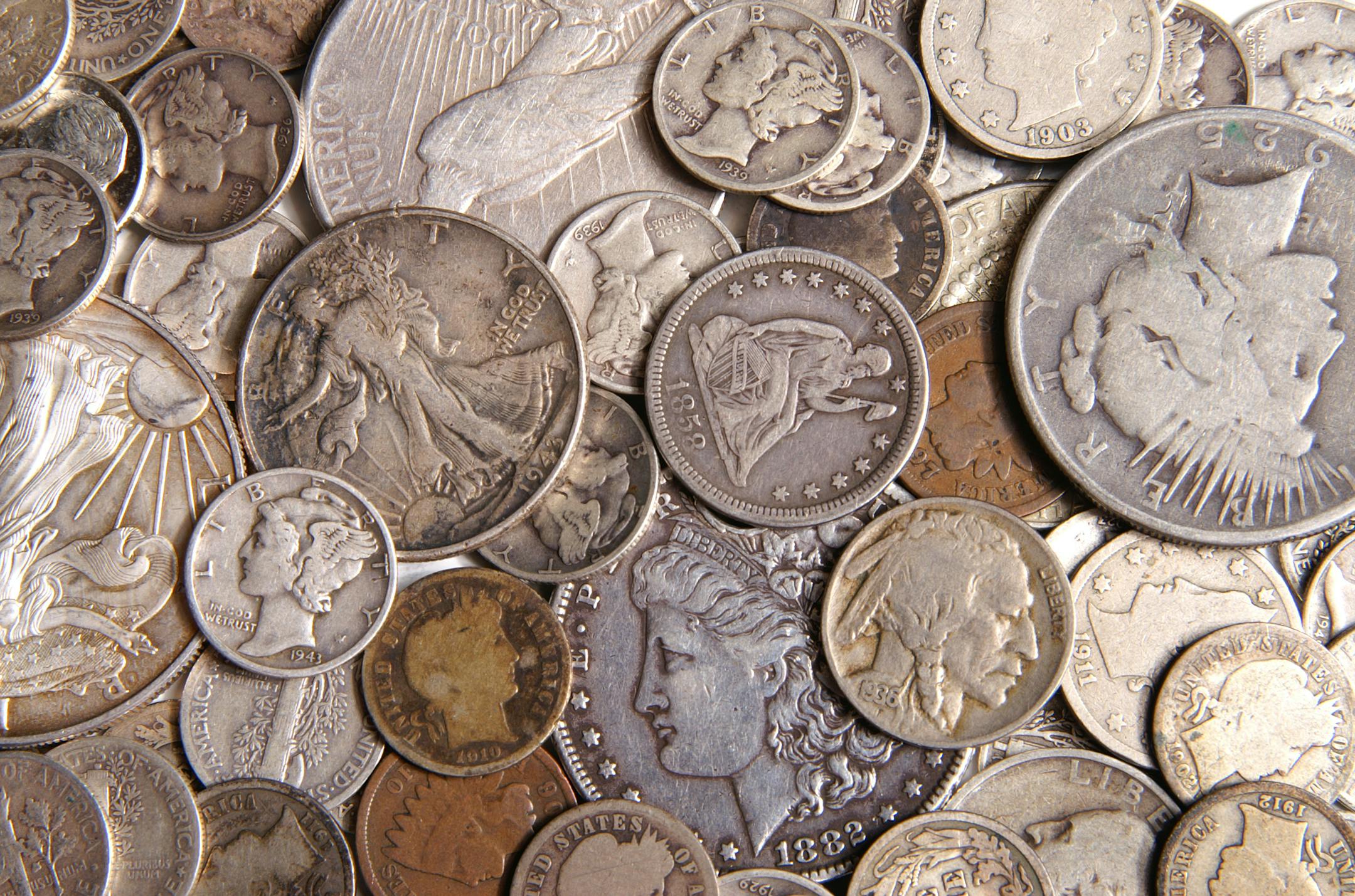
From the beginning of the pandemic, I have been taking daily walks to get out of the house and to look at something other than a computer screen, where the shame of being told "You're on mute (again)!" makes a change of venue a mental health necessity. Of course, taking walks has helped many of us cope with the pandemic, but for me walks are also a trophy quest for the elusive wild coin.
Some years ago, I was hospitalized for major depression. In recovery, I've learned the importance of agency, the self-worth that comes from making your own decisions and taking responsibility for them. Deciding to become a self-declared professional wild-coin hunter then creating my own hunting rules is a low-stakes reminder of how precious it is to be free to manage one's own life, not a given for someone once confined in a locked psych unit.
I define wild-coin hunting as a come-as-you-are sport — no metal detectors, coin-finding apps or coin-truffling pigs are to be used. Beyond this fundamental, there are three rules, all of my own creation. Rule 1: Coins found in our house and in our driveway are domestic. Picking them up is housework, not hunting. Coins found in all other locations, including our yard, are wild. Rule 2: Coins found under the cushions of chairs in public places are also wild. If you decide to change these rules to better fit your own coin-hunting milieu, I'm all for it.
The third and final rule establishes essential coin-hunting nomenclature: Rule 3: Coins found where one wouldn't expect to find them, say a couple of quarters in the middle of a busy parking lot, are to be termed "fresh droppings." If they weren't fresh, recently dropped coins, then somebody else would have pounced on them before you arrived on the scene. Any humor associated with the term "fresh droppings" is a collateral recovery benefit.
As a professional, I have the knowledge and skills to maximize the success of any coin-hunting expedition. The best times and places, under what types of cover a furtive wild coin is most likely to be crouching — the professional hunter knows all this and much more. Coin-hunting knowledge is gained by careful watching and patient study, immersing oneself in the realities of the coin kingdom.
In mental health recovery, immersing oneself in reality is healing — an escape from the mind where shame and self-loathing abolish sleep and destroy pleasure. These days, instead of beating myself up or catastrophizing, I'm looking for coins in all the right places. If you're one of the many for whom the pandemic has precipitated depression and anxiety, I invite you to get out of your head and into the real world of coin hunting.
As you would suppose, parking lots are reliably productive wild-coin habitats. My hunts often take me across multiple parking lots and sometimes into parking ramps. I live in a near suburb of Minneapolis, and I am blessed to live in reasonable stalking distance of some of the most coin-productive parking areas in my state.
The parking lot of a local clinic has been especially fertile for me, one day yielding a covey of six coins, three quarters and three pennies, one of my happiest days during the pandemic. Of course any time I find a coin is a happy time, even if it's just a corroded penny. Depression has taught me how precious happiness is; the pandemic has taught this to all of us. If you can imagine yourself smiling with fresh droppings in your hand, then wild-coin hunting is calling you.


