
The new soapbox: Presidential candidates look to comedy and late-night TV to reach voters

To capture more votes, politicians are campaigning for laughs.

February 8, 2016 at 11:42PM
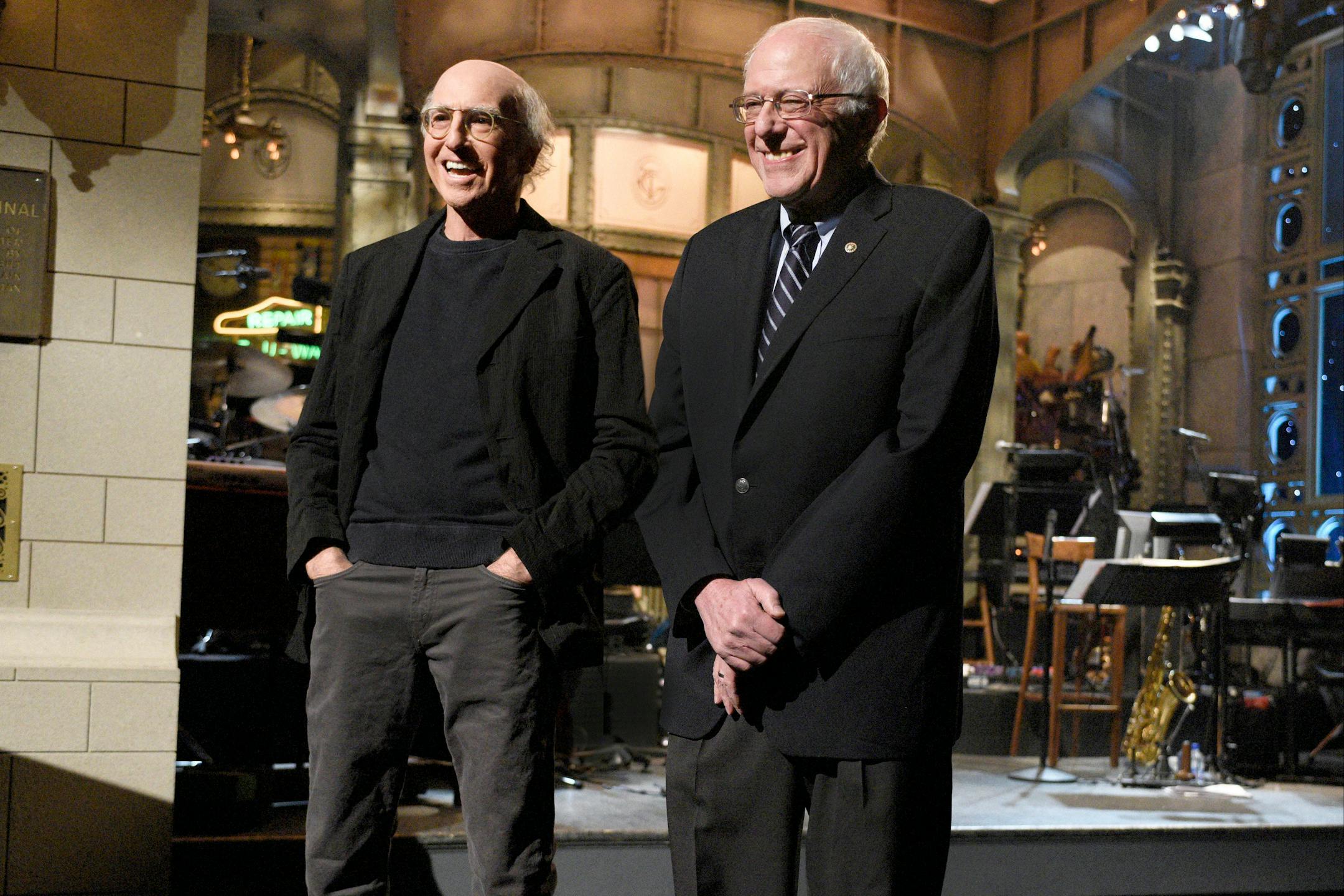
This Saturday, Feb. 6, 2016 photo provided by NBC shows, Larry David, left, and Democratic presidential candidate Sen. Bernie Sanders, introducing musical guest The 1975 on the "Larry David" episode of "Saturday Night Live," in New York. Sanders made a cameo appearance on "Saturday Night Live" three days before the New Hampshire primary, appearing in a skit with host David, the comic who has done a dead-on impersonation of him. Sanders is the third presidential candidate to appear on "SNL" this
This Saturday, Feb. 6, 2016 photo provided by NBC shows, Larry David, left, and Democratic presidential candidate Sen. Bernie Sanders, introducing musical guest The 1975 on the "Larry David" episode of "Saturday Night Live," in New York. Sanders made a cameo appearance on "Saturday Night Live" three days before the New Hampshire primary, appearing in a skit with host David, the comic who has done a dead-on impersonation of him. Sanders is the third presidential candidate to appear on "SNL" this season. (Dana Edelson/NBC via AP) (Mike Nelson — Associated Press/The Minnesota Star Tribune)

Bernie Sanders' cameo on "Saturday Night Live" this past weekend won't earn him an invitation to become a full-time cast member, but he's betting his appearance as a steamship stowaway will bolster his chances in Tuesday's New Hampshire primary and beyond.

Sanders, who is also scheduled to appear Wednesday on "The Late Show With Stephen Colbert," is one of a growing number of politicians veering off the traditional campaign trail to hit the comedy circuit in hopes of reaching voters through their funny bones.

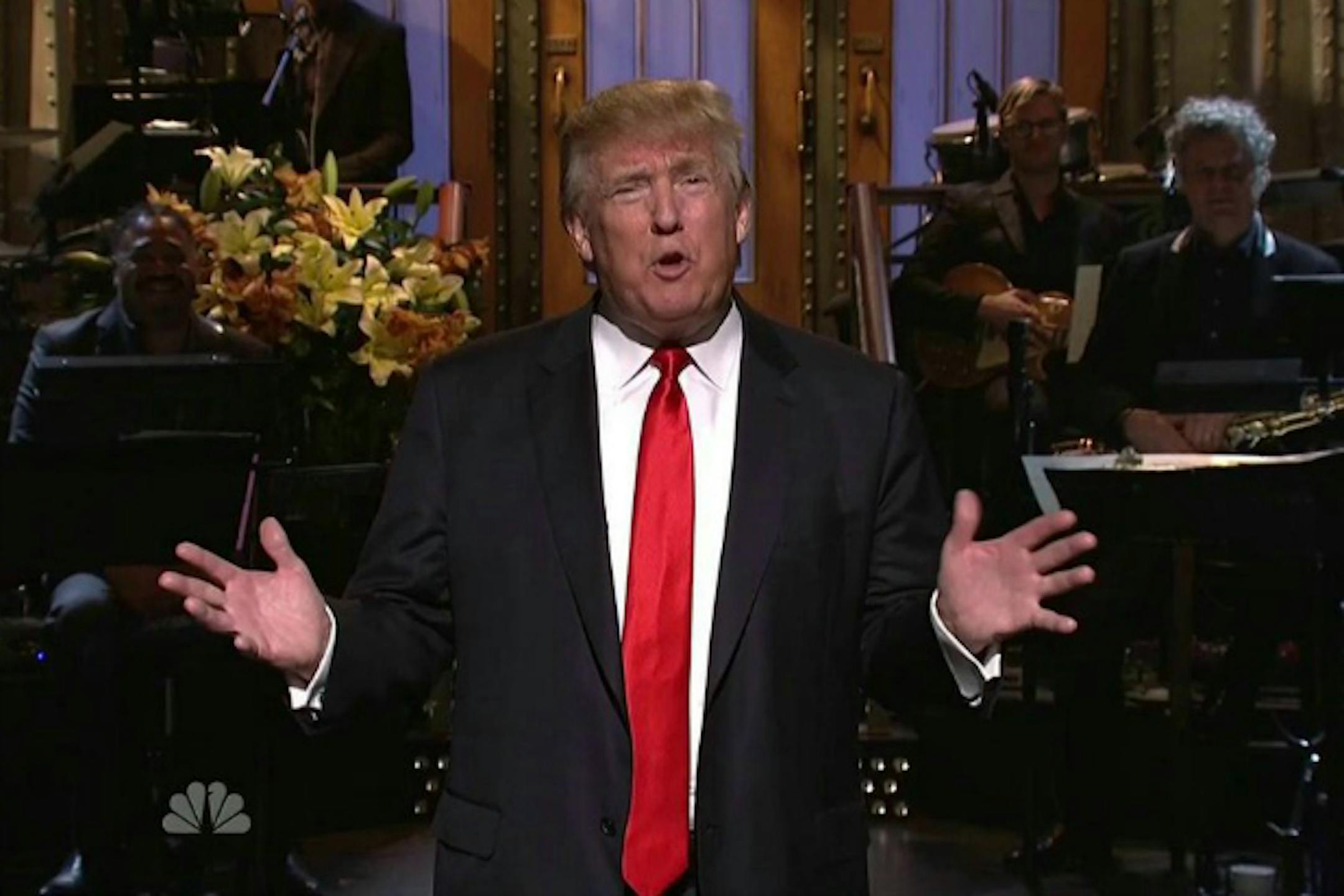
The trend has led to some strange moments in an already strange political season: Jeb Bush debating Stephen Colbert on the merits of an exclamation point in his bumper sticker, Donald Trump dancing to Drake's "Hotline Bling" on "SNL," Barack Obama riding shotgun in a Corvette with Jerry Seinfeld around the White House grounds for an online short.

"It's just a different way to reach people," said Sen. Amy Klobuchar, D-Minn., who used an appearance on "The Late Show With Stephen Colbert" last November to boost sales of her book and her national profile. "You can do all this work, and then find out that it's the nontraditional political shows that really grab people."

Humor has long played a role in national politics. John F. Kennedy's presidential press conferences were wittier than most 1960s sitcoms. Richard Nixon loosened up his image by asking "Laugh-In" viewers to sock it to him. But the number of late-night appearances by those seeking high office has dramatically risen since the reign of Johnny Carson, who rarely had lawmakers sit on the couch.

Since his debut this past September, Colbert has mixed it up with 21 bureaucrats and office seekers. Sanders is scheduled to appear Wednesday.

In the same period leading up to the 2012 presidential race, Colbert's predecessor, David Letterman, hosted only eight.

Michele Bachmann was the only member of the Washington elite to stop by "Late Night With Jimmy Fallon" during the run-up to the 2012 Iowa caucus and New Hampshire primary. This time around, Fallon, now host of "The Tonight Show," has entertained both Hillary Clinton and Donald Trump twice, as well as Sanders and Marco Rubio.
The uptick might have something to do with the nature of viral videos, which have a life expectancy that extends beyond the midnight hour.

"If you do something good on a show that's funny, charming or heartbreaking, people will be watching it at lunchtime the next day," said James Corden, host of "The Late, Late Show With James Corden." "There are higher-rated shows, but I don't know how many people are sharing clips from 'CSI' and 'Survivor' the next day."

If all goes well, it's a win-win proposition. Hosts prove they have a brain; guests prove they have a heart.

"If you want to be informed about the political campaign, you can't confine yourself to the earlier viewing hours," said former CBS anchor Dan Rather, who has been covering elections for more than five decades. "A lot of times, voters may not agree with what candidates said, but they like the way they said it. They're more likely to get that sense in a more relaxed mood than they are at 8 at night."

Late night with Bernie

A more laid-back atmosphere may also put a higher premium on personality than policy, making it more enticing for certain politicians to consider staying up late for "SNL" rather than getting up early to "Face the Nation."

"I think you'll see a lot of experimentation in this area, because there is a frustration on the part of the campaigns," said reporter John Heilemann, co-author of "Game Change" and co-host of Showtime's "The Circus." "They look at the Sunday shows and other traditional formats and say, 'Who is watching these and how do they help us break through?' They just feel old, very tired. They don't expose voters to the best sides of their candidates."

Does that mean those trying to reach voters will skip mainstream journalism altogether? Gayle King, co-host of "CBS This Morning" isn't ready to sleep in just yet.

"You can't underestimate the intelligence of the voter," she said. "When they come on our show, they know to expect a serious discussion and they know what to expect when they're on a lighthearted program. People want to see all sides of a candidate."

In the hot seat

Working late doesn't always pay off. Former Illinois Gov. Rod Blagojevich discovered that when he chose to swing his doomed redemption tour through "The Late Show," telling Letterman that he had always wanted to be on his show in the worst way.

"Well, you're on in the worst way, believe me," Letterman said in a quip that did almost as much damage as Blagojevich's impeachment.

Jesse Ventura didn't fare much better in 1999 when he complained to Letterman that whoever designed St. Paul's streets must have been drunk.

For politicos considering a lap around the comedy circuit, Klobuchar has some advice.

"Make a few jokes, but don't try to be funnier than the host," she said. "It's different than when you're debating someone. Listen. Don't talk so much. Try holding back a little."

Neal Justin • 612-673-7431 • Twitter: @nealjustin

Donald Trump appeared on "Saturday Night Live" on Nov. 7.
Donald Trump appeared on “Saturday Night Live” on Nov. 7. (Randy Salas/The Minnesota Star Tribune)
about the writer

about the writer

Neal Justin

Critic / Reporter

Neal Justin is the pop-culture critic, covering how Minnesotans spend their entertainment time. He also reviews stand-up comedy. Justin previously served as TV and music critic for the paper. He is the co-founder of JCamp, a non-profit program for high-school journalists, and works on many fronts to further diversity in newsrooms.

See Moreicon