

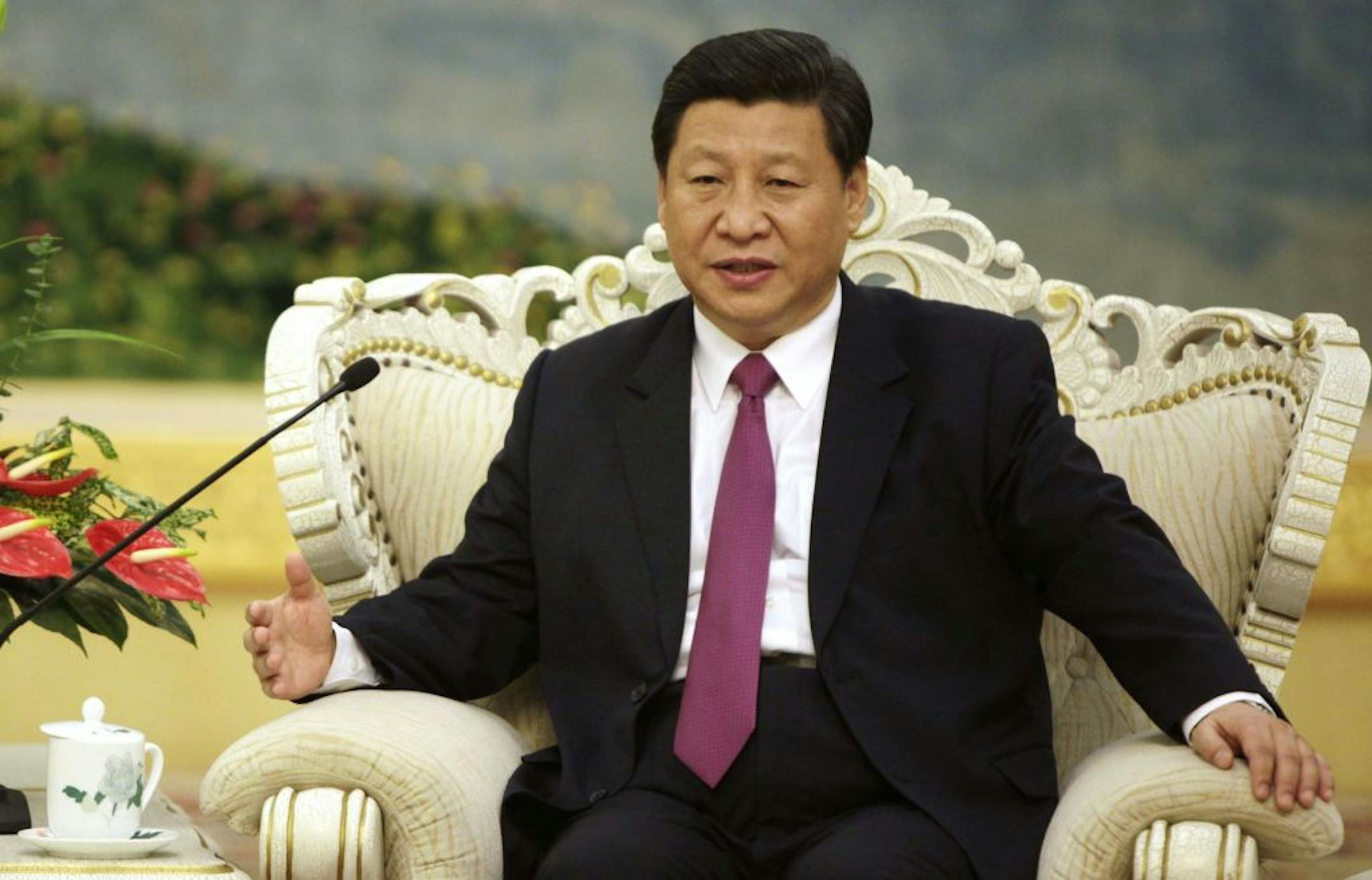
Just after the 18th National Congress of the Chinese Communist Party, which starts in Beijing on Nov. 8, a short line of dark-suited men, and perhaps one woman, will step onto a red carpet in a room in the Great Hall of the People and meet the world's press.
At their head will be Xi Jinping, the newly anointed party chief, who in March will also take over as president of China. Behind him will file the new members of the Politburo Standing Committee, China's supreme body. The smiles will be wooden, the backs ramrod straight. Yet the stage-management could hardly be more different from the tempestuous uncertainties of actually governing.
As ruler of the world's new economic powerhouse, Xi will follow his recent predecessors in trying to combine economic growth with political stability. Yet this task is proving increasingly difficult. A slowing economy, corruption and myriad social problems are causing growing frustration among China's people and worry among its officials.
In coping with these tensions, Xi can continue to clamp down on discontent, or he can start to loosen the party's control. China's future will be determined by the answer to this question: Does Xi have the courage and vision to see that assuring his country's prosperity and stability in the future requires him to break with the past?
Who's Xi?
To the rich world, laboring under debt and political dysfunction, Chinese self-doubt might seem incongruous. Deng Xiaoping's relaunch of economic reforms in 1992 has resulted in two decades of extraordinary growth. In the past 10 years under the current leader, Hu Jintao, the economy has quadrupled in size. A new (though rudimentary) social safety net provides 95 percent of all Chinese with some kind of health coverage, up from just 15 percent in 2000. Across the world, China is seen as second in status and influence only to America.
Until recently, the Chinese were getting richer so fast that most of them had better things to worry about than how they were governed. But today China faces a set of threats that an official journal describes as "interlocked like dog's teeth."
The poor chafe at inequality, corruption, environmental ruin and land-grabs by officials. The middle class fret about contaminated food and many protect their savings by sending money abroad and signing up for foreign passports. The rich and powerful fight over the economy's vast wealth. Scholars at a recent government conference summed it up well: China is "unstable at the grass roots, dejected at the middle strata and out of control at the top."



