

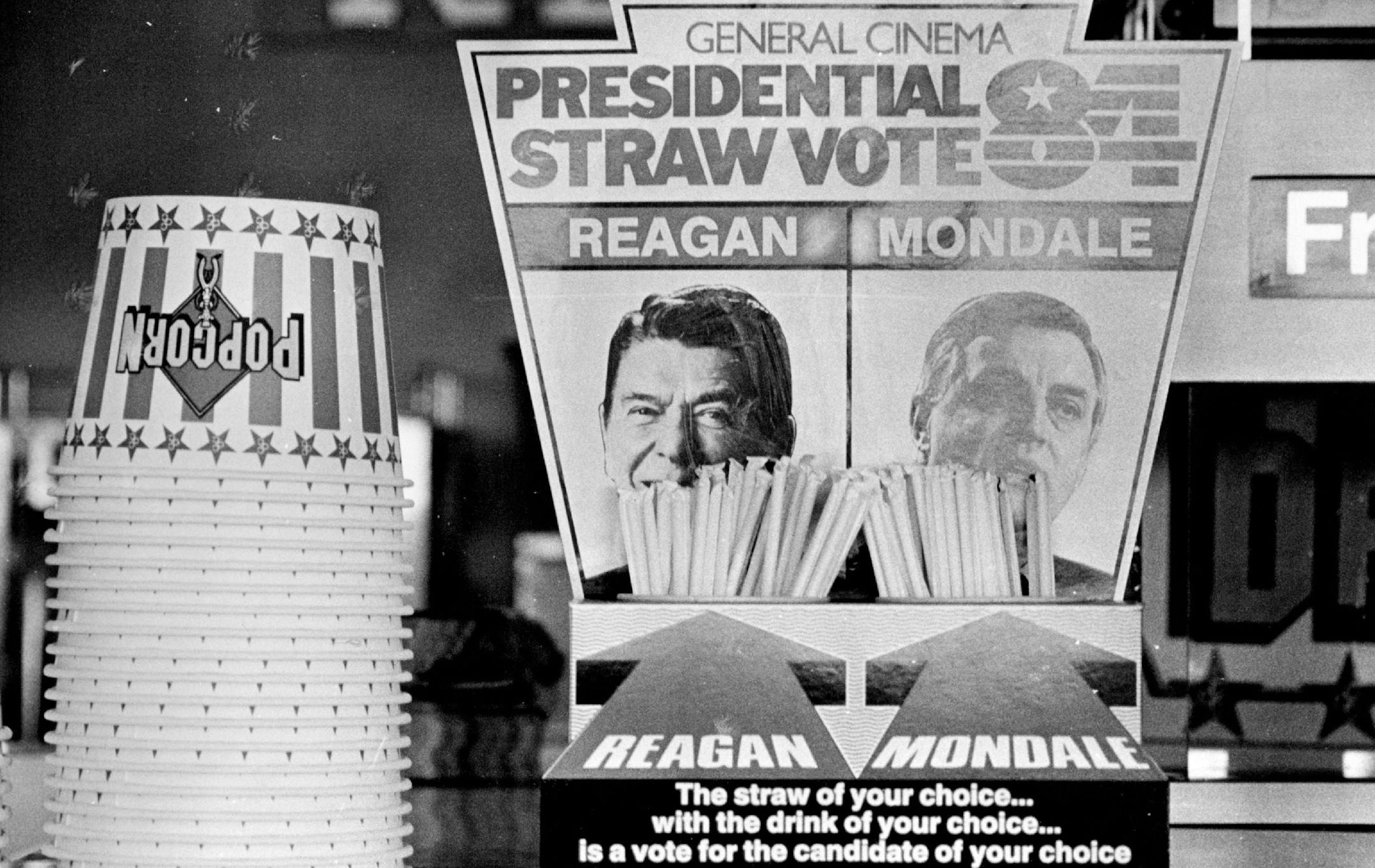
The first presidential campaign I volunteered for was Walter Mondale's, in the summer of 1984. I was short of voting age, but standing outside an old New England Grange hall, handing out Mondale-Ferraro brochures, I understood the intoxication of political idealism. One commitment in the pamphlets was especially snappy: "Making the rich pay their fair share of taxes like everybody else."
Sick burn. Take that, Reagan juggernaut.
When Mondale, who died Monday at 93, lost resoundingly that November, I also understood crushing defeat. The one good thing about an election year in which your candidate wins only his home state and the District of Columbia — the Electoral College tally was 525 to 13 — is there's no fuss about a recount.
Ronald Reagan was reelected in a tsunami that year, and in retrospect it's hard to imagine his tide could ever have been stemmed. He entered his second term with a 62% approval rating.
It was also true, even to a gimlet teen eye, that Reagan somehow seemed to lift the notorious 1970s drear. His sunny vibe was a reproof to the Carter-Mondale era, which I came to associate with "grime" movies such as "Taxi Driver," "Carnal Knowledge" and, good gravy, "Looking for Mr. Goodbar," in which Diane Keaton's character endures repeated rapes, and then she is murdered.
By 1982, we got "Annie"— jolly kids' fare — and from there it was a smooth ride to the greed worship of "Wall Street" and the happy jingoism of "Rocky IV." Reagan spokesmodeled for the menacing "military-entertainment complex," as Wired has called it, but I had to admit that the grime was off the national lens. The dog day afternoons of the '70s had been replaced by red dawn in Reagan's America.
Mondale could never have done government as show business. He was famous for his integrity and reciprocally awkward with media. Reagan "could walk in front of those cameras and it would come out magic," Mondale told the Guardian in 2008. "I would walk in and it would be a root canal." His full-throated endorsement of higher taxes was seen as his 1984 undoing.
What seems most quaint now is Mondale's focus on actual governance. Former President Jimmy Carter, in a statement this week, credited Mondale with transforming the vice presidency into a "dynamic, policy-driving force."


