

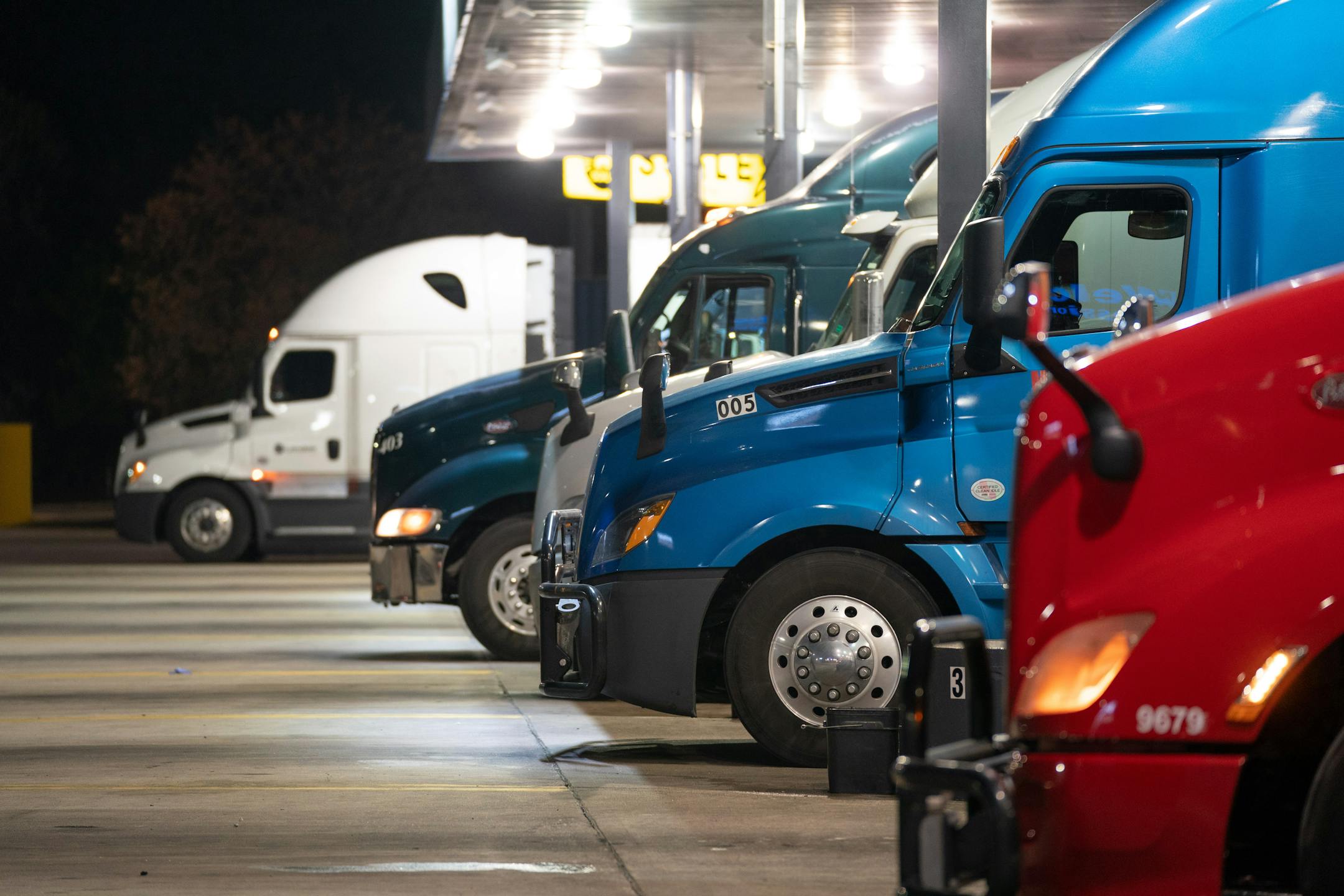
In March, a self-driving 18-wheeler spent more than five consecutive days hauling goods between Dallas and Atlanta. Running around the clock, it traveled more than 6,300 miles, making four round trips and delivering eight loads of freight.
The result of a partnership between Kodiak Robotics, a self-driving startup, and U.S. Xpress, a traditional trucking company, this five-day drive demonstrated the enormous potential of autonomous trucks. A traditional truck, whose lone driver must stop and rest each day, would need more than 10 days to deliver the same freight.
But the drive also showed that the technology is not yet ready to realize its potential. Each day, Kodiak rotated a new team of specialists into the cab of its truck, so that someone could take control of the vehicle if anything went wrong. These "safety drivers" grabbed the wheel multiple times.
Tech startups like Kodiak have spent years building and testing self-driving trucks, and companies across the trucking industry are keen to reap the benefits. At a time when the global supply chain is struggling to deliver goods as efficiently as businesses and consumers now demand, autonomous trucks could alleviate bottlenecks and reduce costs.
Now comes the most difficult stretch in this quest to automate freight delivery: getting these trucks on the road without anyone behind the wheel.
Companies like Kodiak know the technology is a long way from the moment trucks can drive anywhere on their own. So they are looking for ways to deploy self-driving trucks solely on highways, whose long, uninterrupted stretches are easier to navigate than city streets teeming with stop-and-go traffic.
"Highways are a more structured environment," said Alex Rodrigues, CEO of the self-driving-truck startup Embark. "You know where every car is supposed to be going. They're in lanes. They're headed in the same direction."
Restricting these trucks to the highway also plays to their strengths. "The biggest problems for long-haul truckers are fatigue, distraction and boredom," Rodrigues explained. "Robots don't have a problem with any of that."


