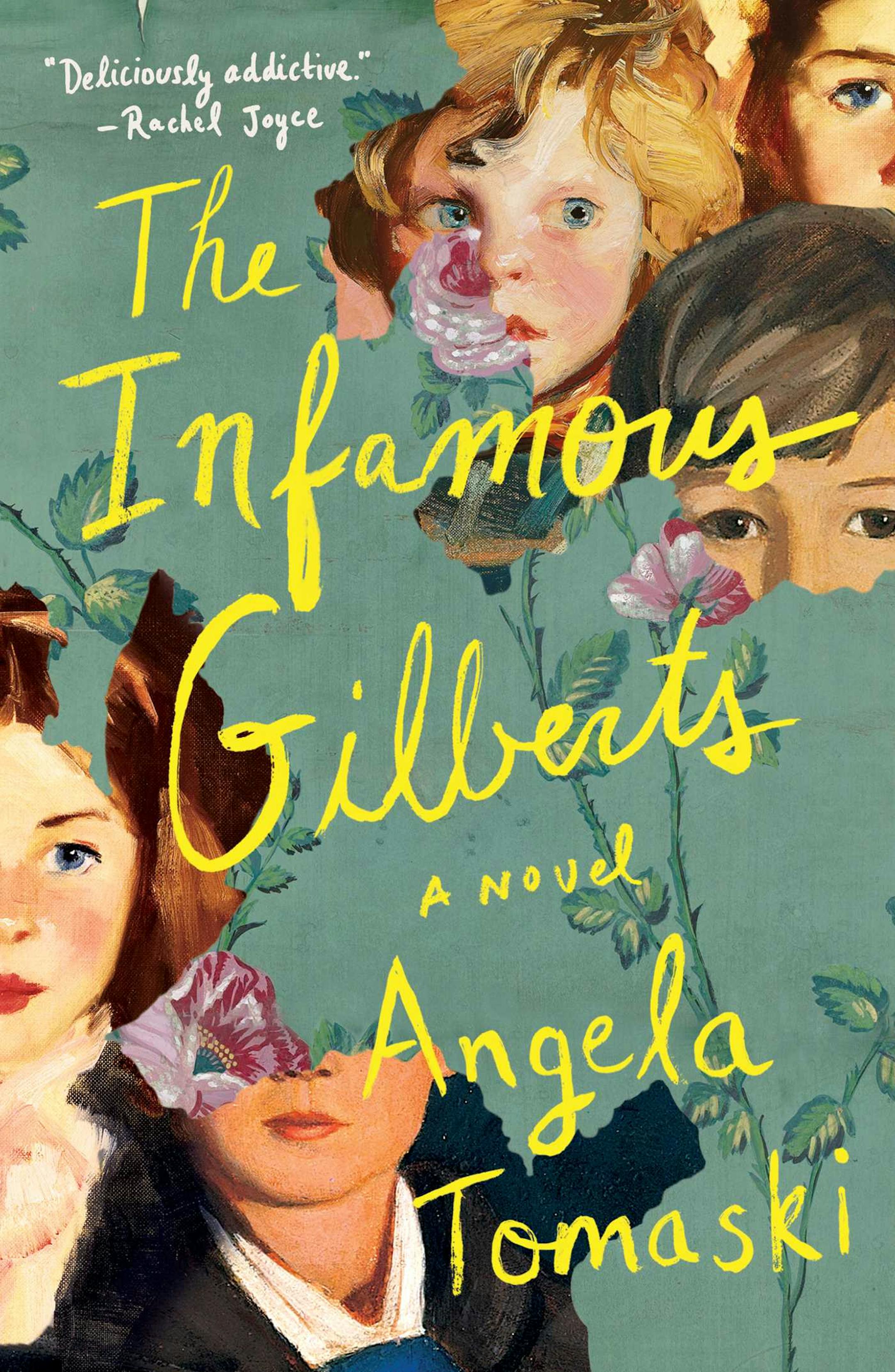
There may be more style than substance in “The Infamous Gilberts” but it is very stylish, indeed.
I kept thinking of Shirley Jackson when I read Angela Tomaski’s debut novel because Jackson wrote both amusingly macabre books about families (“Life Among the Savages”) and darker works that hinted that the cracks in crumbling Gothic mansions sometimes represent the moral failings of the people who live in them (“The Haunting of Hill House”). “The Infamous Gilberts” does a bit of both of those things.
Tomaski traces the Gilberts from the 1940s to the 2000s, although both the book’s language and the Gilberts’ house seem to date to about a century earlier, around the time of “Jane Eyre.” There’s an absent father and a clueless, neglectful mother but the five Gilbert children — Lydia, Hugo, Annabel, Jeremy and Rosalind — are essentially raising themselves in an English country house of secret passages and worrying infestations.
“Gilberts” is partly structured as a tour of the now-deserted mansion, which is called Thornwalk and which is going to be converted into a hotel. A mysterious narrator, about whom all we know is that he is named Max, leads us from room to room, pointing out trinkets left by family members, damage inflicted during fights and blood left in ominous circumstances.
As anyone who has ever toured an inexpertly staged home-for-sale knows, you can tell a lot about people by the things they leave behind. And it’s fun to speculate about them, even if — as with Thornwalk — there’s no way you’re buying that house.
Going back and forth in time and peeping at the Gilberts, almost as if Thornwalk is a dollhouse and they are dolls posed within it, Max offers a flurry of observations about the children. There’s this, for instance, when he points out an ear-shaped mark worn into a door and observes, “It is not a nice habit, you say, this listening at doors. You are thinking badly of poor little Annabel. But she has her reasons.”
Tomaski is too fond of versions of the phrase “but more of that later,” a tease that can begin to feel monotonous. But she’s adept at hints that, like “she has her reasons,” promise revelations to come.
In the second sentence of “Gilberts,” our narrator announces that it will be about “the downfall of this great family,” once “the subject of much tawdry gossip and many a sensational headline,” and the book delivers on that, with family members stealing from each other, locking one another up and, in the case of poor Annabel, ordering a medical procedure so unspeakable that, well, it’s not spoken of, only hinted at.