

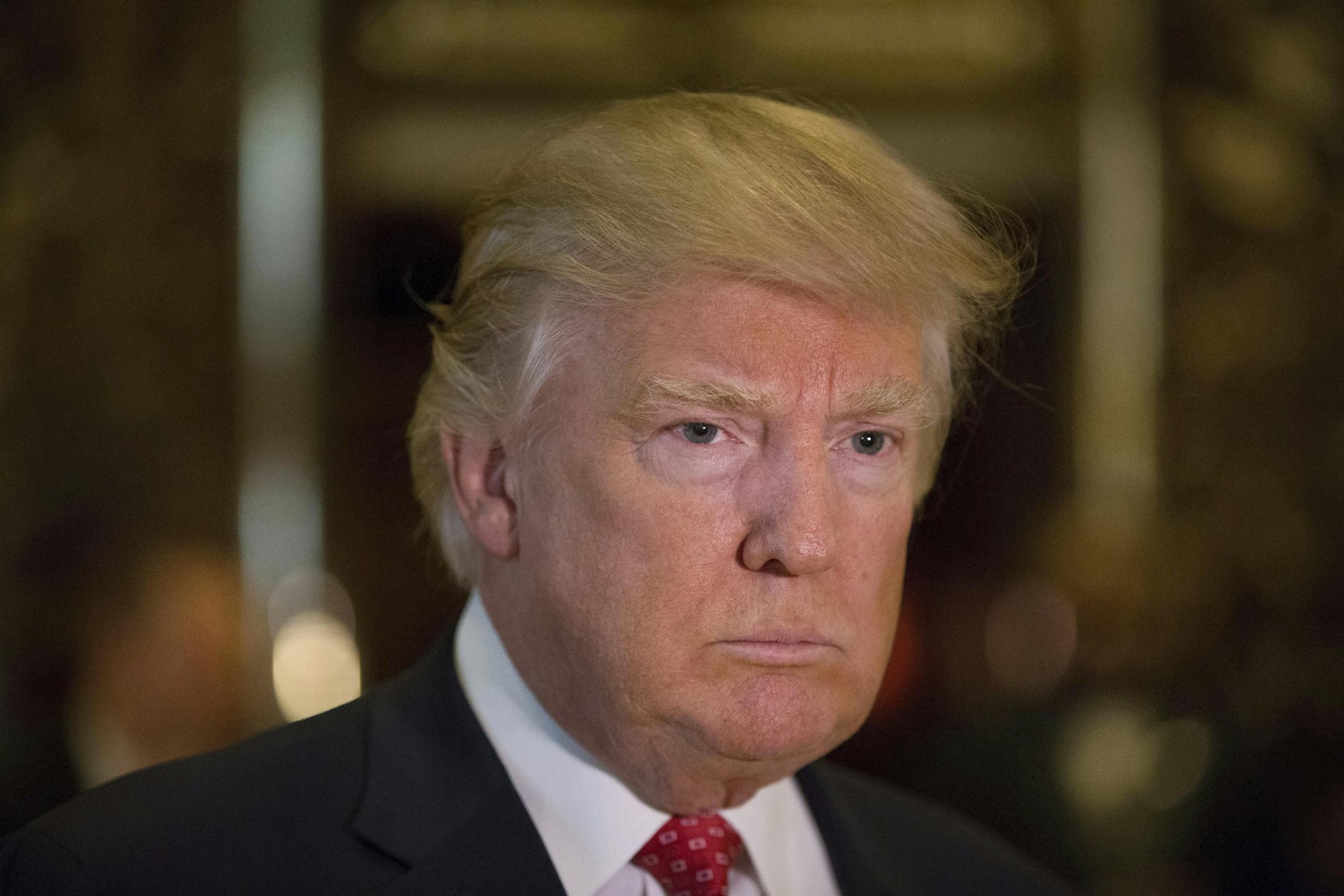
Were Donald Trump to read all the previous inaugural addresses in preparation for his big day, it would be pretty tough going from James Madison to James Buchanan. Then there was that Lincoln guy, who was really first rate in the big speech department.
But Trump would sense a kindred spirit in Ulysses S. Grant's second inaugural, with its memorable peroration: "I have been the subject of abuse and slander scarcely ever equaled in political history, which today I feel I can afford to disregard in view of your verdict, which I gratefully accept as my vindication."
Fondly do we hope that Trump finds superior sources of inspiration. The best of the inaugural addresses pool into two categories. There are speeches of national purpose, such as John Kennedy sounding the trumpet in a long twilight struggle.
Then there are speeches of national unity, such as Thomas Jefferson's first inaugural, in which he declared, "We are all Republicans, we are all Federalists." Lincoln's second inaugural is remarkable for daring to assert a unity of both suffering and guilt. George W. Bush's first (which I helped produce) was of this type: "This is my solemn pledge: I will work to build a single nation of justice and opportunity."
Trump faces a series of self-created challenges. His lifelong use of division as a method of motivation makes a direct appeal to national unity, well, suspect. He must somehow live and lead in a political environment he has helped to poison with invective and bitterness.
But low expectations are the speechwriter's friend. And Trump needs, for the sake of the country, to deliver a successful speech that inaugurates a period of healing and accomplishment.
What might work? Many of Trump's defining policies and stump-speech devices — the wall, "America First," "lock her up" — are not particularly good options to organize an inaugural speech. But Trump completely owns one useful phrase: "Make America great again." The problem is "again," which bespeaks nostalgia.
Trump's inaugural speech needs to turn a rhetorical corner. He must define "greatness," not as a past condition but as a current mission. Mere nostalgia is the idealization of a time that many Americans — including women and minorities — find less than idyllic. For his speech to succeed, Trump requires not just a fabled past, but a promised land.


