Editor's Pick

Editor's Pick

The heroes of Annunciation

October 26, 2025
(Renée Jones Schneider/The Minnesota Star Tribune)

First responders recall the chaos and trauma of Aug. 27, when a mass shooting at Annunciation Church in south Minneapolis killed two children and wounded more than two dozen others.

The Minnesota Star Tribune

Minneapolis police Lt. Ryan Kelly remembers the silence.

A surge of frantic 911 calls sent him racing down Interstate 35W toward the scene of a reported active shooter in south Minneapolis. But when he arrived at Annunciation Catholic Church that morning, heart pounding, he stepped out of his squad car and heard nothing.

An unknown assailant had unleashed a torrent of 116 rounds minutes earlier, shattering stained glass windows and terrorizing the young parishioners praying inside. The stench of gunpowder still hung in the air.

Kelly left his steel chest plate and ballistics helmet behind; there was no time.

A man, standing frozen on the lawn, could not speak when Kelly inquired about victims — only point.

“I’m going in,” Kelly radioed to dispatch, before sprinting toward the church’s double doors. Stillness greeted him inside.

Then, slowly, dozens of heads poked up from behind the pews.

Bravery amid trauma

Two months after the Aug. 27 mass shooting that left the Twin Cities shaken, Kelly and four other first responders shared, for the first time, their accounts from that chaotic day.
They described the trauma of those who witnessed the attack, and lauded the bravery of civilians, big and small, who protected each other when an assailant opened fire during a back-to-school Mass, killing 8-year-old Fletcher Merkel and 10-year-old Harper Moyski, and injuring 28 others.

Their individual actions and collaborative efforts that day were critical in getting the wounded loaded into ambulances and escorted to area hospitals within 17 minutes of the first emergency call, likely saving many lives.

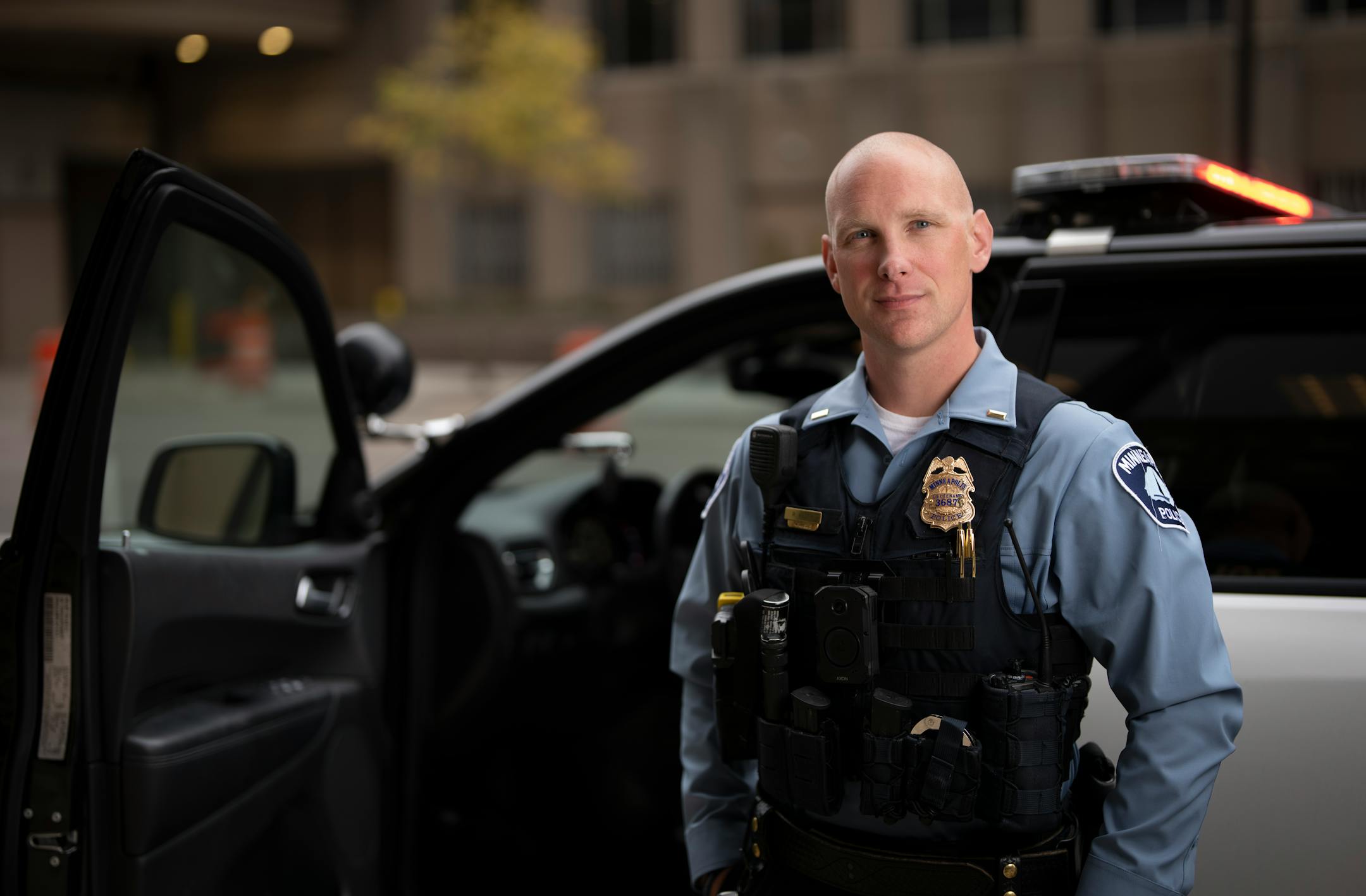
Kelly ran toward danger.

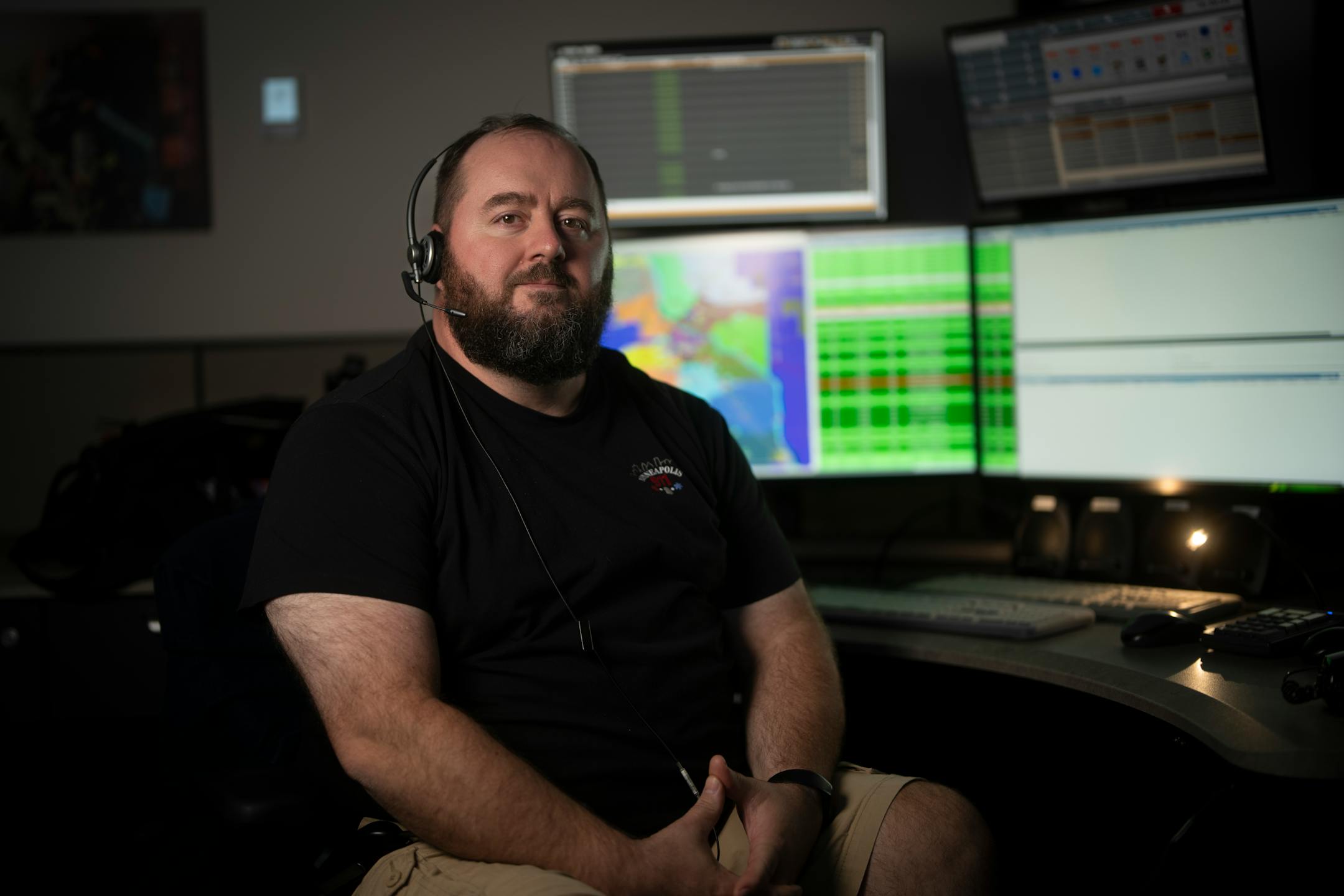
Chad Howard, a 911 dispatcher, fielded calls from distraught witnesses and guided first responders.

Minneapolis firefighter Seamus Black and Hennepin County paramedic B. Gregory triaged injured children.

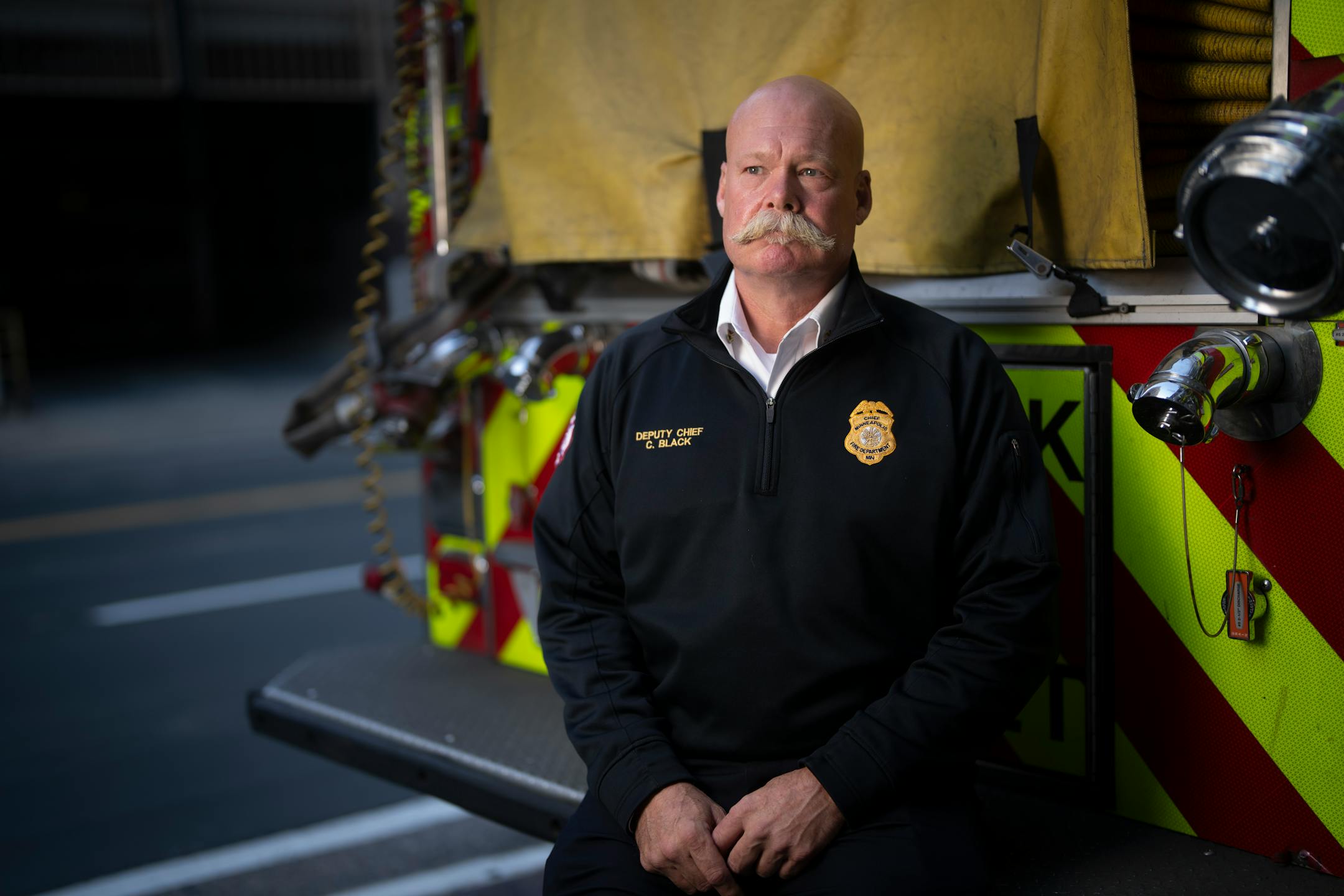
And Deputy Fire Chief Colm Black helped reunite families in the aftermath.

“That doesn’t happen in this city, that happens elsewhere,” Minneapolis 911 dispatcher Chad Howard recalled thinking as he received a deluge of 911 calls that morning. (Renée Jones Schneider/The Minnesota Star Tribune)

The phones kept ringing

The first emergency call came at 8:27 a.m., alerting dispatchers to a potential active shooter. A responder was en route 93 seconds later.

But the phones kept ringing.

From the downtown Minneapolis Emergency Communications Center, Howard and fellow dispatchers watched as the electronic call board lit up their dark chambers. It did not appear to be a false alarm. He was in disbelief.

“That doesn’t happen in this city, that happens elsewhere,” Howard recalled thinking that morning. But the flurry of 911 calls each seemed to triangulate from the same location: Annunciation Church.

Howard spoke with a scared bystander, who reported a shooter dressed in all black firing through the church windows, and talked to a fourth-grade teacher trapped inside, huddled with a student under the pews.

While on the line, the woman comforted and guided the children, at one point saying: “Police are coming, I promise.” Howard did not notice it at the time, but others later recognized the sound of glass breaking as shots rang out.

“I didn’t focus on that,” he said. “I was just trying to get whatever info she was giving me and find out if she knew where any victims might have been.”

Howard answered nearly a dozen calls that day, pulling up Google Maps to visualize the property as witnesses described the movements of the shooter, which he then relayed to responders on the ground. The veteran dispatcher soon switched to the fire department’s tactical channel to help deploy medics.

During such a high-stress shift, he leaned on training from time in the military police to keep his emotions in check and block out distractions.

“I still have a job to do. I still have to press forward.”

Lt. Ryan Kelly's quick dispatching of information on victims is credited with ensuring an exceptionally effective response to the shooting, saving lives. (Renée Jones Schneider/The Minnesota Star Tribune)

‘I didn’t think twice’

The cacophony of gunfire sent 200 people dropping to the floor of the church, and teachers scrambling to shield their students. When it stopped, several fathers guarded each entrance, quickly concocting a plan to tackle the shooter should they attempt to breach the church and continue the rampage.

Kelly entered instead.

Once inside, he instructed terrified parishioners to stay down until he could confirm that the suspect was no longer a threat. He quickly searched the perimeter, tracing the attacker’s route, finding empty magazines and discarded shell casings, but there were no more shots. He didn’t see the shooter, who by then was dead of a self-inflicted gunshot wound.

He ran back inside to tend to the wounded. In those first moments — before the parade of ambulances arrived and the grounds flooded with desperate parents, before law enforcement strung yellow crime tape and TV cameras encircled the neighborhood documenting America’s latest mass killing — Kelly ushered survivors up and out of the sanctuary.

He directed them to a designated evacuation area, called the “Casualty Collection Point,” to await incoming paramedics. He quickly catalogued the number of victims, relaying an accurate count to dispatch. EMS officials would later credit those actions for ensuring an exceptional trauma response.

“I didn’t even think twice,” said Kelly, a trained combat medic. “My whole role was to try and bring calm to the chaos.”

Minneapolis firefighter Seamus Black used to attend Annunciation School and was a first responder to the shooting. (Renée Jones Schneider/The Minnesota Star Tribune)

‘Why would they wanna hurt us?’

Firefighter Seamus Black had finished his 24-hour shift and was due to head home. But supervisors asked him to stick around when a colleague called off sick.

He was just five blocks away at Fire Station 27 when the tones chimed, signaling an emergency at Annunciation, his former school.

Black jumped on a rig that staged nearby — one of the first on scene — until police announced a code 4, confirming that there was no longer an imminent threat. Kelly phoned it in.

Frantic parents approached the fire crew, asking questions they simply couldn’t answer. “Have you seen my kid?!”

One man who heard the shots asked for permission to go to the building and search for his child. Black and his crew said they didn’t advise it, but couldn’t tell him no.

“Of course, the dad ran — like any other parent probably would too,” Black said.

Officers and paramedics swarming the area were met with a chaotic scene: Kids running everywhere. Teachers chasing after them, instructing bigger students to grab their “littles.” Everyone lending a helping hand.

Paramedics worked to quickly triage injuries, stopping those closest to them and making instant assessments between patients with minor cuts and more serious wounds, who needed to be loaded and go. Sorting through the crowd wasn’t easy. Many were covered in other people’s blood.

As HCMC paramedic B. Gregory tended to a young boy in her ambulance, a little girl nearby asked: “Why would they wanna hurt us?”

The heaviness of that question broke her heart.

“There’s nothing I could do to answer that that was going to make her feel better, because it doesn’t make sense,” Gregory recalled, her voice quivering. “There’s no good reason. And watching someone so little have to process that was tough.”

The boy was more concerned about the fate of his peers than himself. On the way to the hospital, Gregory asked for permission to call his mother.

“I called and called and called until she answered,” Gregory said, noting it was among the most difficult conversations of her career. “I could hear the fear in her voice.”

Gregory promised that her child was safe — and that she would stay by his side.

HCMC paramedic B. Gregory tended to a young boy in her ambulance who was more concerned about the fate of his peers than himself. (Renée Jones Schneider/The Minnesota Star Tribune)

‘Can I have a Band-Aid?’

A minute felt like an eternity.

Amid the frenzy, Kelly yelled orders at incoming officers, including those he didn’t know from other agencies that arrived as mutual aid. Each cop was placed with a designated child and instructed to care for them.

He doubled back inside the sanctuary to find the most critically wounded patients. Two had already died of their injuries.

Officers alerted him to a 12-year-old girl with a gunshot wound to the head. He and several volunteers carried her outside to be placed in the first available ambulance.

Doctors feared that Sophia Forchas would become the shooting’s third fatality, but she survived. Her neurosurgeon called it a miracle. She returned home from the hospital last week.

As Kelly directed traffic, a little boy, maybe 5 years old, began trailing him around the property. The child calmly pointed to a puncture wound on his arm, likely caused by shrapnel. He told Kelly he might have been shot and asked him to look. “Can I have a Band-Aid?” he asked.

Kelly placed a large trauma bandage on the wound. There were no tears from the boy, only gratitude.

Minutes later, Kelly spotted one of his officers using a tourniquet on a woman, saving her life. Just hours earlier at roll call, Kelly urged his officers to ensure they had proper medical supplies, after a mass shooting the day before outside Cristo Rey Jesuit High School. A gunman fired into a crowd from a passing vehicle, killing one and injuring six.

“He put it in his pocket because of our conversation that morning,” Kelly said.

Minneapolis Fire Deputy Chief Colm Black and his firefighter son both were first responders to the shooting. As he watched his son tend to victims, "all of a sudden, I was overwhelmed with pride watching him work, but also that sadness for the kind of innocence lost.” (Renée Jones Schneider/The Minnesota Star Tribune)

Innocence lost

Down in the gymnasium, where students were ushered for the reunification process, Deputy Fire Chief Colm Black gathered class rosters from every grade to make sure each child was accounted for.

Firefighters like his own son, Seamus Black, treated minor scrapes and bruises from shrapnel while consoling terrified children. Seamus chatted up a group of basketball players, trying to bring “some normalcy to a really bad situation.”

It marked a surreal moment for both father and son.

“I had a flashback to him being this eighth-grader in a basketball uniform,” Colm Black said. “Then, all of a sudden, I was overwhelmed with pride watching him work, but also that sadness for the kind of innocence lost.”

‘I’m glad you’re home’

Kelly couldn’t bring himself to leave.

All the injured patients were gone and the long, emotional reunification process had already begun. But Kelly wanted to know the status of the young victims at the hospital, information that would surely trickle back through the incident command post. He looked for excuses to stay.

Members of the department’s Health and Wellness team soon arrived, forcing Kelly and the other officers to take a break. They walked down the street to a coffee shop for a debriefing.

Dozens of first responders from various agencies took time off work to rest and recover. During his week at home, Kelly pulled his own 7- and 9-year-old daughters close.

They didn’t ask a lot of questions, but sensed something was amiss.

“I’m glad you’re home, Daddy. I’m glad you’re OK,” Kelly recalled of their conversation.

“I’m glad you are OK,” he replied.

An ice pack around the heart

Three weeks after the shooting, Annunciation hosted a community event with first responders to mark the students’ first half-day back at school.

Many were hesitant to return.

Kelly snuck in the back, hoping to just observe. But his presence did not go unnoticed. Principal Matthew DeBoer wrapped him in a big hug.

All around them, kids laughed and romped on the lawn. Community service officers challenged children to foot races. Little ones drew pictures of police and folded origami paper ambulances.

Parents rushed to thank the men and women who cared for their children. Gregory met the mother she’d phoned from the back of her rig, who thrust flowers and a card into her hands.

Seeing kids being kids delivered a sense of catharsis to those gathered at the church. A painful memory on those grounds had been muted, if never replaced, with one of joy.

“It was the greatest ice pack around my heart I’ve ever had,” Chief Black said. “I told somebody at that event, ‘I’ll spend the rest of my life trying to forget the first day, but I’ll spend the rest of my life trying to remember today.’”

Correction: An earlier version of this story misspelled Sophia Forchas' first name.
about the writer

about the writer

Liz Sawyer

Reporter

Liz Sawyer  covers Minneapolis crime and policing at the Star Tribune. Since joining the newspaper in 2014, she has reported extensively on Minnesota law enforcement, state prisons and the youth justice system. 

See Moreicon

More from News & Politics

See More
card image
Maplewood Police Department

A man was arrested after being found with an apparent self-inflicted gunshot wound, police said.

card image
card image