

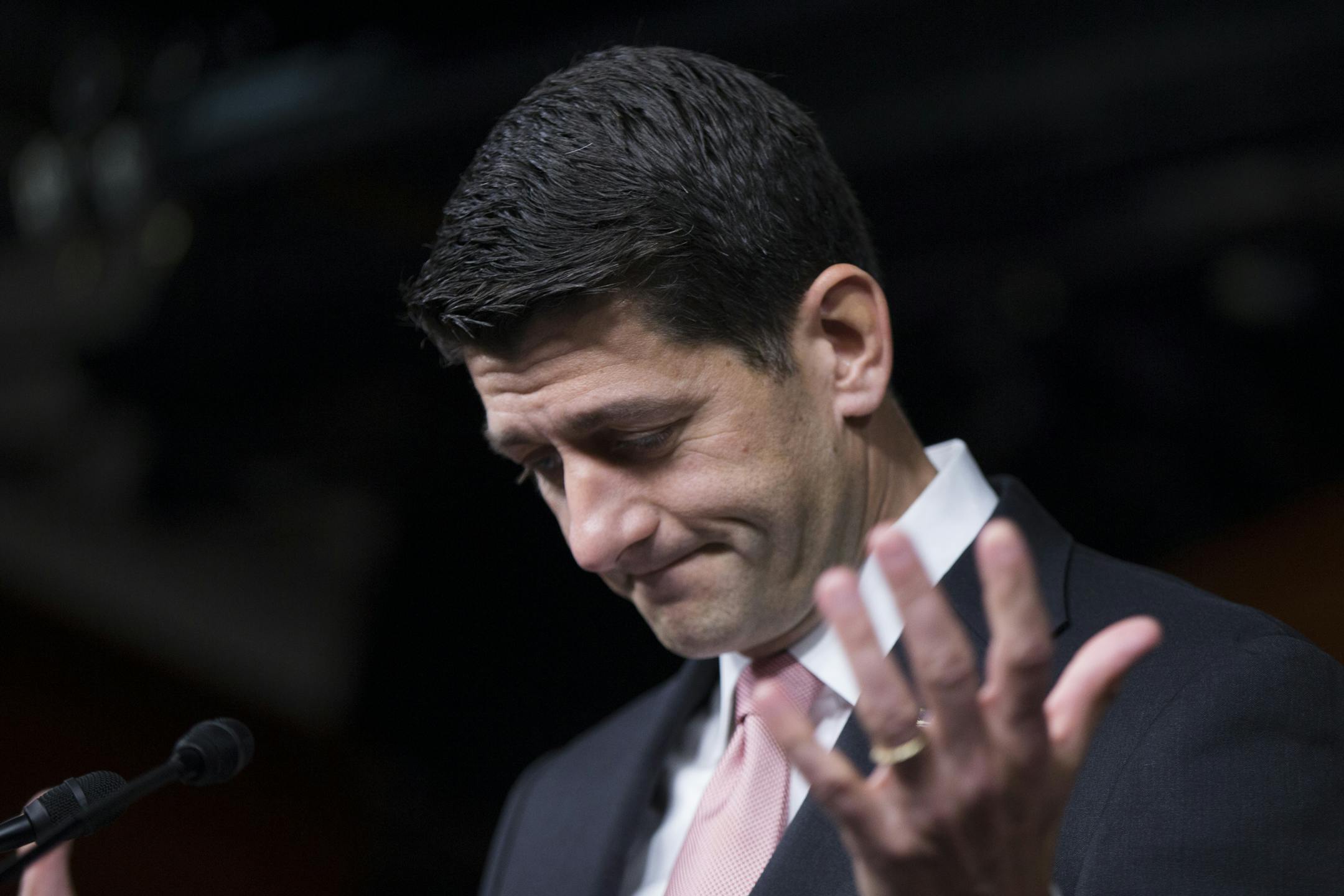
It's hard to excel in a job you never wanted in the first place. That seems to be one of the primary takeaways from the three years Paul Ryan served as House speaker since Republicans practically begged him to step into the void they created when they ran John Boehner off from the job in 2015.
Add to Ryan's burden the fact that he had to work with a president who was his opposite in every measure but party affiliation, and it's easy to think Ryan's speakership was doomed from the start. But it wasn't all bad for the gentleman from Janesville. Let's review.
The good
• Paul Ryan. If there's one thing Republicans will eternally owe Ryan, it's that he never made the tumultuous last two years worse than they could have been. While several previous Republican speakers became mired in scandal during or after their tenures, Ryan was never a leader Republicans had to worry about. Not only was Ryan's good-guy image genuine, but his down-to-Earth decency and self-restraint were also an important counterbalance to the bottomless scandals down the street in the West Wing.
• Anti-poverty agenda. In the months after the 2012 elections, Ryan quietly traveled the country with Bob Woodson, a civil-rights activist, to visit impoverished communities around the country. The two traveled once a month for two years to inform the anti-poverty agenda that Ryan hoped to pursue as chairman of the Ways and Means Committee.
Ryan's focus on poverty didn't get much attention during his speakership, and it certainly wasn't a centerpiece of his or any GOP agenda. But Ryan did manage to move a few discrete items to address income inequality in larger bills. The tax cut package included language creating "opportunity zones" to encourage investment in low-income neighborhoods, along with "social-impact bonds" to allow bond issues to address pressing social needs.
• Tax reform. As the holy grail of Republican policy goals, it would have been unacceptable for a Republican-led House not to deliver a tax reform package to President Donald Trump, especially after Republicans' failure to repeal Obamacare as promised in 2017. Ryan drove passage of the bill, even on the days when West Wing drama threatened to stall it completely.
That the tax cuts also rang up massive deficits and threaten to explode the national debt is a topic for the next section.
The bad
• Debt and deficits. If there was a more passionate evangelist against the evils of government debt and deficits over the last 20 years than Rep. Paul Ryan, it is hard to think of one. When he unexpectedly ascended to the speakership in 2015, many in Washington assumed he would quickly advance an agenda to achieve what he had preached for so long — a program to shrink the debt into balance, even if it hurt.


