

Opinion editor's note: Star Tribune Opinion publishes a mix of national and local commentaries online and in print each day. To contribute, click here.
•••
The first pope to resign was Celestine V, born Pietro Da Morrone, who was living the life of a pious hermit when he was elevated to the papacy in 1294, in his 80s, to break a two-year deadlock in the College of Cardinals. Feeling overmastered by the job, he soon resigned in the expectation that he could return to his monastic existence. Instead, he was imprisoned by his successor, Boniface VIII, who feared that some rival faction might make Celestine an antipope.
The former pontiff died after about a year in captivity; his successor, one of the most ambitious of medieval popes, eventually fell into a disastrous struggle with the king of France that ended with Boniface temporarily imprisoned in the weeks before his death.
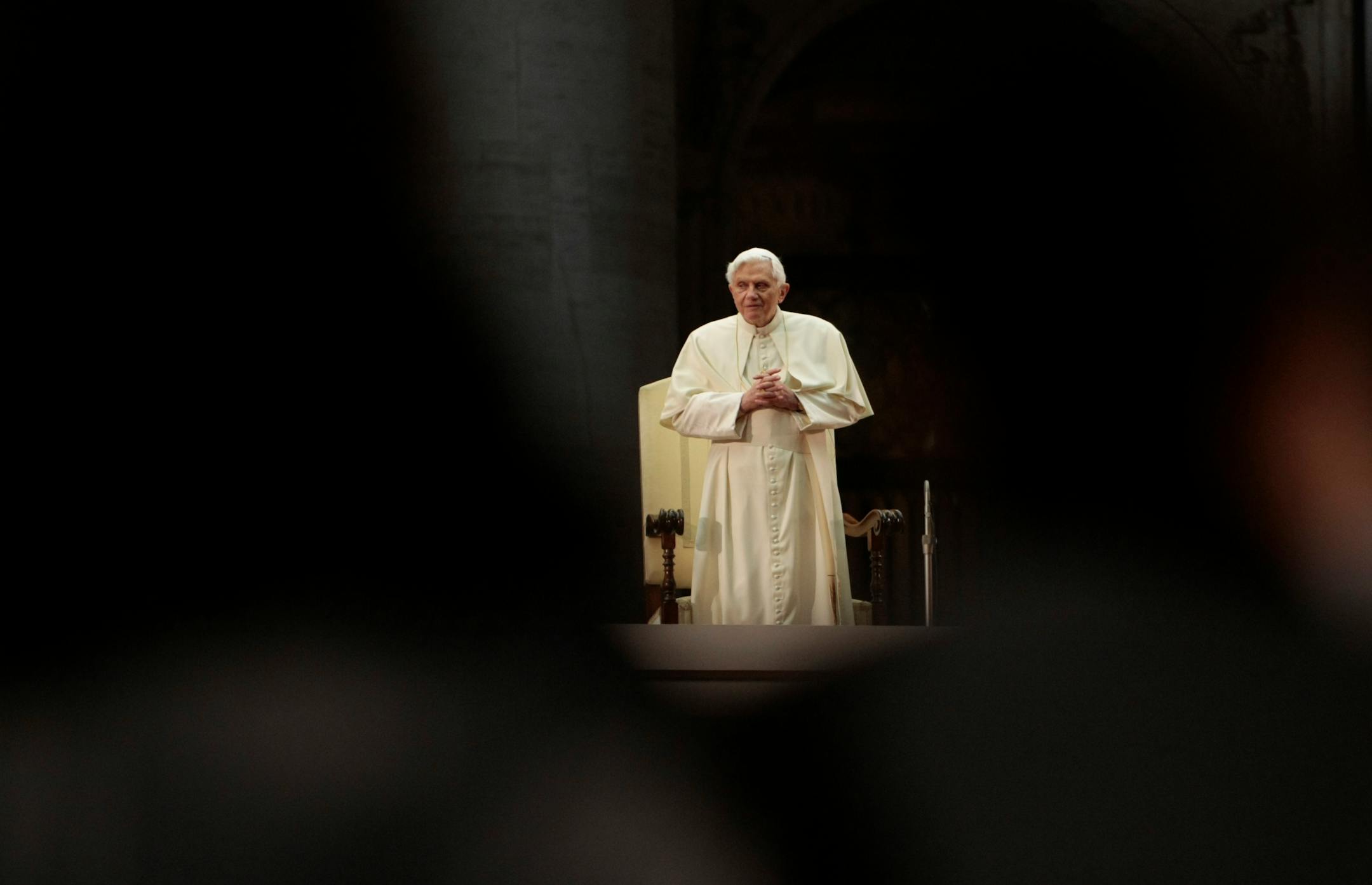
The strange afterlife of Pope Benedict XVI's pontificate, which ended with his death Saturday at 95, was not quite so wild or dramatic. But like Celestine's experience it was not exactly an advertisement for papal resignations. For almost a decade the former Joseph Ratzinger played a peculiar and poorly defined role as "pope emeritus," neither fully secluded nor formally active, even as his successor, Francis, sought to dismantle important parts of his work.
The former pope promised to live out his days "hidden from the world" and presumably expected to see his legacy secure. Instead, he conducted a post-papacy of ambiguous gestures in response to a Vatican that had been delivered, by the mysteries of God's providence, to his longtime foes.
Looking back to what I wrote upon his retirement in 2013 is a strange experience, because much of that analysis ceased to apply within just a few years of the resignation. At the time, I argued that Benedict, as pope and earlier as John Paul II's doctrinal chief, had worked tirelessly to prevent the ruptures that followed the Second Vatican Council — the collapse of Mass attendance in the Western world, the wars over liturgy and sexual ethics — from breaking up the Roman Catholic Church.
A great theologian, part of the brilliant generation that advised the bishops at Vatican II, he put his brilliance in the service of continuity — offering a sustained reassertion of the church's core beliefs, a defense of traditional piety against academic revisionists, a lifelong argument that the Second Vatican Council hadn't simply overwritten the church that existed for centuries before.


