

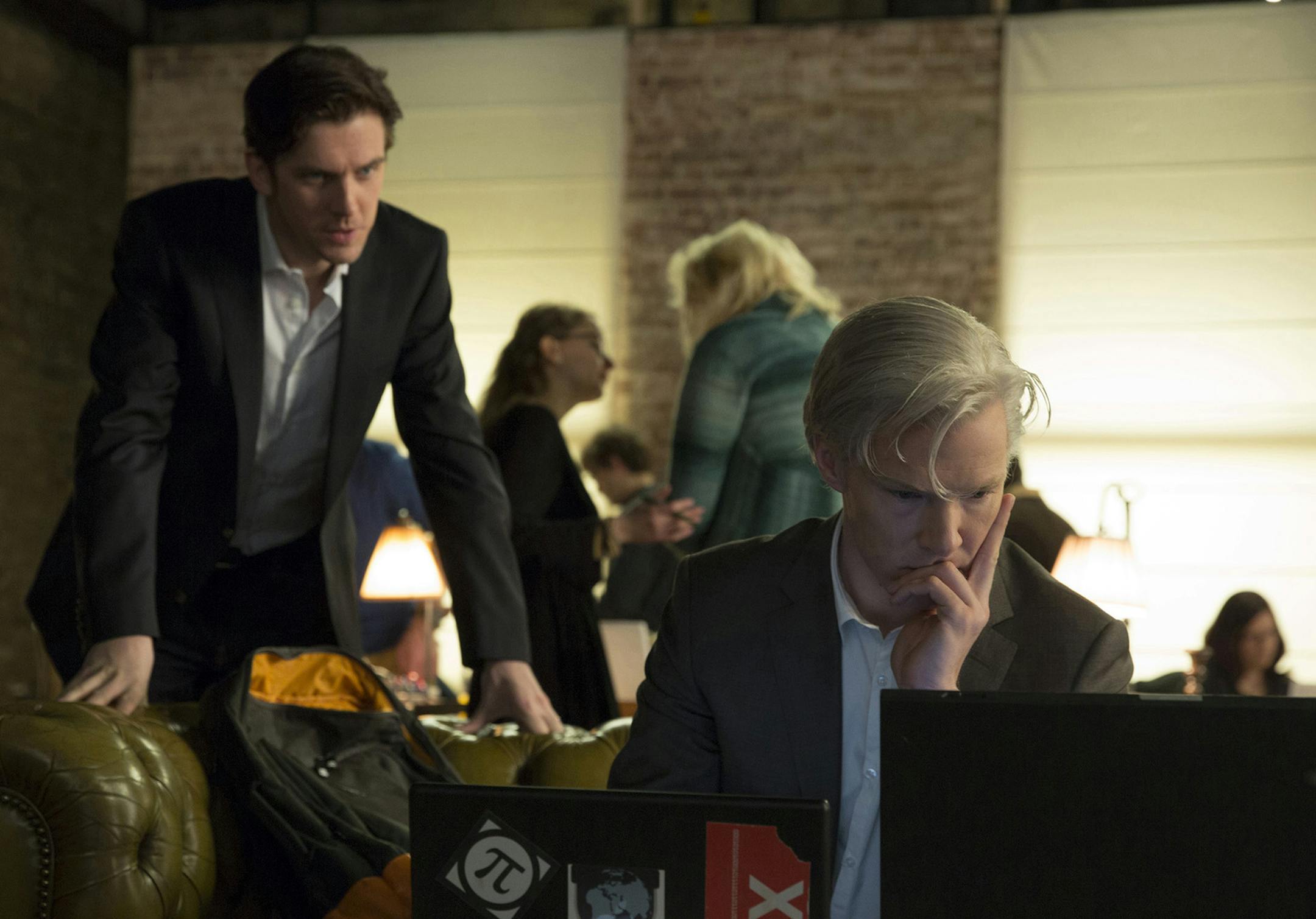
"The Fifth Estate," the new film featuring a first-rate portrayal of WikiLeaks founder Julian Assange, presents the promise and peril of today's asymmetric media era.
The questions raised are ones that Bill Keller, then executive editor of the New York Times, directly dealt with. Along with the Guardian in London and Der Spiegel in Germany, the Times partnered to parse and publish WikiLeaks' cache of classified documents.
Keller, now a columnist, wrote in 2011 about a process that "combined the cloak-and-dagger intrigue of handling a vast secret archive with the more mundane feat of sorting, searching and understanding a mountain of data." Impressively, "The Fifth Estate" captures the cloak-and-dagger, but does not make a molehill out of the data mountain and the ethical questions of how to responsibly reveal the leak-turned-torrent of classified cables.
"WikiLeaks initially found some of the measures taken by the Times (and the Guardian and other partners) — redacting the names of innocent sources who might be put at risk, offering the government an opportunity to make a case for withholding some information — puzzling," Keller recalled in an e-mail exchange. "Their agenda was to discredit the U.S. and its allies, and the basic journalistic practice of letting the subjects of the memo respond was alien to them. After an initial release by WikiLeaks of documents that included names of informants, they took some flak from groups I think they regarded as like-minded, such as Amnesty International, and after that they seemed to take redaction more seriously."
Reacting to redacting wasn't just a journalism issue. For the U.S. Departments of State and Defense, it literally could mean life and death for sources willing to help Americans.
At stake for State was "a breach of trust," said Tom Hanson, a former Foreign Service officer who is now a diplomat in residence at the University of Minnesota Duluth. "People, when they talk with our diplomats, expect a high level of classification and protection so it won't become public."
"The Fifth Estate" hones in how stolen secrets — downloaded on a CD with Lady Gaga written on it — become a Pandora's box that Assange seems unwilling to contain.
Journalists, conversely, were well-aware of how an ethical publishing process could still bring truth to power. James C. Goodale, who was chief counsel for the Times during the Pentagon Papers case, was in Minneapolis this week for a lecture at the University of Minnesota's Silha Center for the Study of Media Ethics and Law. Goodale, author of "Fighting for the Press," said in an interview that, "From the public point of view, you would like to have responsible publishers working with Assange all the time to try to persuade him to hold back what they hold back."


