

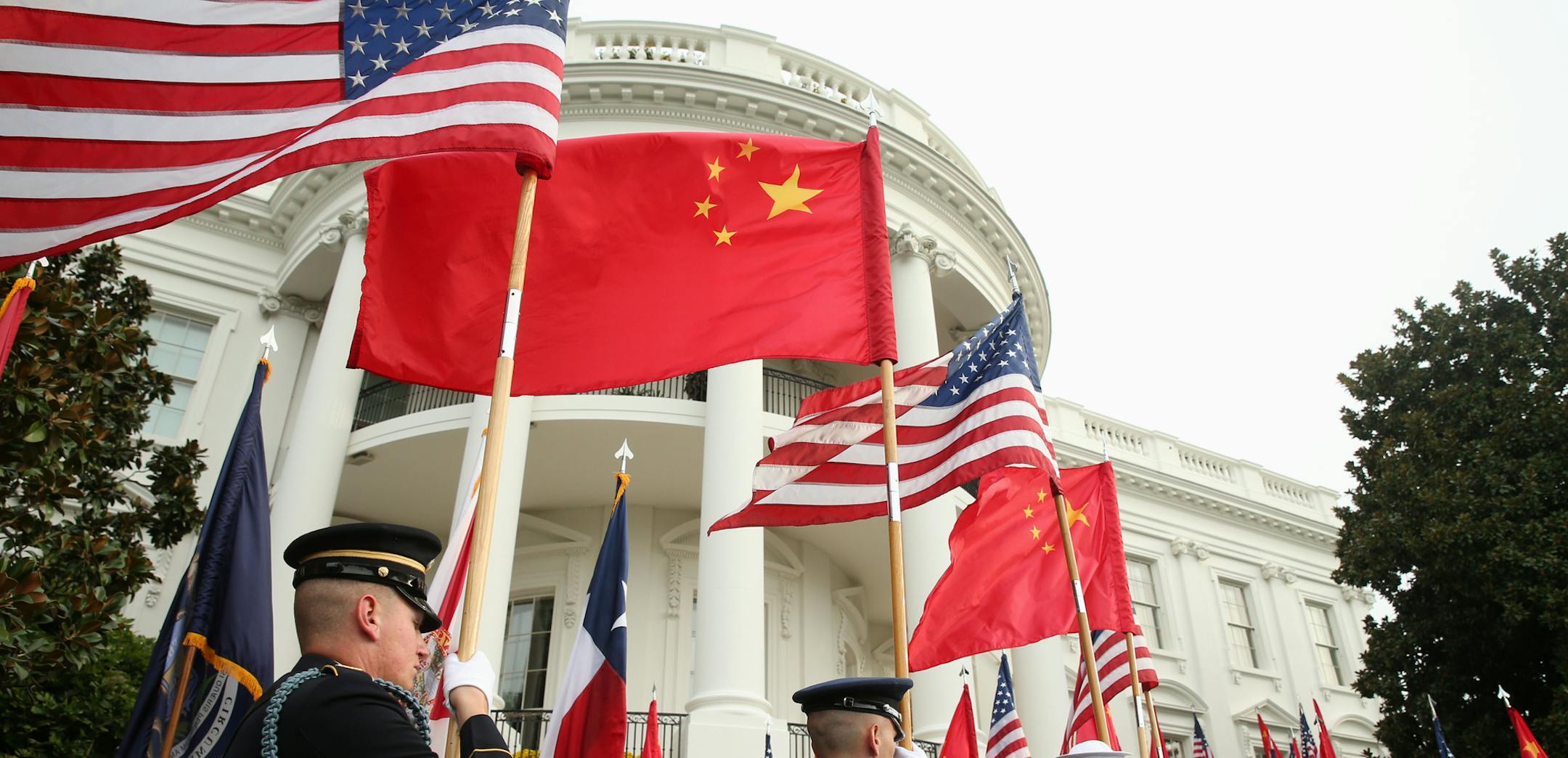
It has been nearly 30 years since we were informed that the "end of history" had arrived. Yet we may be approaching a time of historic trouble and great irony.
"The end of history" was the lesson political philosopher Francis Fukuyama sought to teach (in a noted book by that name) after the Cold War had ended and Western values seemed to reign supreme.
The Soviet Union had fallen without a shot being fired. Communist China had opened itself to the West and to capitalism. The world seemed to be on the verge of a general agreement that some version of liberal, free market democracy was not just the best way to organize countries, but the irresistible wave of a new future, heralding permanent peace and prosperity.
The consensus seemed to be that the American model, or some approximation of it, was the answer to the world's problems. America really was John Winthrop's "city on a hill." And America as redeemer nation would bring redemption by American example and not by the American sword. As former enemies went about the gradual process of becoming more like us they might even become new friends — or at least peaceful competitors.
World Wars I and II were permanently in the rear view mirror. There would be no further need to "make the world safe for democracy," as Woodrow Wilson had vowed, at the point of a gun. An "arsenal of democracy," as FDR had dubbed America, would no longer be needed.
Adding to the American-ness of that "end of history" moment, its arrival had roughly coincided with the 200th anniversary of the birth of the United States. Thanks could be given to the American framers, whose founding documents presumed that political freedom and economic freedom were best assured if bound together — that you really couldn't preserve one without the other for any length of time.
The United States has benefited from that understanding for better than two centuries now. As of the early 1990s and the "end of history," America's rivals seemed suddenly poised to benefit as well. And the whole world, too. After all, it was said, commercial republics don't fight against one another; they trade with one another.
Fast forward three decades. Neither Russia nor China is anywhere close to becoming either a commercial republic, or even an approximation of one. History is no closer to its end in 2021 than it was in 1992.


