

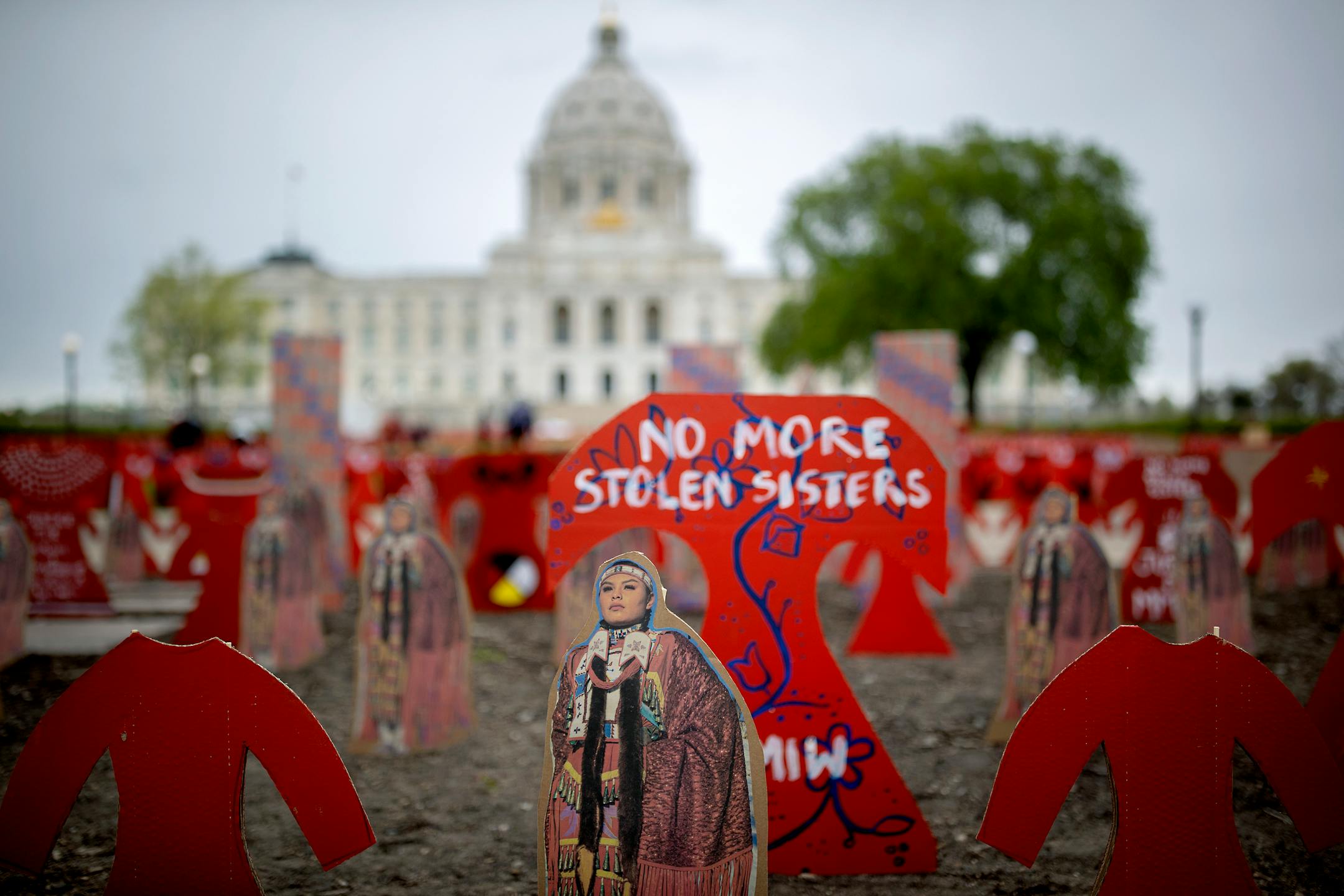
November is National Native American Heritage Month. While we are proud to celebrate our heritage and culture, we believe it's important to acknowledge and demand action to address the impacts of historical trauma and colonization on American Indian people in Minnesota, including the violence perpetrated against Indigenous women and girls.
Nearly a year ago, Minnesota's Task Force on Missing and Murdered Indigenous Women (MMIW Task Force) submitted its final report to the Minnesota Legislature and Gov. Tim Walz with mandates to address and end the violence experienced by Minnesota's Indigenous women and girls. We've made important progress since then, but the work has only just begun.
Examining root causes, systemic problems and potential solutions to violence against Indigenous women and girls in Minnesota
In any given month, 50 or more American Indian women and girls are missing in Minnesota. Although we comprise less than 1% of the state's population, we account for 8% of all murder victims. Indigenous women and girls disproportionately experience violence and exploitation, as well as incarceration, homelessness, child protection system involvement, and addiction. Systemic factors — racism, sexual objectification of Indigenous women, and historic trauma Indigenous peoples experienced due to colonization — contribute to our increased risk of experiencing violence.
The MMIW Task Force report and presentations have helped raise awareness about the MMIW injustice and have led to critical first steps toward addressing it.
Putting data into action: Missing and Murdered Indigenous Relatives Office
Following the first recommended action from the task force, one of this article's co-authors, state Sen. Mary Kunesh — with state Rep. Heather Keeler, Yankton Sioux — authored legislation, passed during the 2021 session, to create the Missing and Murdered Indigenous Relatives (MMIR) Office in Minnesota, which is the first of its kind across the 50 states. That office will collaborate with Minnesota state agencies to build accountability in collecting data related to the MMIW injustice, enhancing intergovernmental communication and collaboration, and facilitating resources and services to reduce and prevent violence in Indigenous communities. The MMIR Office will also continue to raise awareness about and address the systemic causes of the MMIW injustice.
The MMIR Office will work in partnership with Operation Lady Justice at the federal level, as well as with neighboring states to share information and strengthen data sharing capabilities nationally.


