NEW YORK — Carnegie Hall is happy to flaunt its treasures. Benny Goodman’s clarinet is prominently displayed in its in-house museum, as are conductor’s batons once waved by Leonard Bernstein and Arturo Toscanini. But hidden away on the seventh floor is an acid-free paperboard box that the hall’s archivist, Kathleen Sabogal, keeps unlabeled.
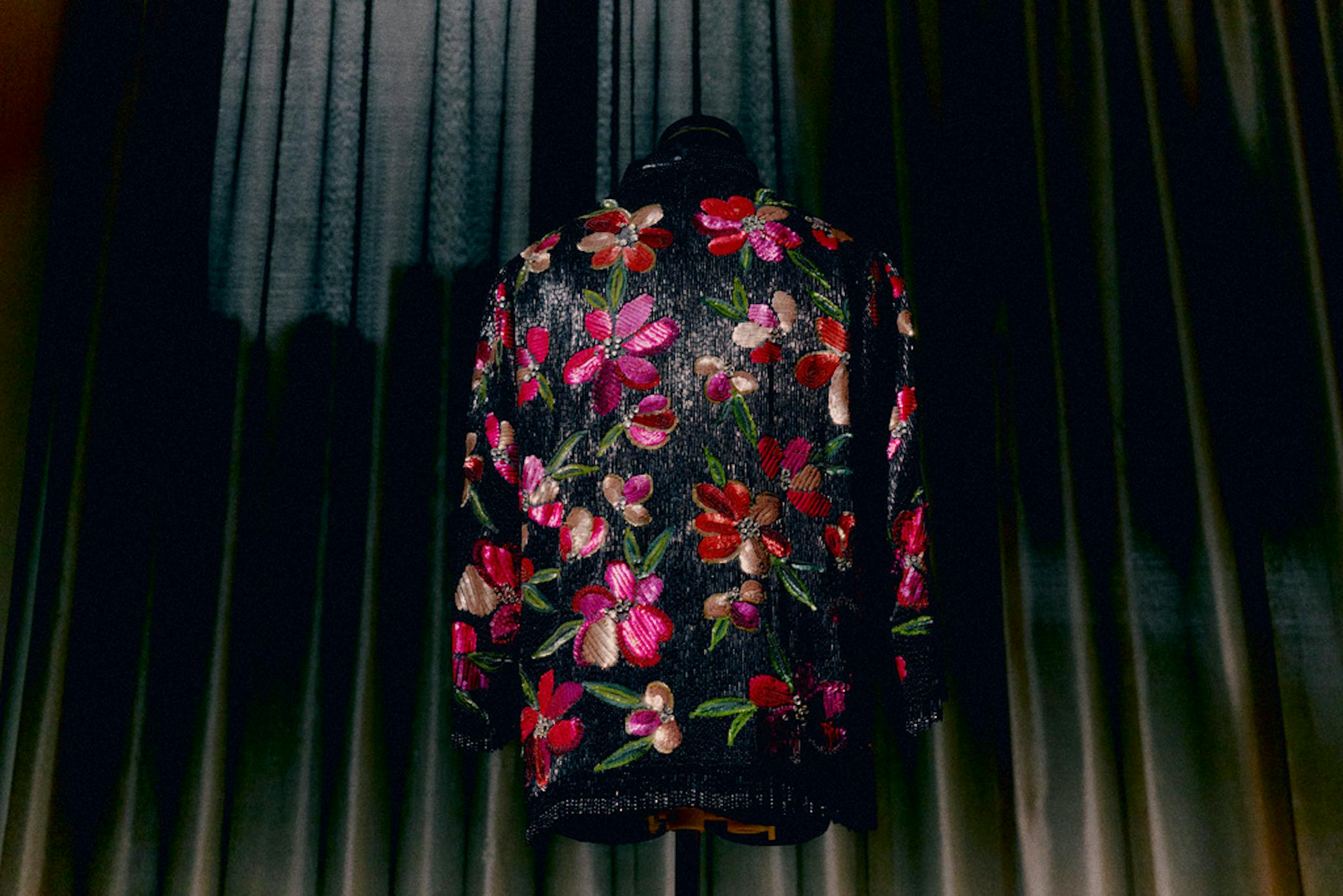
“I kind of put it like ‘Raiders of the Lost Ark,’” Sabogal said as she pulled the box off its shelf in the fire-resistant Archives Storage room. Inside: a silk evening jacket worn by Judy Garland during her Carnegie Hall debut, perhaps the most storied performance in the venue’s 134-year history.
In a review of the April 23, 1961, concert, the New York Times compared it to a “religious ritual,” referring to Garland as “the goddess” and noting the “frenzies of exaltation” and “pandemonium” that greeted her renditions of “The Trolley Song” and “Over the Rainbow.”
Discussions of that night tend to elicit a certain amount of breathlessness (see above), but facts are facts: The performance was attended by a number of stars, including Julie Andrews, Lauren Bacall, Richard Burton, Henry Fonda and Rock Hudson. A live recording of the show spent 13 weeks on the top of the Billboard album chart and earned Garland the Grammy for album of the year.
Whether or not the 2½-hour performance was, as Capitol Records crowed at the time, “the greatest evening in show-business history,” it symbolized a turning point in Garland’s career. Only a year earlier, she was discharged from Doctors Hospital in Manhattan, where she had received a diagnosis of acute hepatitis and had been told she might never work again.
In a career rife with comebacks, Carnegie Hall was perhaps the biggest of them all. And, if her family’s accounts are to be believed, the singer credited at least some of her good fortune to her “lucky jacket.”
Because Garland wore it during the second half of the show, it has become known as the Act II jacket. It was the work of the Seventh Avenue studio of Norman Norell, a designer described as the “American Balenciaga” for his couture-level craftsmanship.
A fringe of glass bugle beads trims the hem, giving the garment a dash of swish. Thousands of sequins, layered like disks of squash in a ratatouille, form the petals of blossoms that bloom across the chest, shoulders and sleeves. Some have suggested that the flowers may be poppies — a reference to Garland’s most famous role, Dorothy Gale, a windswept Kansan who traipses through a poppy field on her way to meet the Wizard of Oz.