

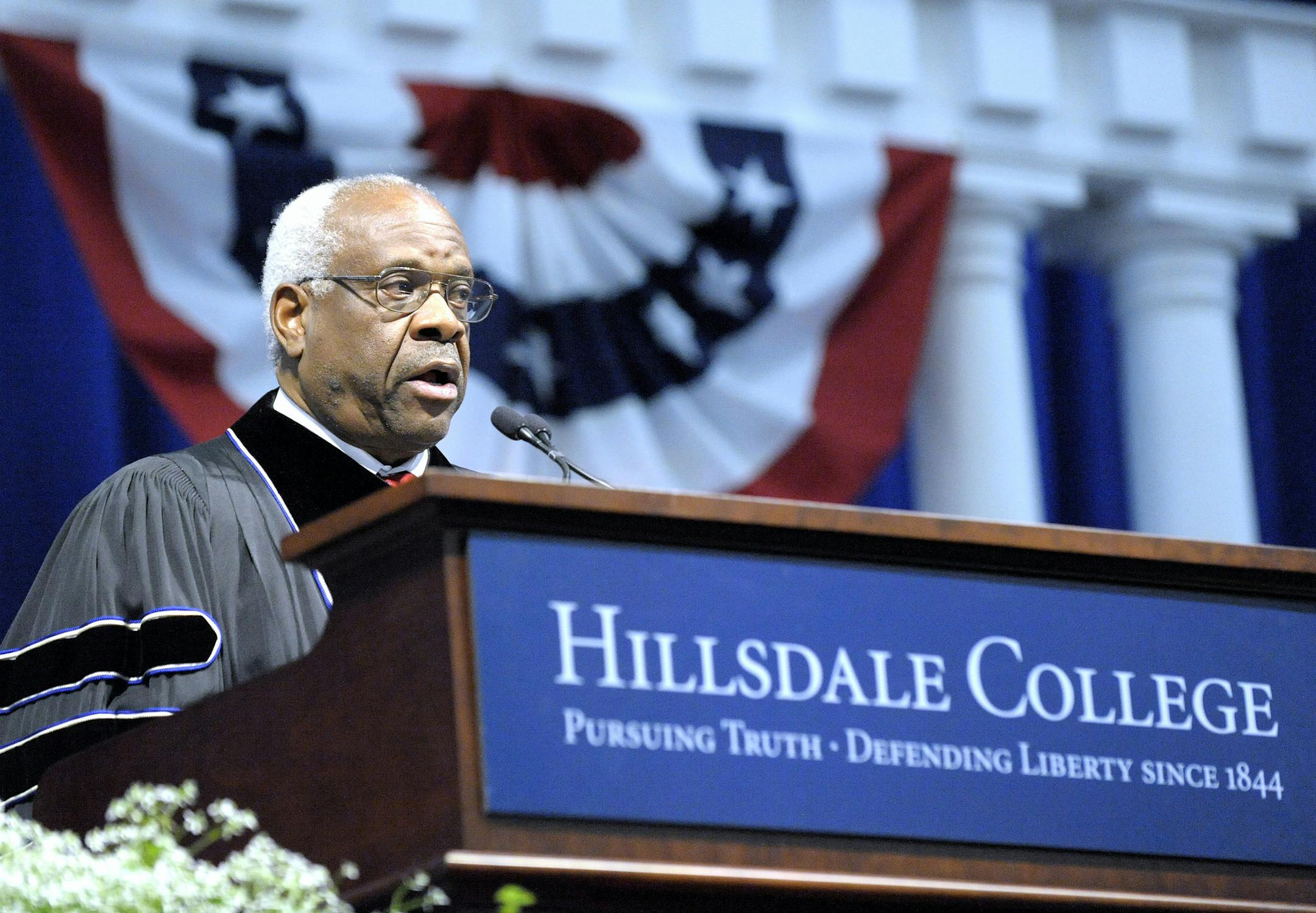
As law professors go, I'm pretty sympathetic to Clarence Thomas's constitutional jurisprudence. It's not that I agree with him, which I almost never do. But I think he genuinely tries to apply originalism using historical methods. And when it comes to the law of race, where again I disagree with Thomas, I respect his effort to give voice to a distinctive form of conservative black nationalism that insists on color blindness because it's better for blacks.
What's more, I respect what I've seen of Thomas personally. I've never forgotten seeing him greet by name the members of the maintenance staff at the Supreme Court who polish the miles of brass on the court's many staircases. Once I asked him about it, and he said he sometimes felt he had more in common with them than with the other justices. I didn't think it was a line then, and I don't think so now.
But today I confess to feeling a bit upset about Thomas's solo dissent in Foster vs. Chatman on Monday, a decision that reversed the capital conviction of a black man from Georgia because the prosecution used its peremptory challenges to strike all the black members of the jury pool.
Thomas is from Georgia. The facts of the case, going back almost 30 years, demonstrate egregious racial stereotyping by the prosecution. Yet Thomas was unwilling to join his seven colleagues, among them some serious conservatives, in striking down the conviction.
Why, exactly, did Thomas bend over so far backward to argue for sending inmate Timothy Foster to his death? And is there something — anything — admirable that can be gleaned from his dissenting opinion?
There was a technical issue at stake in the case — namely, whether the state Supreme Court decision denying the prisoner's claim was based on state or federal law. On this point, Thomas's view is defensible, if unconvincing.
Foster was convicted of the heinous sexual assault and murder of Queen Madge White in Rome, Ga., in 1986, almost 30 years ago. He appealed through the Georgia courts, relying among other arguments on the claim that the prosecution systematically excluded all the black jurors in violation of the U.S. Supreme Court's opinion in Batson vs. Kentucky, a landmark 1986 decision.
The Georgia courts denied Foster's claim because he couldn't prove the exclusions were motivated by race. But when Foster re-presented his claim in his post-conviction habeas corpus proceeding, he had more evidence to support it. Foster now had documents showing that the prosecution actively identified and marked the black prospective jurors (with a capital B) and excluded them from the jury based on their race.


