

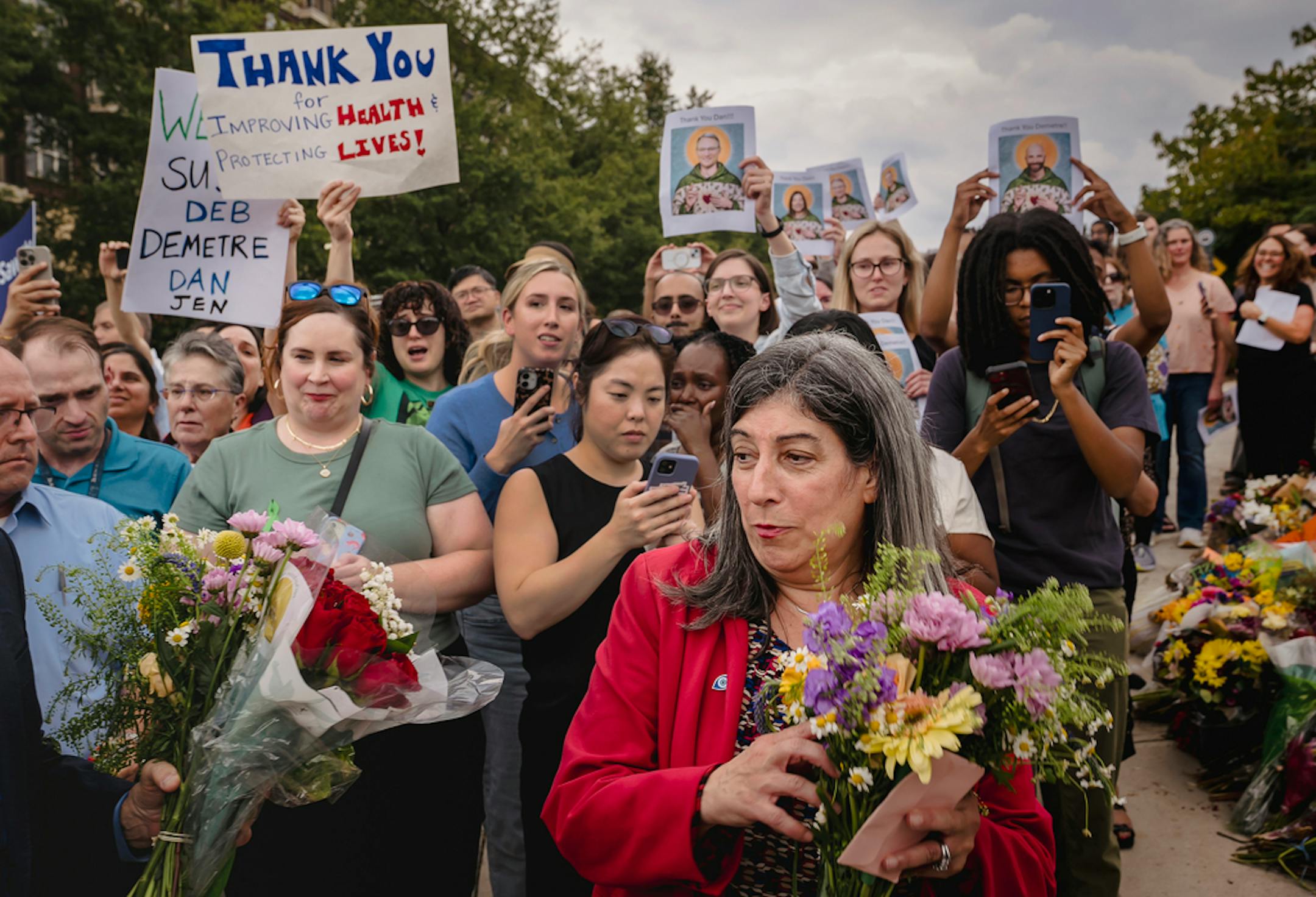
Senior officials resigned this week from the Centers for Disease Control and Prevention, revolting against efforts to upend U.S. vaccine policy that they warned could lead to resurgences of preventable disease. But months of upheaval at the agency have already undercut its work to shield Americans from harm, officials and public health experts said, with the worst possibly yet to come.
Under the Trump administration, the agency has slashed billions in funding, shed hundreds of employees and rolled back programs to help Americans quit smoking and to prevent infant and maternal deaths, including support for monitoring sudden unexpected infant deaths. Funding for programs to prevent drowning, youth violence and sexual assault is in limbo, while they are under review by the U.S. DOGE Service.
The consequences of some of these cuts have been muted or delayed because they have yet to take effect or have been halted by courts. But public health workers and experts say the CDC’s troubles could grow worse as the agency loses career staff who could intervene. And they say a bigger crisis in credibility is already unfolding.
“I never have seen an instance of an advanced, affluent country with among the finest scientific resources and leaders in the world be under assault, not from small pockets of the public or people who have unusual beliefs, but from the government itself,” said Allan M. Brandt, a public health historian at Harvard University. “This has just been radically unprecedented.”
Months of tension erupted this week with the ouster of the agency’s director, Susan Monarez, and resignation of senior leaders. In a rare moment of open defiance against the Trump administration, CDC staffers rallied Thursday in support of the departing leaders outside their Atlanta campus.
Health and Human Services Secretary Robert F. Kennedy Jr., a longtime anti-vaccine activist who has repeatedly attacked the credibility of CDC, sent an email to employees late Thursday telling them he wanted to restore trust and credibility to the agency.
“Your daily efforts — often unseen — save lives,” he wrote. “Reform does not diminish your work; it strengthens it.”
Dozens of CDC employees in recent months have told the Washington Post that Kennedy has instead weakened the agency. Most spoke on the condition of anonymity to avoid retaliation. With the agency at a crossroads, those workers and public health experts worry that many Americans might not notice the CDC’s unraveling until it’s too late.


