

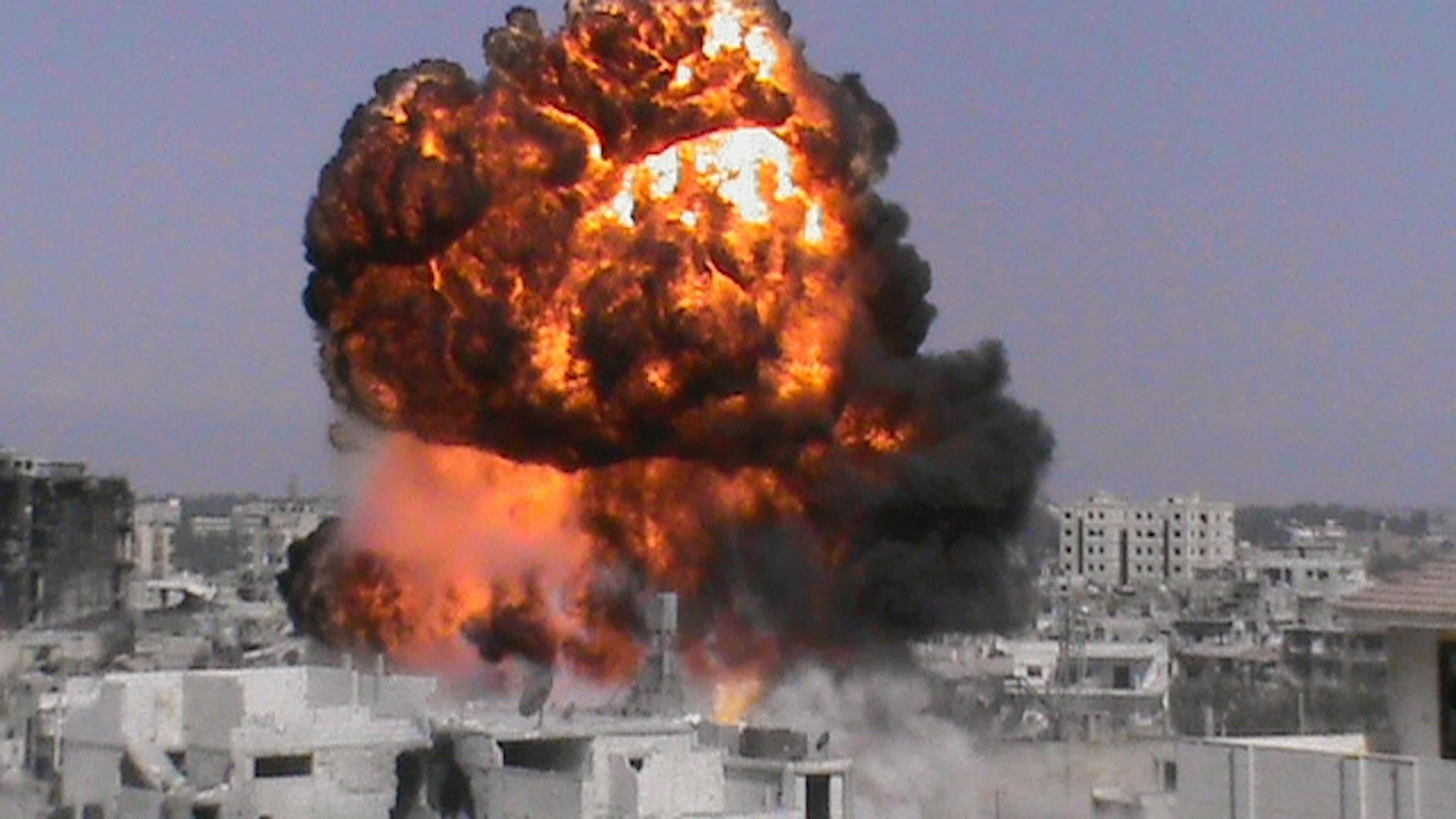
Calls for a U.S. military intervention in Syria have dominated the conversation in conventional and social media. Two simple and effective arguments are being advanced. The first, and most compelling, is that the unfolding humanitarian catastrophe befalling the Syrian people mandates international action. The second is based on realpolitik: Supporting the just and winning cause of the Syrian rebels will put the United States in good standing with the regime that emerges from the conflict.
Both arguments are wrong.
The humanitarian crisis in Syria is undeniable. The murderous regime led by Bashar Assad has killed thousands of men, women and children. Assad's regime is fighting for its life, and it has nowhere to go. The opposition has come alive after suffering through two generations of oppression and banal evil. But this is a civil war, not a genocide. By definition, civil wars are violent, some more than others. There are also at least two parties to the conflict. Regardless of the odiousness of the Assad regime, a sizable portion of the Syrian public, although a minority, remains attached to it.
Any U.S. military engagement in Syria would have two important ramifications.
First, it would cause casualties, including civilian ones. One should not underestimate how much bombing would be required just to suppress anti-aircraft installations so that the U.S. Air Force could operate in support of the rebels. Furthermore, suppression is not a one-off campaign. It has to be continuous, and the regime is likely to hide many of its air defenses in populated areas, provoking more civilian casualties.
Second, U.S. participation in another war in a Muslim country will serve to only deepen the perception that Washington is trigger-happy about dropping bombs on Muslim populations and regimes. Two years after the conclusion of any U.S. intervention in Syria, what people will remember is that women and children died under American bombardments.
Taking sides and delivering power to one group does not always induce the winners to be magnanimous. Iraq is the perfect example of this. It's sad to say, but civil wars have to be fought and won by locals -- and it is generally only after experiencing the horrors of war that the participants learn to compromise.
U.S. foreign policy has always been more preoccupied with America's place and role in the world than with the countries we engage. Our foreign-policy professionals care deeply about the rest of the world but often for the wrong reasons; they operate as if they alone can reshape outcomes and be the agents of change. Inaction is not in their lexicon.


