

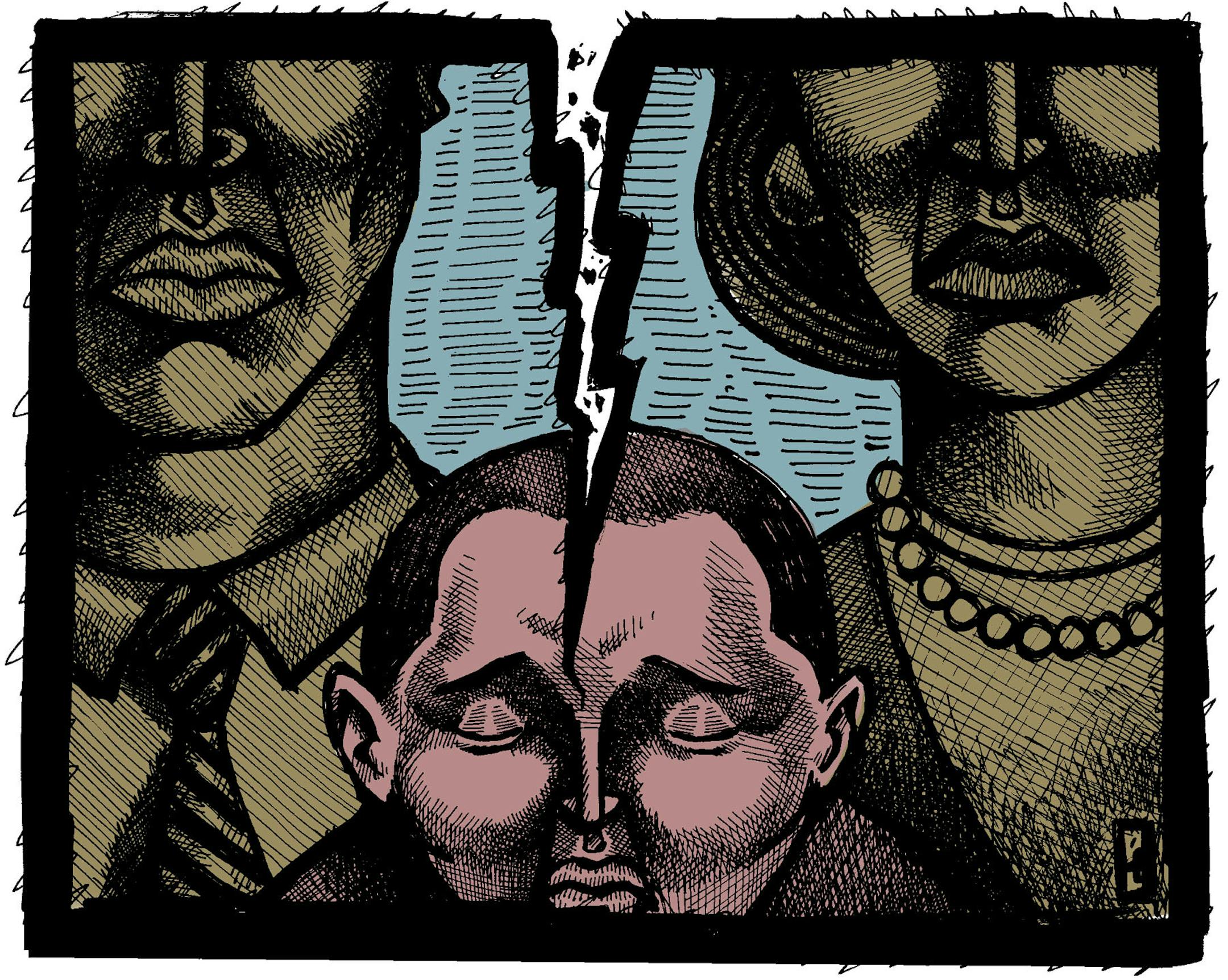
The breakdown of the black family is a sensitive topic, though it's not new and it's not in dispute. President Obama, who grew up with an absent father, often urges black men to be responsible parents.
Nor is there any doubt that African-American children would be better off living with their married parents. Kids who grow up in households headed by a single mother are far more likely than others to be poor, quit school, get pregnant as teens and end up in jail.
But these facts were once inflammatory. Fifty years ago next month, a Labor Department official named Daniel Patrick Moynihan published a paper titled, "The Negro Family: The Case for National Action," which argued that "a tangle of pathology" afflicting black communities had emerged because "the Negro family in the urban ghettos is crumbling." His key fact: Nearly one-fourth of black babies were born to unwed mothers.
He was accused of blaming the victim, but he was onto something important. Today, Moynihan, later a liberal Democratic senator, is invoked by conservatives to explain why African-Americans' progress has been so slow.
Jason Riley, a senior fellow at the Manhattan Institute, claims that "family structure offers a much more plausible explanation of these outcomes than does residual white racism." Fox News host Bill O'Reilly is more blunt. "The reason there is so much violence and chaos in the black precincts is the disintegration of the African-American family," he said last year. "White people don't force black people to have babies out of wedlock."
They're right, up to a point. It's far from optimal for 72 percent of black children to be born out of wedlock. Social ills would diminish if there were more stable, two-parent black households.
The problem with this line of thinking is that it's incomplete. Worse, it's often used to gloss over intractable realities that continue to hinder black progress.
It's true that whites don't force blacks to have children out of wedlock. But it's wrong to suggest that whites bear no responsibility. Poverty is often the result of lack of access to good jobs or any jobs, and discrimination by employers didn't stop in 1965 — and hasn't stopped yet.


