

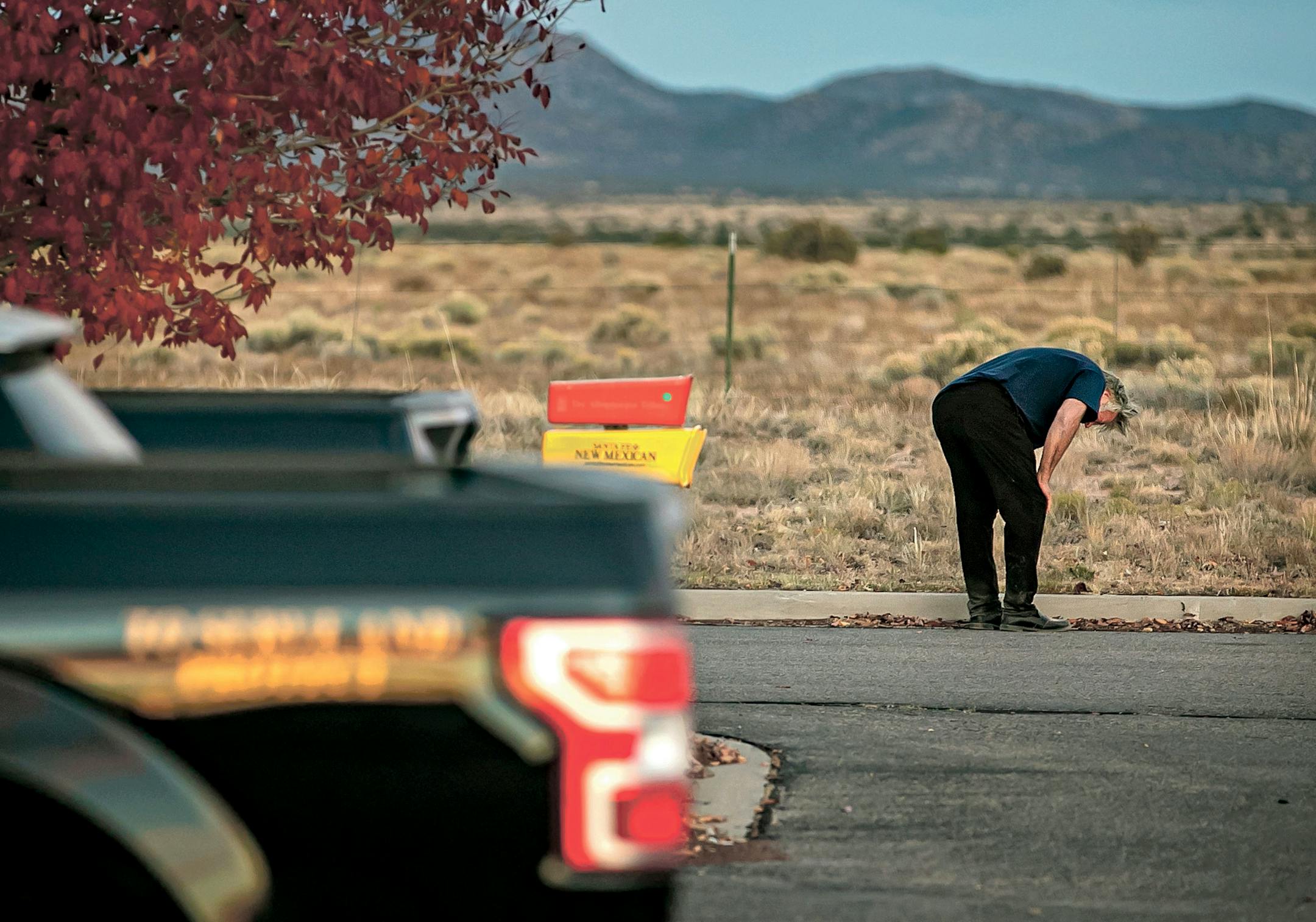
Even as he is surrounded by loving friends and family, actor Alec Baldwin may well feel all alone in the world. In a split second, he learned how capricious life can be, and how we have far less control over ourselves and our world than we like to believe.
By his own account, Baldwin is traumatized, in the grip of shock, grief and guilt after firing a prop gun last Thursday on the New Mexico set of the film "Rust," killing the film's cinematographer and injuring the director. The actor had been assured the gun did not contain live ammunition, law enforcement officials said.
Horrible images of the shooting and the aftermath are likely dominating his consciousness. He may feel numb or spacey, then crash back down to earth in a sea of despair. In a statement on Twitter on Friday, Baldwin wrote, "There are no words to convey my shock and sadness regarding the tragic accident that took the life of Halyna Hutchins, a wife, mother and deeply admired colleague of ours."
Those who care about him are probably trying to relieve his distress by saying things that may be true but are beside the point such as "it wasn't your fault," or "it was just an accident." The fact is, he was the agent of terrible harm. It is a heavy burden to bear, apart from the potential legal ramifications of being one of the film's producers.
I know this because I, too, am an unintentional killer. Many years ago, an 8-year-old boy named Brian dashed in front of my car. I tried to swerve, but I hit him. He died before he reached the hospital.
As part of my own healing, I formed a nonprofit called Accidental Impacts, an organization devoted to helping those who have unintentionally killed or seriously injured other people. Our research indicates that at least 30,000 people in the U.S. alone accidentally kill someone each year. So many of them are devastated. Yet they may keep their thoughts and feelings to themselves because they don't believe they deserve support, they fear retaliation or they cannot find support.
I do not mean to suggest that those who accidentally kill another are victims. We are not. But neither are we evil or uncaring. These tragedies do not define us. In fact, the depth of our despair is evidence of our caring and humanity.
Many people who have inadvertently killed someone and seek support from Accidental Impacts have carried the weight of trauma, guilt and loneliness for decades. But we can and do find our way back to peace.


