

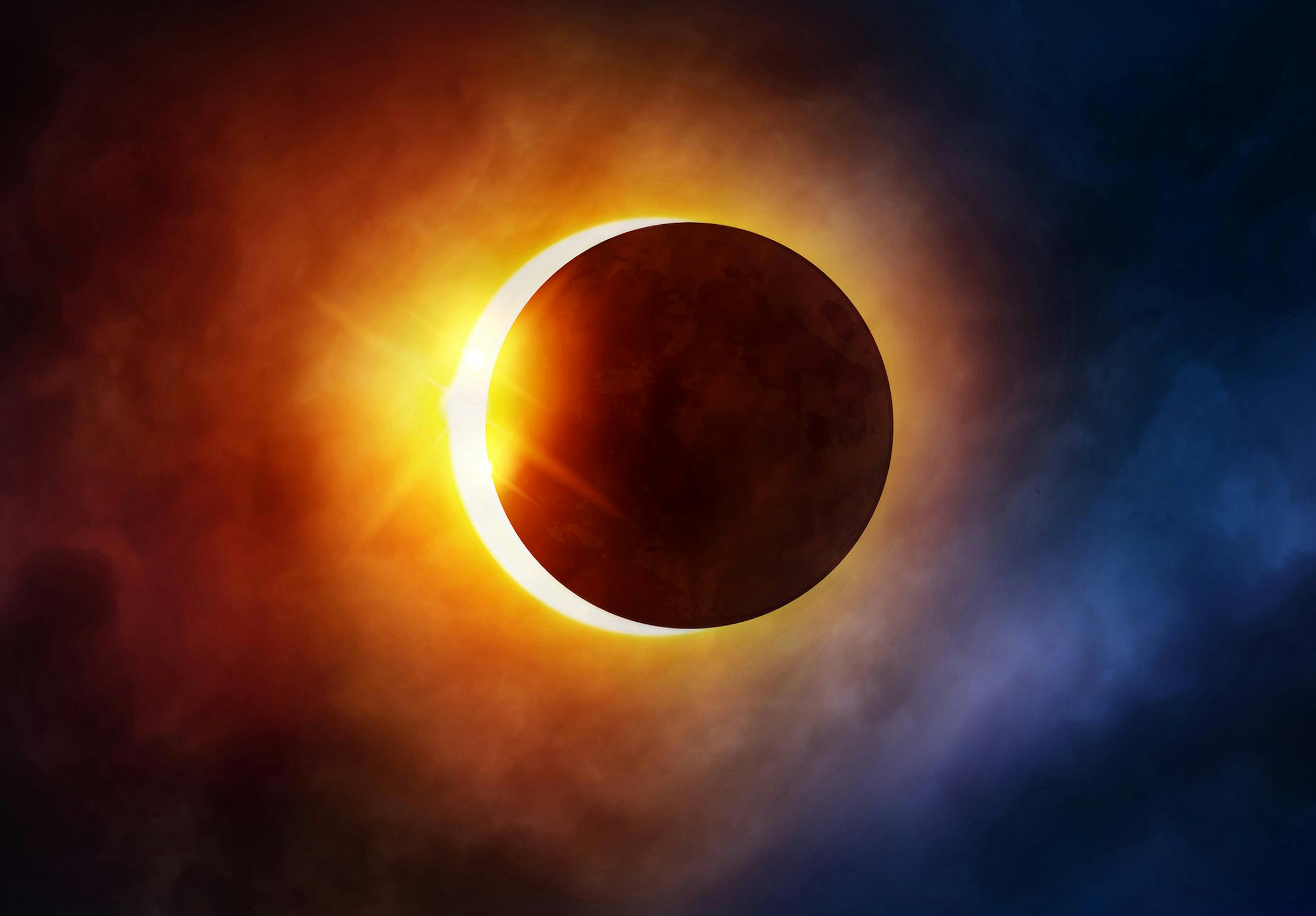
On Monday, there will be a total solar eclipse in the United States. It is being called the American Eclipse because it will be viewable only in the United States. Weather permitting, it will be seen from coast to coast, but totality will be not visible in Minnesota.
Partial eclipses are interesting, but they are not the same magnificent experience that has fascinated humankind since the planets were first set in motion.
On Aug. 11, 1999, I was in Salzburg, Austria. I had traveled there with the Wright County Chamber Chorus on a tour to Austria and the Czech Republic.
The headlines in Austrian and German newspapers announced the day's event: "Die totale Sonnenfinsternis" — the total eclipse of the sun. "Die Nacht am Tag" — night in day.
Salzburg is home to nearly 150,000 people, and in summer the population swells to three times that number with tourists drawn to one or both of its well-known attractions: Mozart's birthplace and several settings featured in "The Sound of Music." Long lines form outside the house where Mozart was born, and even longer lines form at the checkout counters in gift shops.
That day in August 1999, the streets and sidewalks of Salzburg were packed as thousands jostled for places to experience the astronomical thrill of a total solar eclipse. Austria was an especially popular place for eclipse watching since the weather forecast promised a full day of clear skies. People in other European countries were to be disappointed by clouds and rain unless they were able to make last-minute travel arrangements.
In Salzburg, the total eclipse was to begin at 12:41 p.m. Late in the morning, shops closed, outdoor lights were extinguished and all traffic lights were held on red. The moon, in its position between the Earth and the sun, would gradually block the sun, turning day into night. The gradual covering would take about 75 minutes; the phenomenon known as totality would last 2 minutes and 40 seconds. And then the gradual uncovering would last another 75 minutes.
With the shops closed and no traffic moving, people from all over the world stopped their shopping and their sightseeing and simply stood. They put on their eclipse-watching eyewear and waited for the drama to begin. They lined streets and bridges and filled parks, staying away from trees and buildings that would obstruct their view.


