

Anyone who still needs proof of how the Supreme Court is changing need look no further than the single decision the justices handed down this week. The court held that a dispute that had become moot in the usual sense of that word — the problem was resolved before the case even went to trial — could be litigated nonetheless, because there was still something at stake: the one dollar the plaintiffs were seeking as damages for an asserted violation of their First Amendment right to free speech.
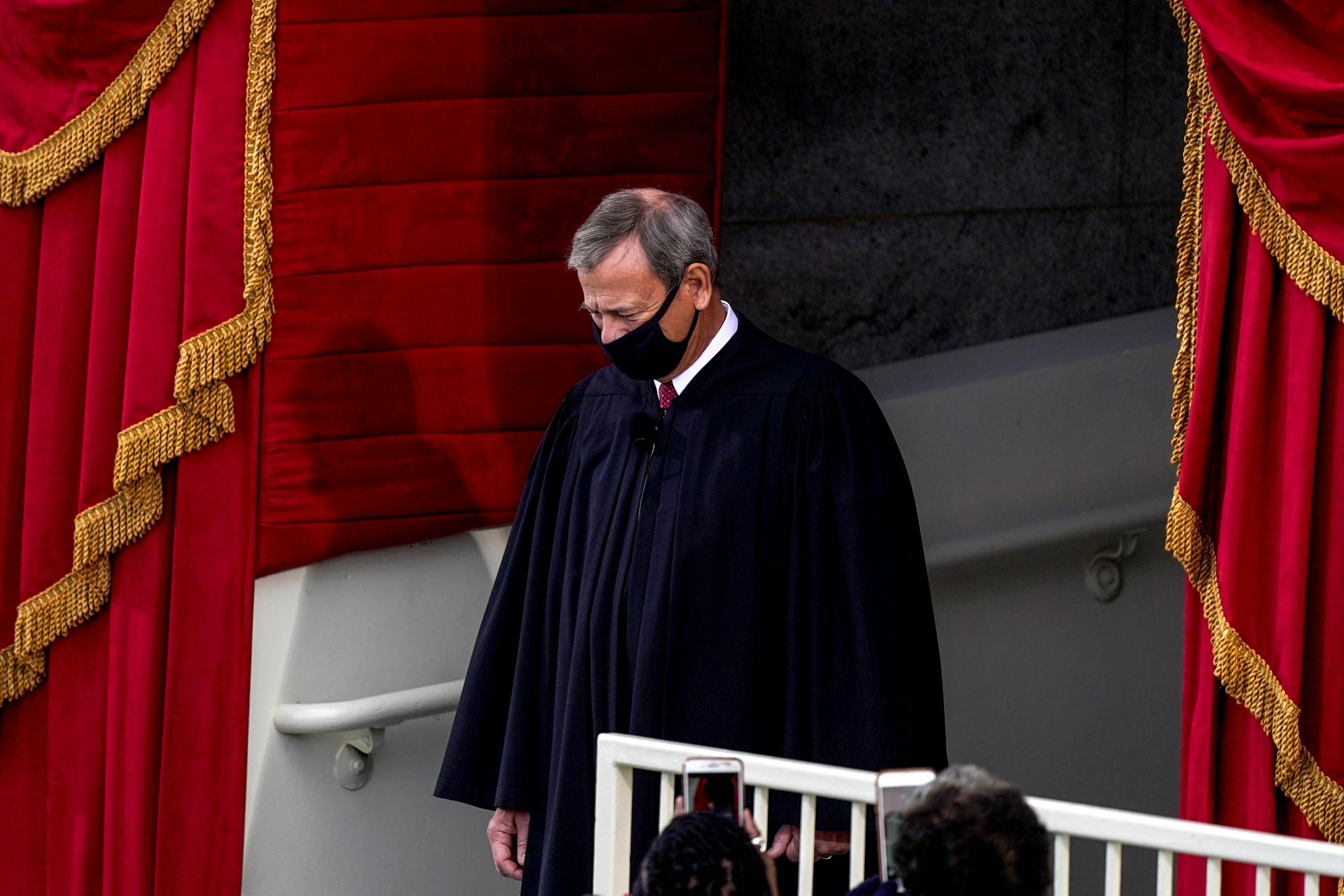
The holding was surprising in its generosity to the plaintiffs, as was the 8-to-1 vote, but that's not what made Uzuegbunam v. Preczewski remarkable. Rather, it was the identity of the lone dissenter: Chief Justice John Roberts.
In more than 15 years on the court, the chief justice had never before filed a solitary dissenting opinion. In fact, he has rarely voted in dissent at all, and has written dissenting opinions even less frequently. During the term that ended last July, he was in the majority 97% of the time. No chief justice since Fred Vinson, during the 1949 term, has displayed that degree of alignment with his court. To the extent that the Roberts court had a center of gravity, Chief Justice Roberts was it.
Justice Amy Coney Barrett's arrival in late October changed all that, and quickly. A few minutes before midnight on the night before Thanksgiving, the court issued an order suspending the indoor attendance limits that Gov. Andrew Cuomo had placed on religious services in areas of New York with high rates of Covid infection.
Back in May and again in July, the court had rejected similar challenges to attendance limits set by governors in California and Nevada. In each of those cases, the vote was 5 to 4, with the chief justice in the majority and the dissenters in both cases the four justices to his right: Clarence Thomas, Samuel Alito, Neil Gorsuch and Brett Kavanaugh.
But by Thanksgiving eve, the lineup was different. There were now five justices to John Roberts's right. He was in dissent, along with three allies from the earlier cases, Stephen Breyer, Sonia Sotomayor and Elena Kagan. One crucial ally was missing: Justice Ruth Bader Ginsburg, who had died in September and was replaced with shocking speed by Justice Barrett.
The case this week was of course very different from the COVID cases, which in the conservative justices' view pitted the unbridled power of the state against the First Amendment right to free exercise of religion. On the surface, at least, last week's case was much less fraught, seemingly taken from the back pages of a casebook on civil procedure or federal-court jurisdiction rather than from today's headlines. But its bread-and-butter nature makes it, perhaps even more than the COVID cases, a fitting symbol of the chief justice's abrupt reversal of fortune.
Beyond the personal, the case illuminates a significant doctrinal shift on the court, one that I think goes far to explain the chief justice's isolation from his fellow conservatives. The case was about standing: whether once a plaintiff in a lawsuit achieves the substantive result he asked for, he can keep the lawsuit alive as long as a request for nominal damages — say, one dollar — remains at stake.


