

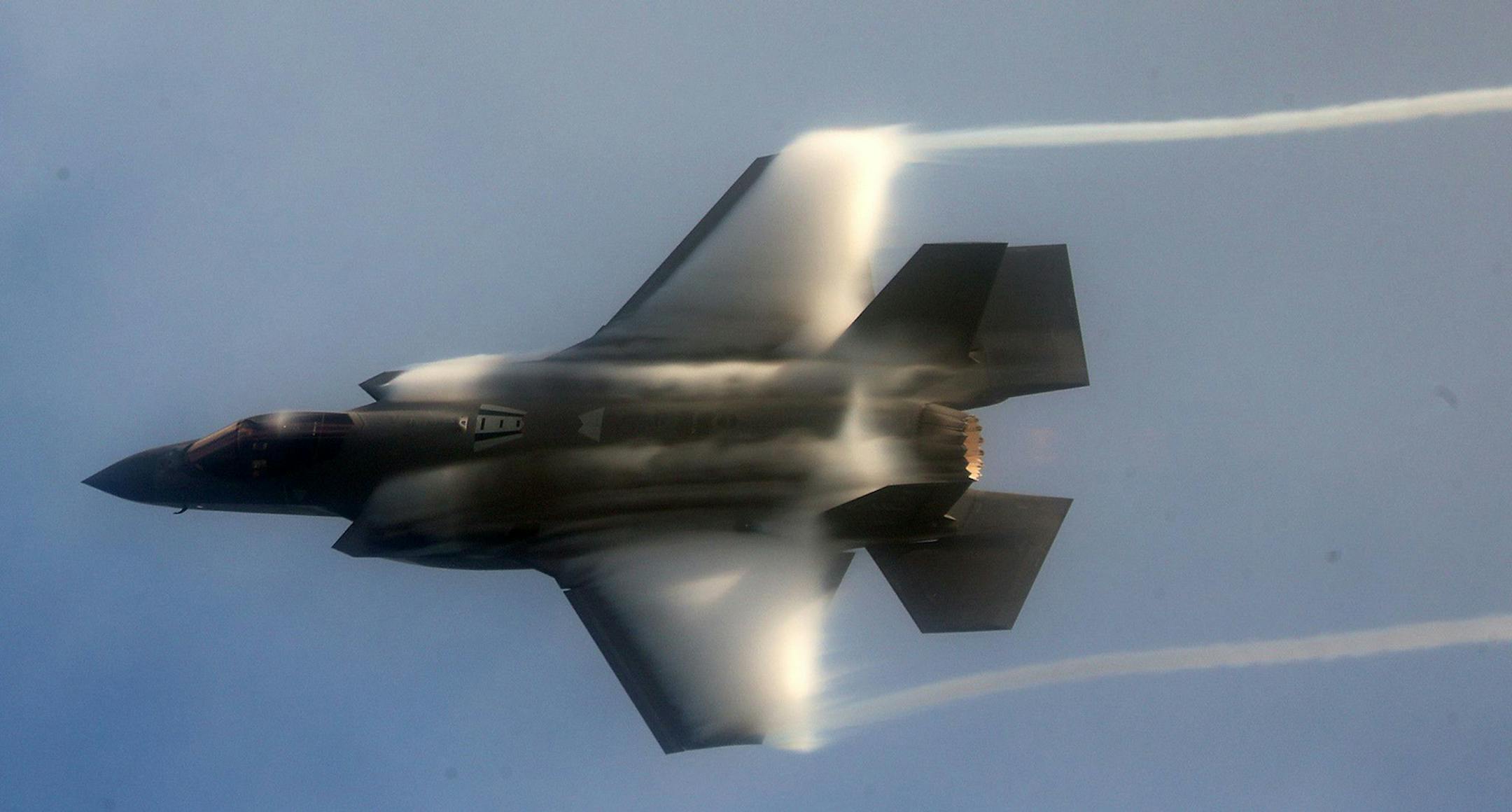
A Ferrari is surely a wonderful sports car, but let's be honest: Most of us couldn't afford the day-to-day maintenance, let alone the sticker price, and these beautiful creatures are hard to drive on America's pothole-plagued streets, and a massive pain in the butt to repair when they break down. So you can imagine the raised eyebrows earlier this year when a top U.S. Air Force general compared the F-35 Lightning II stealth fighter jet — decades and hundreds of billions of dollars into a lifetime that will cost taxpayers $1.7 trillion — to that Italian dream machine.
"I want to moderate how much we're using those aircraft," Gen. Charles Q. Brown, the Air Force chief of staff, told Pentagon reporters about the Lockheed Martin-built fighter in February. "You don't drive your Ferrari to work every day, you only drive it on Sundays. This is our high end, we want to make sure we don't use it all for the low-end fight ... We don't want to burn up capability now and wish we had it later."
In so many words, Brown was admitting that one of the most expensive weapons systems known to humankind is a failure — to be kept under a heavy tarp in a padlocked garage six days a week. His words riled critics like William Astore, a retired Air Force lieutenant colonel who today writes frequently about Pentagon waste. That's because the F-35 was sold to the public in the early 1990s not as a luxury item but as a lower-cost, everyday workhorse fighter jet. He said the flaws now deeply embedded in America's military-industrial complex — the Pentagon's demands for the newest gadgets and a defense contractor's skill at upping the ante — "is how you end up with a Ferrari instead of a Camry ... or even an Audi."
The massive swing-and-a-miss that is the F-35 — which already has the Pentagon dreaming of a new, new next-gen fighter that might actually be cheaper and easier to use — is just one symptom of a much greater problem: In spending more on war-related costs than the world's next 10 nations combined, the U.S. wastes billions on weapon systems that are ineffective and often not even needed. This dollar drain hasn't let up even as America's highways fill up with those Ferrari-foiling potholes and bridges collapse, while the world's richest nation falls behind on everything from high-speed rail to solar energy to teaching our kids.
But the obscene failures of the military-industrial complex that Dwight Eisenhower tried to warn us about way back in 1961 seem particularly frustrating this spring, as President Joe Biden begs Congress to help him pay for the $2 trillion infrastructure plan he unveiled Wednesday in Pittsburgh. His scheme aims to not only address those decades of shameful neglect of highways but also stop poisoning kids with lead in drinking water, as happened in Flint, Mich., and tackle 21st-century problems like climate change — but the fight will be over how to pay for it.
There's nothing fundamentally wrong with Biden's idea, which is to raise corporate taxes back to 2017 levels, before President Donald Trump's irresponsible tax cut that — studies have shown — may have helped slightly fatten the bottom line for Big Business but did little for the everyday worker. But the Chamber of Commerce crowd and their GOP handmaidens on Capitol Hill will fight this with every fiber of their being, and even with Democrats using the 51-vote reconciliation tool there is no guarantee the badly needed plan will pass.
Meanwhile, the money blown on that sleek fighter jet behind the padlock on America's garage could have — OK, with help from a good accountant, perhaps — painlessly paid for 85% of what the Biden administration is seeking to do here. Or, what if we went crazy and tackled senseless Pentagon waste and raised taxes on corporations and on billionaires like Jeff Bezos and used the savings for our other massive needs, like making community college and public universities free to attend? But here's the deal, folks — Uncle Joe isn't going there, not yet.
The new administration has already signaled to Capitol Hill that its next Defense Department spending plan slated for later this spring will be essentially "flat" — if that word can be used to describe a bloated Pentagon budget of about $704 billion to $708 billion. The Biden plan would ignore a letter from 50 House progressives pleading for real cuts to instead invest "in diplomacy, humanitarian aid, global public health, sustainability initiatives, and basic research." But of course there's also pressure from congressional conservatives who want to spend even more on weapons, to accelerate a new cold war with Russia but especially with China.


