

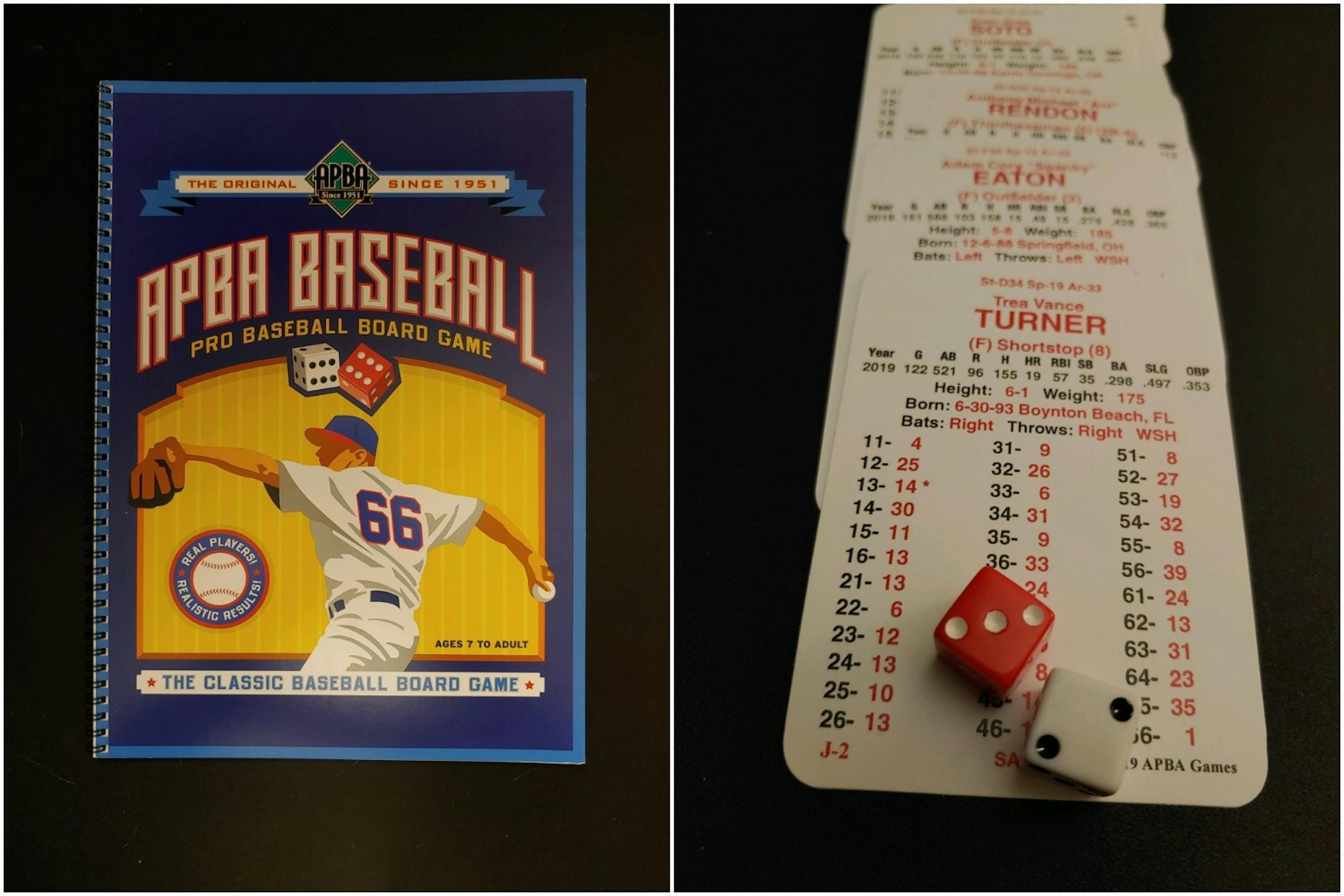
In my parents' home in West Pittston, Pa., a small town about 10 miles from Scranton, the dining room is in the middle of the first floor.
This is where my dad, Chet, will post up and occupy half the table for a couple hours at a time — and send the sound of several rapid rattles of a dice shaker bouncing off the walls of the downstairs.
Hundreds of them. Click, click, click, click, click. Then thump, out the dice fall onto his APBA baseball board for him to translate into an out, hit or home run.
Ever since he was a kid, my dad, now 71, has owned the APBA game — which is similar to another popular dice game, Strat-O-Matic. Dad, however, grew up on APBA (pronounced APP-buh). He hasn't stopped now that he's still (impressively) fending off gray hair.
As he's searched for ways to pass the time while under a stay-at-home order, he's been playing it even more. You might think the sound of the rolls would get annoying, but Dad has played it so much it's like white noise to anyone else in the house.
The company (short for American Professional Baseball Association) was located near Lancaster, Pa., before moving its headquarters to Alpharetta, Ga., and still sells the game (in other sports, too) and provides an updated set of players cards for every season. Dad still buys them. APBA even has an annual tournament in which diehards can play against each other with their favorite teams, new or old.
APBA is simple, and the rhythms of the game become familiar with repetition. Every player on a team has his own card. On that card is his defensive rating, whether he's a slow, average or fast runner and numbers that correspond to the 36 different two-dice combinations you can roll when he is up to bat.


