
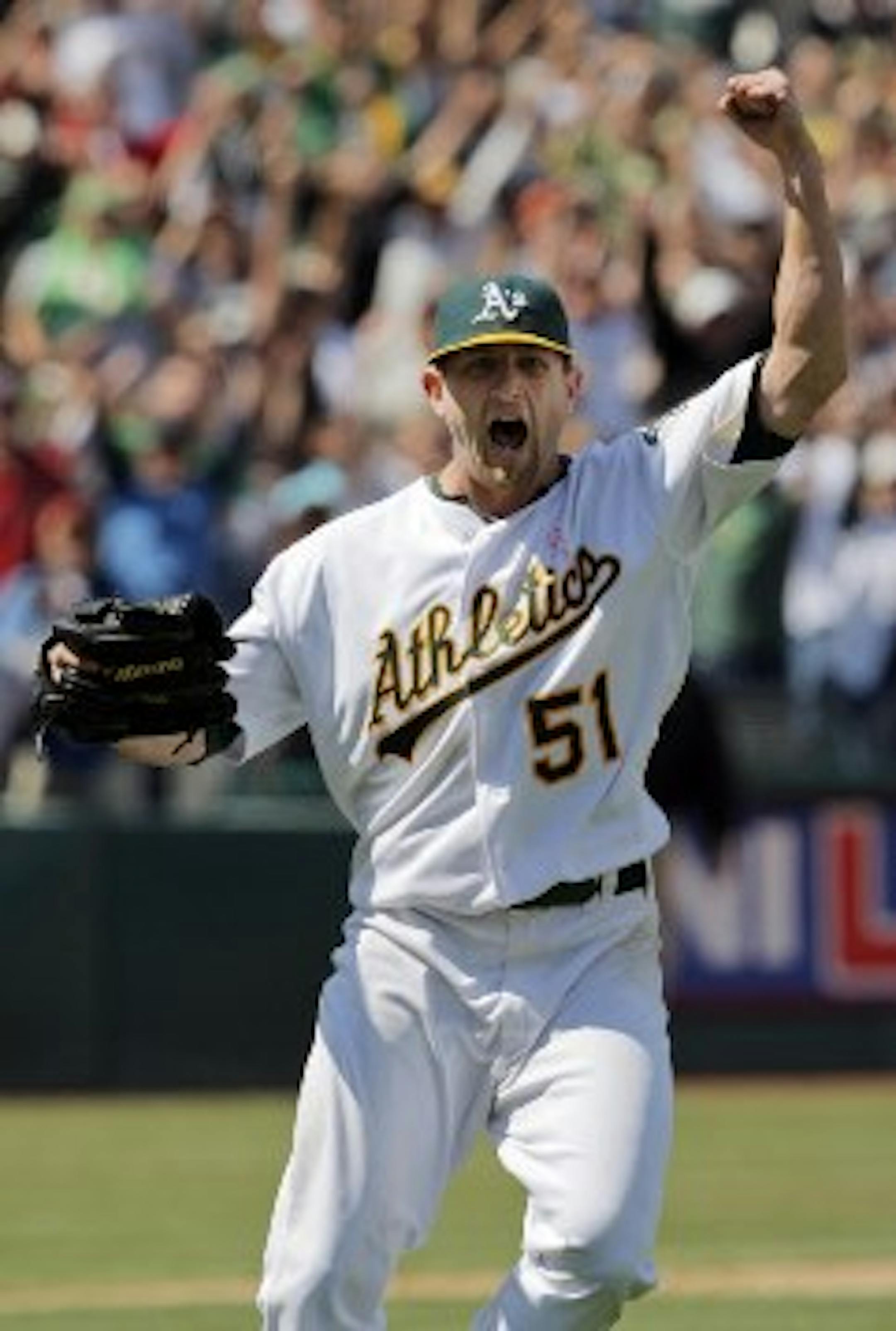
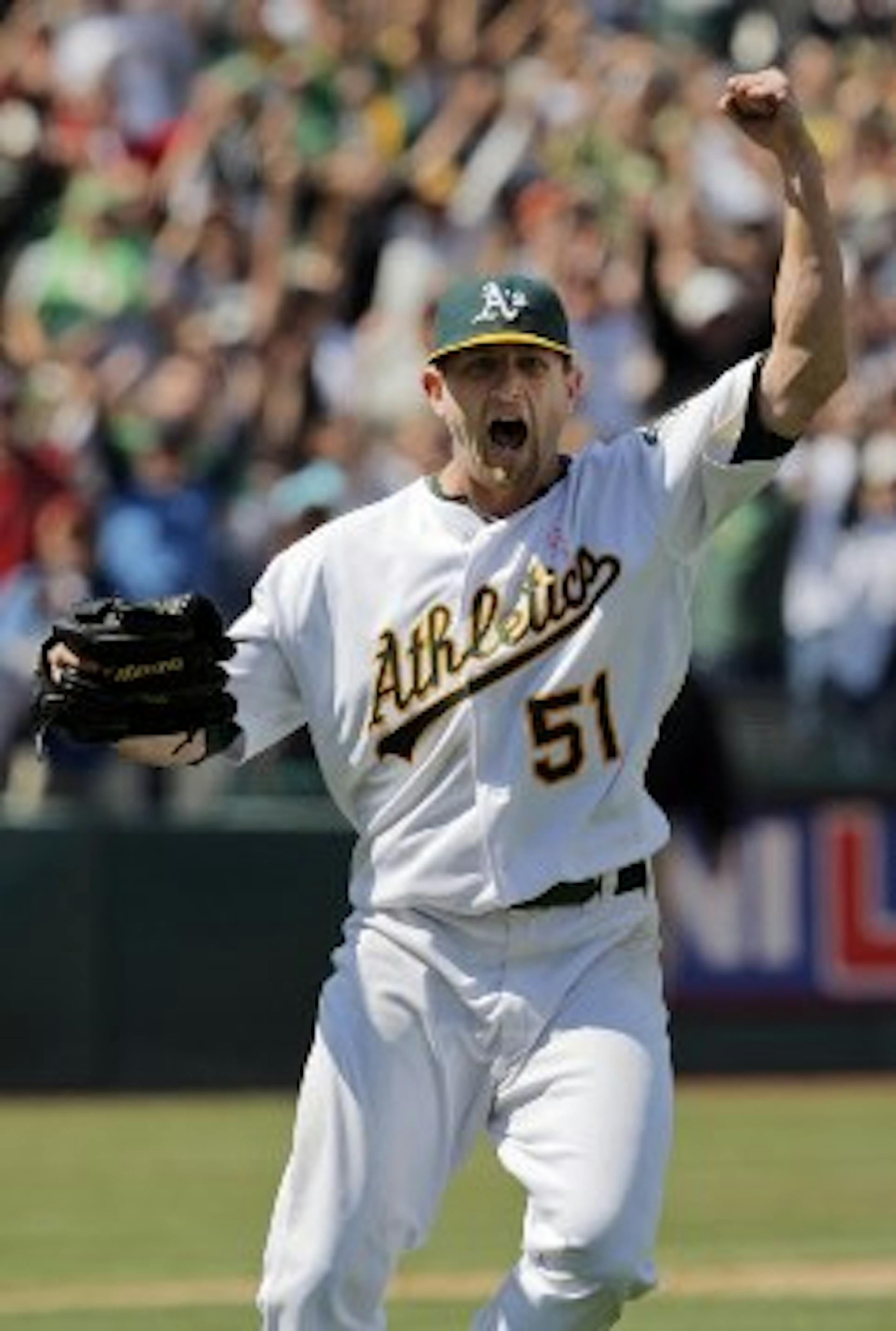
TFD: Former A's pitcher Dallas Braden eloquently explains the art of the changeup

April 3, 2015 at 9:56PM
(The Minnesota Star Tribune)

I called former A's pitcher and current ESPN baseball analyst Dallas Braden for a Q&A that will run Sunday. Two things stood out:

1) He answered the phone pretending to be a pizza delivery establishment. That's a pretty bold gag in an era of caller ID, and I complimented him on it.

2) I told him I only needed about 10 minutes of his time, but it turned into more like 20 because my last question — which didn't end up making the cut for the print Q&A — was about throwing changeups and he ended up giving a 10-minute answer.

Because the Twins are known to be favoring more changeups this season — particularly now that soft-tossing lefty Tommy Milone figures to stick even longer in the rotation thanks to Ervin Santana's suspension — his answer seems like #relevant #content, but there was no way it was going to fit into a condensed space.

Braden's average fastball was around 88 mph in his career, while his changeup was around 73 mph. He was a classic lefty who relied on control and changing speeds. He threw changeups for 24 percent of his career pitches, far above the major league average. As such, here are his thoughts on the changeup:

Q What is the key to a good changeup, and how do you get a guy to get comfortable throwing it?

A The key to a good changeup is understanding what the pitch is trying to do and what it's meant to do . It's meant to emulate the pitch that you see (most) of the at bat, which is a fastball. So this pitch is meant to look like something it is not. So now you need to pay attention to what sort of fastball you predominantly throw. Myself, I was predominantly a four-seam fastball pitcher until I started my ascent into the big leagues, and then I realized I needed to start sinking and running the ball to get guys to hit the ball off the end of the bat. So I developed a two-seam changeup as well.

I threw multiple different changeups for the reason that I would throw a four-seam fastball inside, and to get the batter off that fastball, I'm now going to throw him something that looks like what he just saw — a four-seam changeup. Then if a guy is fouling my two-seam fastball off and I know that he's on me and I need to get him off that pitch, I'm not going to go back to the four-seam changeup. I'm going to throw the two-seam changeup that looks just like the two-seam fastball I've been throwing this guy.

ADVERTISEMENT

You can work from the ground up. How much pressure are you applying when you're driving the baseball from the top of the rubber down that angle to your target? As a changeup artist, I understood the hitter definitely isn't smart enough to look in two different places at one time. So he's picking up my arm speed and hand speed. That's all he can focus on — my release. So with my lower half, I can control velocity. Instead of driving off with the changeup, I can just rotate on the backside while maintaining the same arm speed and hand speed (as I would for a fastball) that the hitter is visually keying on. You think it's the mean-[redacated] 86 mile per hour fastball coming? Well, here comes 70 instead. He sees 86 arm speed and 86 hand speed, and he's back in the dugout talking about the 70 mile per hour changeup he just swung through.

Then you talk about thumb placement. If you want to create east to west movement, the thumb can be placed higher on the side of the baseball. If you're looking to create north-south movement, which ultimately is creating drag in the air, that drop-off if you will, now you can anchor that thumb underneath one of the laces. So you've manipulated arm speed and hand speed, but now you've created another anchor on the baseball.

Pitching is all about presentation. It's making the hitter think he's getting something he's not — about disrupting the timing. He has keyed you up and is looking for a certain pitch in a certain location, and if you can give him your pitch in the location he's looking for, you're winning because you've executed something he doesn't see coming.

Q Do most pitchers throw multiple types of changeups like you did?

A I threw a screwball and multiple changeups in the minors. For me, you can liken it to a power guy who has a really good feel for the breaking ball, the slider, the slider with a little more depth — a guy who can really fiddle with the breaking ball. I was a guy who needed to figure it out going the other way. That's why I learned to dabble in the changeup. A changeup artist understands he's not in the big leagues to miss bats. He's there to miss barrels. And that's what I was trying to do.

Q When you threw the perfect game in 2010, were you just dialed in with the changeup?

A In all honesty, it was a combination of good defense played behind me and executing the game plan. I scratch my head sometimes and wonder, "How did that even happen? Was that real?" People in their career, going out with my stuff that I had that day, would be like, "I can't pitch with this." For me to think anything was extra-special that day, I'd have to think there was something extra-special to begin with. And I didn't. I just wanted to pitch.

about the writer

about the writer

Michael Rand

Columnist / Reporter

Michael Rand is the Minnesota Star Tribune's Digital Sports Senior Writer and host/creator of the Daily Delivery podcast. In 25 years covering Minnesota sports at the Minnesota Star Tribune, he has seen just about everything (except, of course, a Vikings Super Bowl).

See Moreicon

More from Sports

See More
card image
Anthony Souffle/The Minnesota Star Tribune

All Wild players have different habits, including “nappuccinos,” but they find that rest is their friend.

Amir Coffey of Hopkins celebrates with assistant coach Kerry Sutherland, left, after their win against Robbinsdale Cooper.
card image