

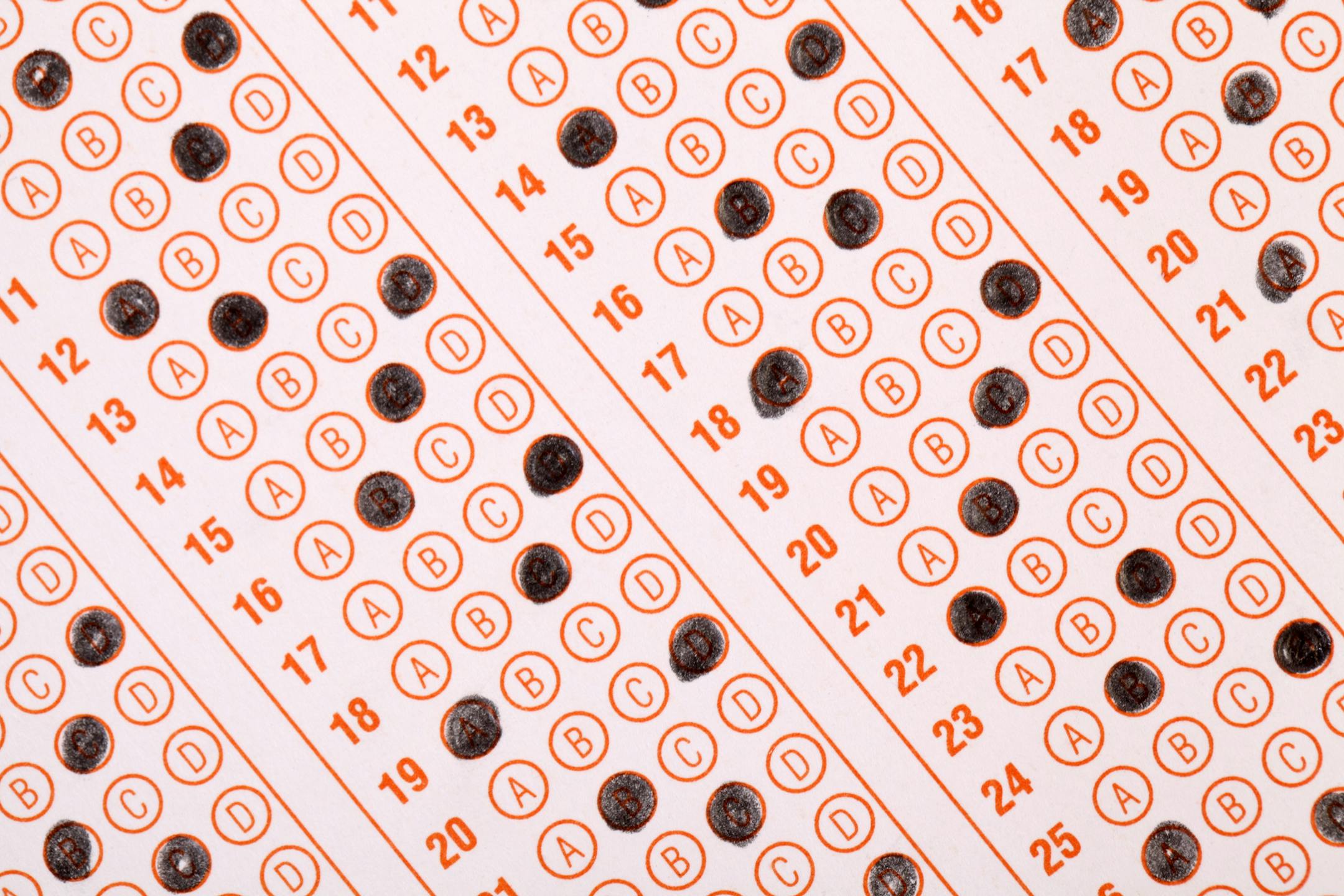
America's decadeslong infatuation with standardized testing is finally waning, and for good reasons. Despite years of training students to do better on tests, the performance of 17-year-olds on the National Assessment of Educational Progress, also known as the nation's report card, has flatlined. At the same time, the focus on testing produced unintended consequences, including inattention to important educational priorities and growing teacher shortages.
That's in part because test performance became a goal in many districts instead of a means to an end and, thus, a prime example of Campbell's Law, which points to the corrupting influence of using a single measurement as a target, thus ensuring that "it ceases to be a good measure."
The federal "No Child Left Behind" initiative introduced by President George W. Bush imposed a battery of high-stakes testing mandates, which continued under President Barack Obama. If children failed to meet proficiency goals for math and English, schools faced closure, teachers were shamed and fired and children were held back. Consequently, many schools and districts focused on test prep, often sacrificing untested but important subjects like civics and neglecting the classroom give-and-take that nurtures critical thinking and creativity.
At the peak of testing mania in the 2014-2015 school year, the average U.S. student was taking 112 standardized tests in the course of a K-12 education, many of which were redundant or pointless.
Now states from Arizona to Wyoming are retreating from high-stakes testing. The announcement last month that New York's education commissioner, a testing proponent, will resign in August, signals another reversal.
It might be easy to say good riddance, but schools still need ways to measure student progress. The accountability movement that pushed testing was a response to a genuine need to improve K-12 education. Since the 1983 publication of "A Nation at Risk," a bipartisan report by a commission appointed by President Ronald Reagan, business leaders have warned that schools weren't developing the knowledge workers modern industry needs, and progressive educators have criticized traditional factory-style schools for not fostering an engaged and informed citizenry.
So schools need to find new ways to show accountability advocates that test retrenchment won't weaken standards, and this presents an opportunity to develop more robust assessments and better education.
The country's best under-the-radar experiments are a useful guide. Chief among these is the New York state Performance Standards Consortium, a decades-old effort led by progressive educators and involving 38 high schools, which won exemptions from all standardized tests except English. Instead, students complete ambitious projects known as performance-based assessments — think mini theses with lots of research, writing and real-world projects in everything from social studies to physics, which students present to expert panels, including teachers (often from different schools) and community members.


