

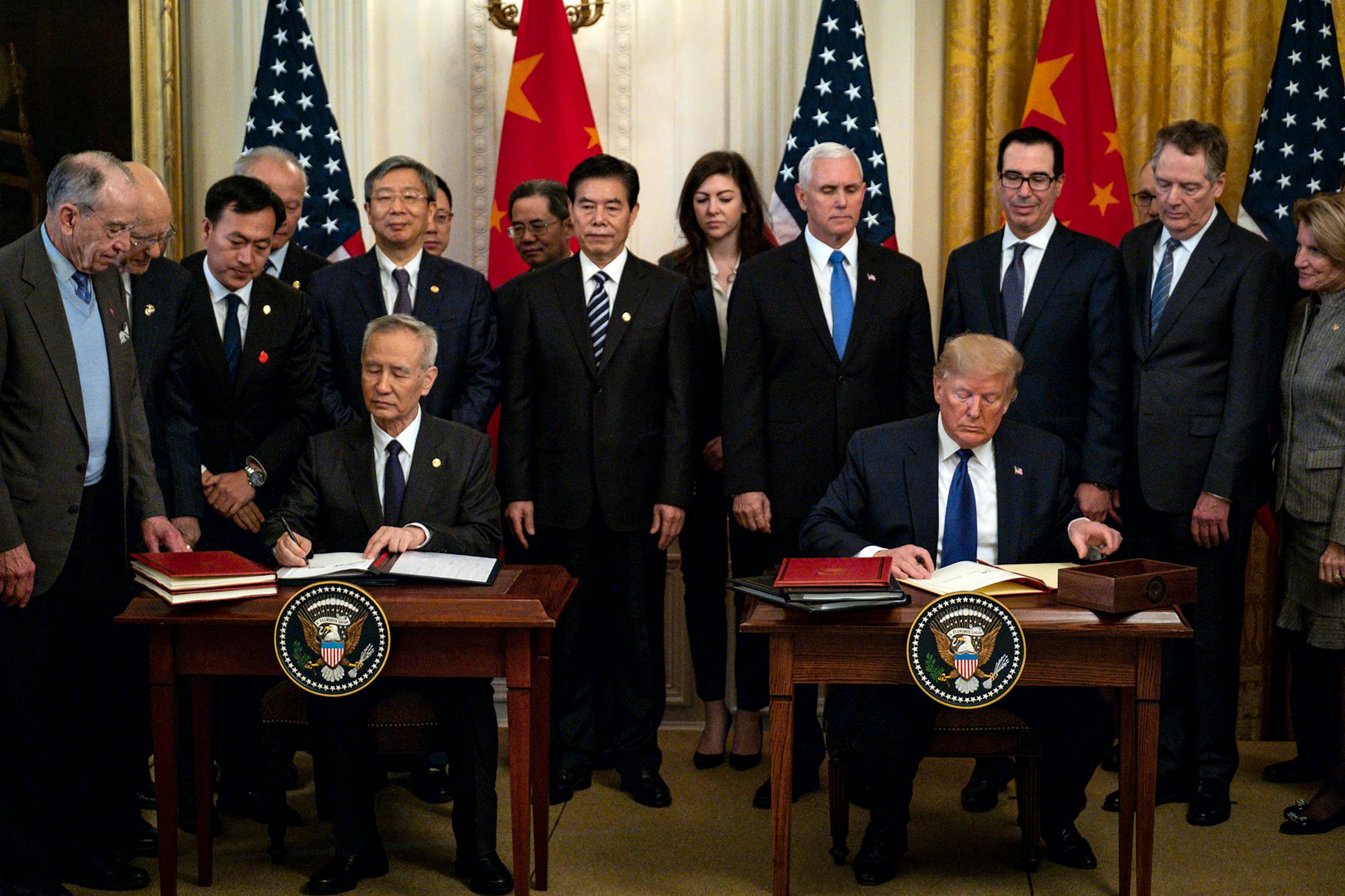
SHANGHAI – Just days before the coronavirus shut down the Chinese city of Wuhan and changed the world, the Trump administration and China signed what both sides said would be only a temporary truce in their 18-month trade war.
Since then, the pandemic has scrambled global priorities, international commerce has stalled and surged again, and President Joe Biden has taken office. But the truce endures — and now appears to be setting new, lasting ground rules for global trade.
The agreement did not stop many of the same practices that sparked the trade war, the biggest in history. It does nothing to prevent China from throwing huge subsidies at a range of industries — from electric cars to jetliners to computer chips — that could shape the future but for which the country often relies heavily on U.S. technology.
In return, the truce left in place most of the tariffs that the Trump administration imposed on $360 billion a year in Chinese-made goods, many of them subsidized. Such unilateral moves run counter to the spirit of the rules of global trade, which were set up to stop nations from starting economic conflicts on their own and to keep them from spiraling out of control.
But the new model seems to be catching on. The European Union announced May 5 that it was drafting legislation that would allow it to broadly penalize imports and investments from subsidized industries overseas. E.U. officials, who had initially looked askance at the U.S.-China truce, said their policy was not aimed specifically at China. But trade experts were quick to note that no other exporter has the scale of manufacturing and breadth of subsidies that China has.
"You see a real appetite in the U.S. but also in the E.U. for unilateral measures," said Timothy Meyer, a former State Department lawyer who is now a professor at Vanderbilt Law School.
The truce, known as the Phase 1 agreement, could still be supplanted by a new deal. The agreement requires that the two sides conduct a high-level review of it this summer. On Wednesday in Washington, Katherine Tai, the U.S. trade representative, held an introductory call with a senior Chinese official, Vice Premier Liu He — a signal that Liu, the same top negotiator who squared off against the Trump administration, will be kept in place by China.
But prospects for a far-reaching new deal this year are slim. The Biden administration is drafting a comprehensive strategy toward China, a complex interagency procedure that could last into early next year. It has also shown little appetite for easing up on China's trade practices, and it has publicly discussed smoothing ties with European and other allies that were ruffled by other disputes during the Trump administration.


