
Olson: Can an ax murderer’s freedom ever be just? Yes.

Preventing a tragedy like that perpetrated by David Brom requires attention to teen mental health needs.

Columnist Icon
The Minnesota Star Tribune
August 6, 2025 at 11:00AM
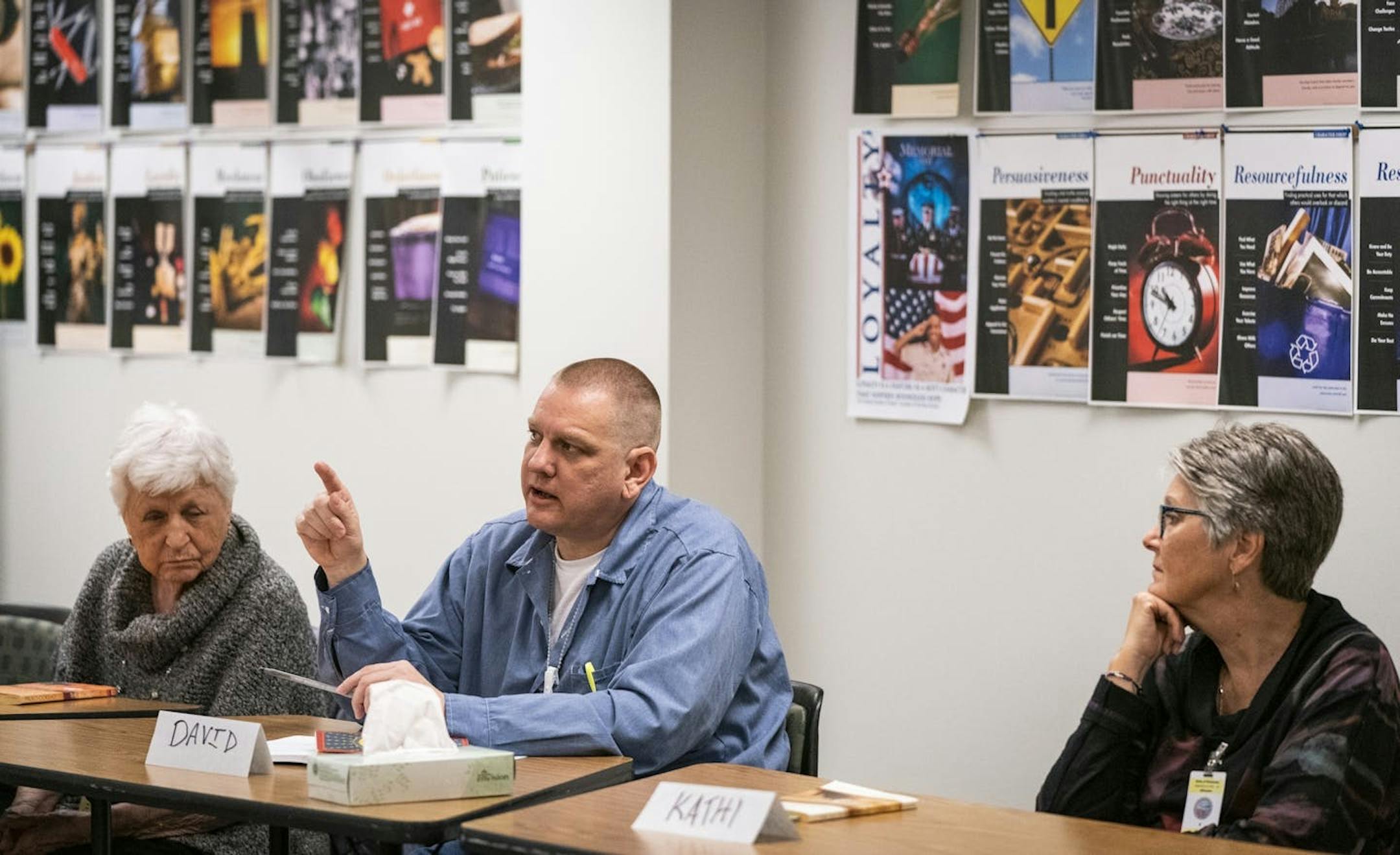
David Brom talks during a book club discussion at Minnesota Correctional Facility-Stillwater in Bayport in 2019.
David Brom talks during a book club discussion at Minnesota Correctional Facility-Stillwater in Bayport in 2019. (Leila Navidi/The Minnesota Star Tribune)

Opinion editor’s note: Strib Voices publishes a mix of commentary online and in print each day. To contribute, click here.

•••

If some crimes are undeserving of mercy, then killing both parents and two siblings with an ax might be among them. And yet David Brom, who killed members of his family in 1988 when he was 16, has been out on work release since July 29, living in a Twin Cities halfway house.

Now 53 and subject to GPS monitoring and supervision, Brom forces us to confront a daunting question: Should the worst day of a broken child’s life — a day shrouded in shocking violence — define the rest of one’s existence?

When Brom was a sophomore at Rochester’s Lourdes High School, he murdered his 41-year-old parents Bernard and Paulette Brom, his 13-year-old sister Diane and 11-year-old brother Rick.

All suffered head wounds. A bloody hatchet was found in the basement of their home on a quiet cul-de-sac. This was not a whodunnit as much a horrifying mystery.

Brom, who was arrested within hours, was described at the time by teachers and priests as a gentle kid who loved biking and music. It was that duality, the sweet boy and the brutal crimes, that was hard to comprehend then and remains so now.

I was a college student back then, but as a journalist I’ve since written about and forgotten plenty of crimes. This one has remained unforgettable. Maybe it stuck with me because I was close to Brom’s age. Maybe I empathized with the teen who didn’t get the support he needed.

Through the years, I’d check public records to see how Brom was managing in prison. He caused no trouble. He became known for defusing tensions.

To some, none of his good work and rehabilitation mattered as his release date approached. He became a political punching bag.

“This is not justice being served, it is an insult to the memory of his victims,” Minnesota House Speaker Lisa Demuth, R-Cold Spring, wrote in a news release. “We must prioritize public safety over leniency for violent criminals.”

She and other Republicans blamed Gov. Tim Walz, but the situation is more nuanced and has to do with society’s evolving understanding of adolescent brain development.

When the 2023 DFL Legislature allowed those who are given life sentences as juveniles to be paroled after 15 years, Minnesota was the 28th state to make the change.

The state change came after a series of U.S. Supreme Court rulings that addressed juvenile sentencing, beginning in 2005 when the high court banned the death penalty for juvenile offenders. Subsequent Supreme Court rulings included banning automatic life sentences without possibility of parole for juveniles.

The rulings didn’t fling open the cell doors for Brom. When he appeared before the Supervised Release Board from prison in January, he faced tough questions.

“The gravity of this offense is immense; not just the impact on your family, but on the community and, as you’ve said, the ripple effect over the course of time,” Minnesota Corrections Commissioner Paul Schnell said to Brom. “Can you help give a sense of understanding through the lens of today, what happened that could allow you to engage in the conduct, taking the life of your family members?”

How does one even begin to formulate a response? Brom said it took years before depression lifted and his mind cleared. He said the support of his four surviving grandparents and increased clarity of what transpired brought pain.

“It was also honestly sometimes difficult to hear their acceptance of me into their lives as I struggled to go through the journey of finding a way to forgive and accept myself,” he told the board.

What would be a satisfactory explanation for Brom’s crimes? There is none. But I can also accept that reality is no match for the warped mind of a depressed teen.

At the January hearing, board member Jody Nelson told Brom that society failed him. “I’m just sorry your 16-year-old self didn’t get the treatment for the depression that you were experiencing,” she said.

Some had tried to help him, including the first two Olmsted County District Court judges assigned the case. Judge Gerard Ring ordered that Brom be tried as a juvenile, saying he wasn’t a threat to public safety.

The state Supreme Court, however, ordered Brom to be tried as an adult. Had Brom been adjudicated as a juvenile, he would have been freed on his 19th birthday.

At the outset of trial, defense attorney Terry Walters asked that the jury be allowed to consider whether Brom, due to severe depression, might have been unable to restrain himself from the crimes.

Judge Ancy Morse reluctantly declined the defense motion, saying she was bound by Minnesota’s insanity defense, the M’Naghten rule, which she called “illogical, forced and outmoded.”

The rule, which dates to the mid-1800s, asks whether a defendant knew what he was doing and whether he knew it was morally wrong. The M’Naghten rule unfortunately remains the law in Minnesota.

Even though Brom found little understanding in the courts, he has spent decades giving it to others. In his public session in January, Brom described the value of helping and counseling fellow inmates.

“I get to walk with people as they experience some real tragic moments in their lives and provide an opportunity to hold hope out for them,” he said.

If you’re disturbed by Brom’s release, you’re not alone. But push through the disturbing facts and ask a deeper question: How do we reach a struggling teen before their breaking point?

I’m betting Brom uses his extensive counseling skills to help others. I hope he gets to ride a bike again and rekindle his love of music.

Brom’s next appearance before the Supervised Release Board is scheduled for January. In the meantime, we best honor the memory of Bernard, Paulette, Diane and Rick Brom by reaching out to kids who are hurting and trying to prevent the next tragedy.

about the writer

about the writer

Rochelle Olson

Editorial Columnist

Rochelle Olson is a columnist on the Minnesota Star Tribune Editorial Board focused on politics and governance.

See Moreicon

More from Columnists

See More
card image
Elizabeth Flores/The Minnesota Star Tribune

His leadership is needed. It probably would be a good political move for him as well.

card image
card image