

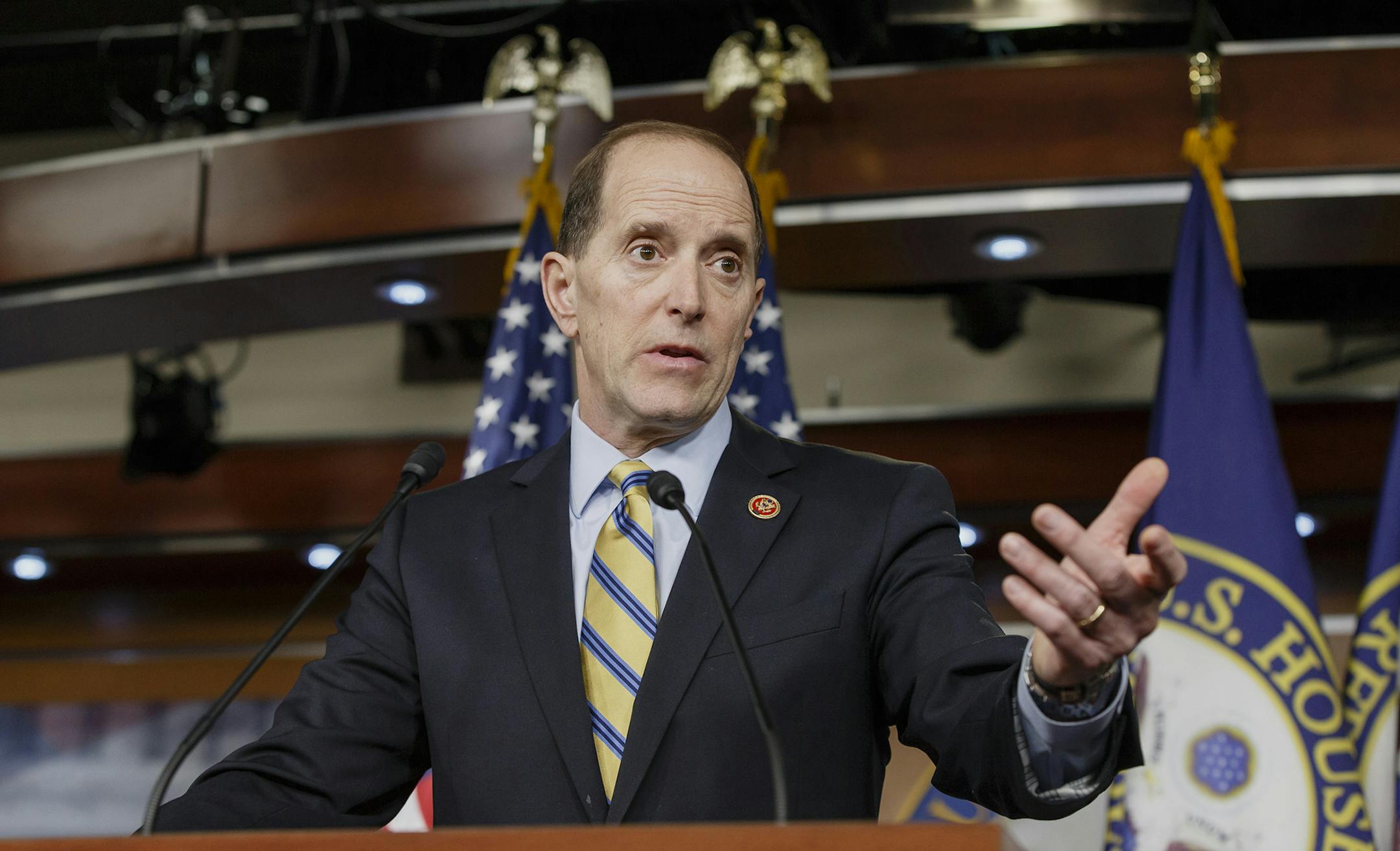
At the end of February, U.S. Rep. Dave Camp released a comprehensive tax-reform plan. It is in no way radical, but it does do what tax-reform advocates have long clamored for by taking away some of the myriad tax expenditures and lowering rates across the board. Given that the one thing everyone in Congress espouses is the need for tax reform, you might have expected a blaring of trumpets and hallelujahs, but instead there has been almost complete silence, not only in Congress but in the press as well. Perhaps March Madness is more important after all.
Understand that Dave Camp is not just any member of Congress. He is the chair of the powerful Ways and Means Committee. I have long argued that the chair of the House Ways and Means is one of the five most powerful people in the U.S. government. All tax legislation begins in that committee, so essentially nothing gets done in the tax arena without the support of the chair. Since just about any policy can be encouraged or discouraged through tax legislation, the chair of the House Ways and Means Committee has a unique role in Congress. One usually does not want to upset such a powerful politician.
Camp's proposal is a serious, well-thought-out piece of legislation. There is little doubt that he and his staff have done their homework. There is something in it that both parties should like.
For Democrats, the standard deduction is almost doubled, while itemized deductions that favor the wealthy are cut back. The taxation of dividends and capital gains is increased, and a 10 percent surcharge is imposed on top-income taxpayers. An excise tax is added on financial institutions.
For Republicans, individual tax rates are generally reduced, the world's highest corporate tax rate is also reduced and the medical device tax is repealed.
For both parties, the ridiculous alternative minimum tax is repealed, and the taxation of foreign earnings is reformed to a more reasonable regime. The child care credit is also increased. All of this is done on a net-zero-sum basis.
The reason the proposal was buried so quickly is — as always — political. In an election year, Democrats see no reason to embrace a Republican plan. Republicans think they have a winning issue with the Affordable Care Act and don't want to muddy the waters with anything substantive like tax reform. The reasoning goes that if Republicans do take control of the Senate in the November election, the Camp proposal would be revived as the starting point for real debate.
But is that true? The problem with any tax-reform proposal is that there will be winners and losers. A tax benefit, once given, cannot be taken away without a lot of outcry. For example, the elimination of the itemized deduction for state and local income taxes would affect a lot of powerful people in high-tax states. Even a very modest adjustment to the deduction for interest paid on a home mortgage (reducing eligible mortgages from $1 million to $500,000) would put the real estate lobby up in arms. And the Camp proposal also limits the itemized deduction for charitable contributions to amounts in excess of 2 percent of adjusted gross income. There may be nothing more sacrosanct than charitable contributions, most of which goes to churches.


