

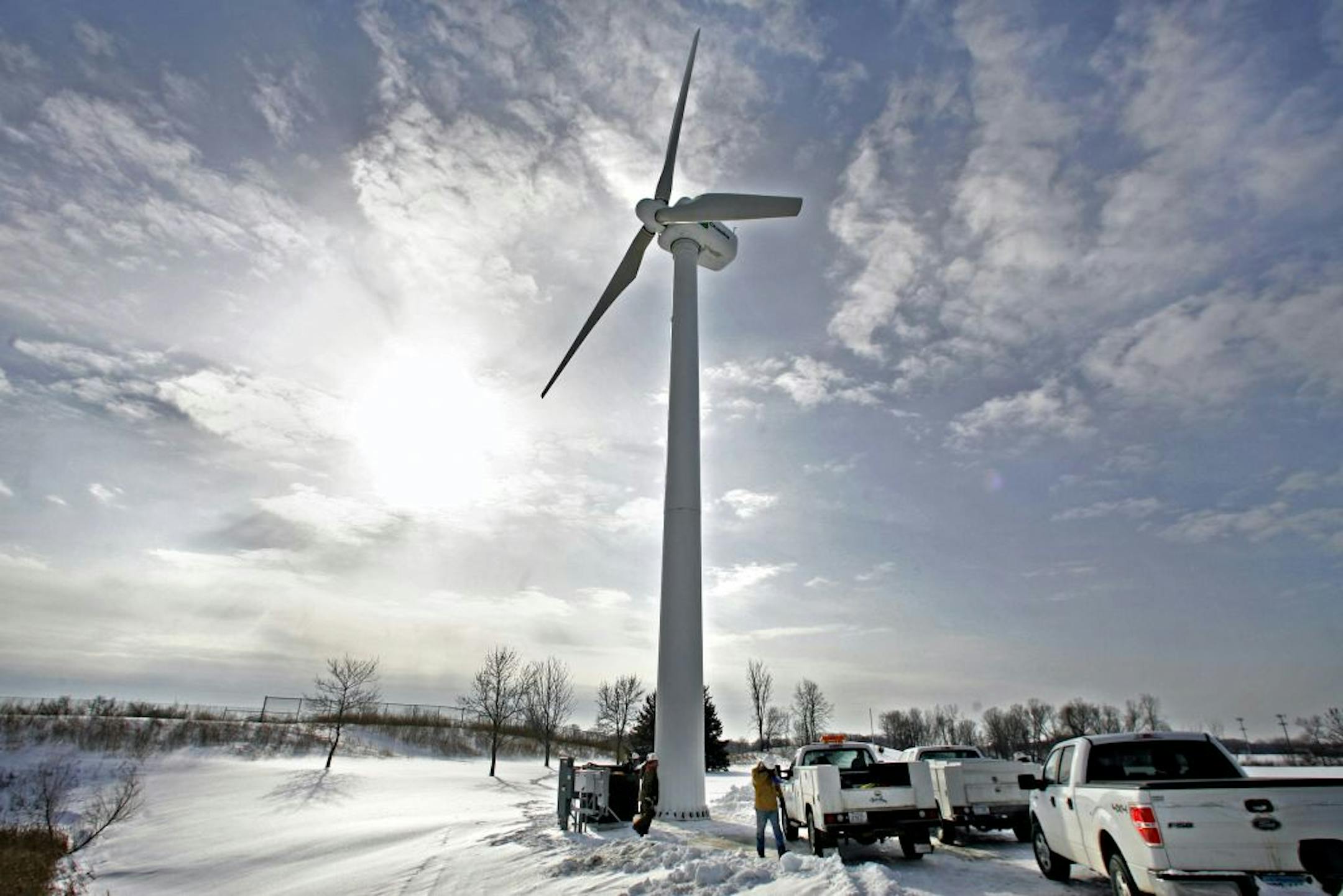
A one-year extension of a federal tax credit -- the product of this week's successful fiscal cliff negotiations -- is a big boost for the U.S. wind power industry, but the benefits may not be fully felt until 2014.
The production tax credit, which expired with the new year, was extended by Congress as part of the measure averting the fiscal cliff that threatened income tax increases for most U.S. workers. The tax credit will subsidize wind projects that start construction in 2013.
Separately, the bill restored tax credits for ethanol that's produced from non-food sources, such as corn stalks, and for biodiesel.
Many wind projects have been on hold, including 13 in Minnesota that have won state regulatory approval. Now that developers are assured of the tax credit, they can try to nail down financing and sign up buyers for their wind farms' electricity. But wind farm development probably won't pick up until the second half of the year, and may not see significant growth until 2014.
"Though too late for this year, it will allow the U.S. market to see some recovery in 2014," Justin Wu, Hong Kong-based head of wind analysis at Bloomberg New Energy Finance, said by e-mail.
Renewable Energy Group, which is spending $20 million to upgrade its biodiesel plant in Glenville, Minn., applauded the return of the $1-per-gallon biodiesel blending credit -- and so did investors. The stock rose 9 percent Wednesday to $6.39 per share.
"This tax credit provides certainty for our petroleum distributor customers and, in turn, market stability for commercial biodiesel producers like us," the Ames, Iowa-based company said in a statement.
Dan Juhl, CEO of Juhl Wind Inc., a publicly traded renewable energy developer based in Pipestone, Minn., said his company has three wind farms proposed in other states that have been on hold, and he hopes they now can move ahead.



