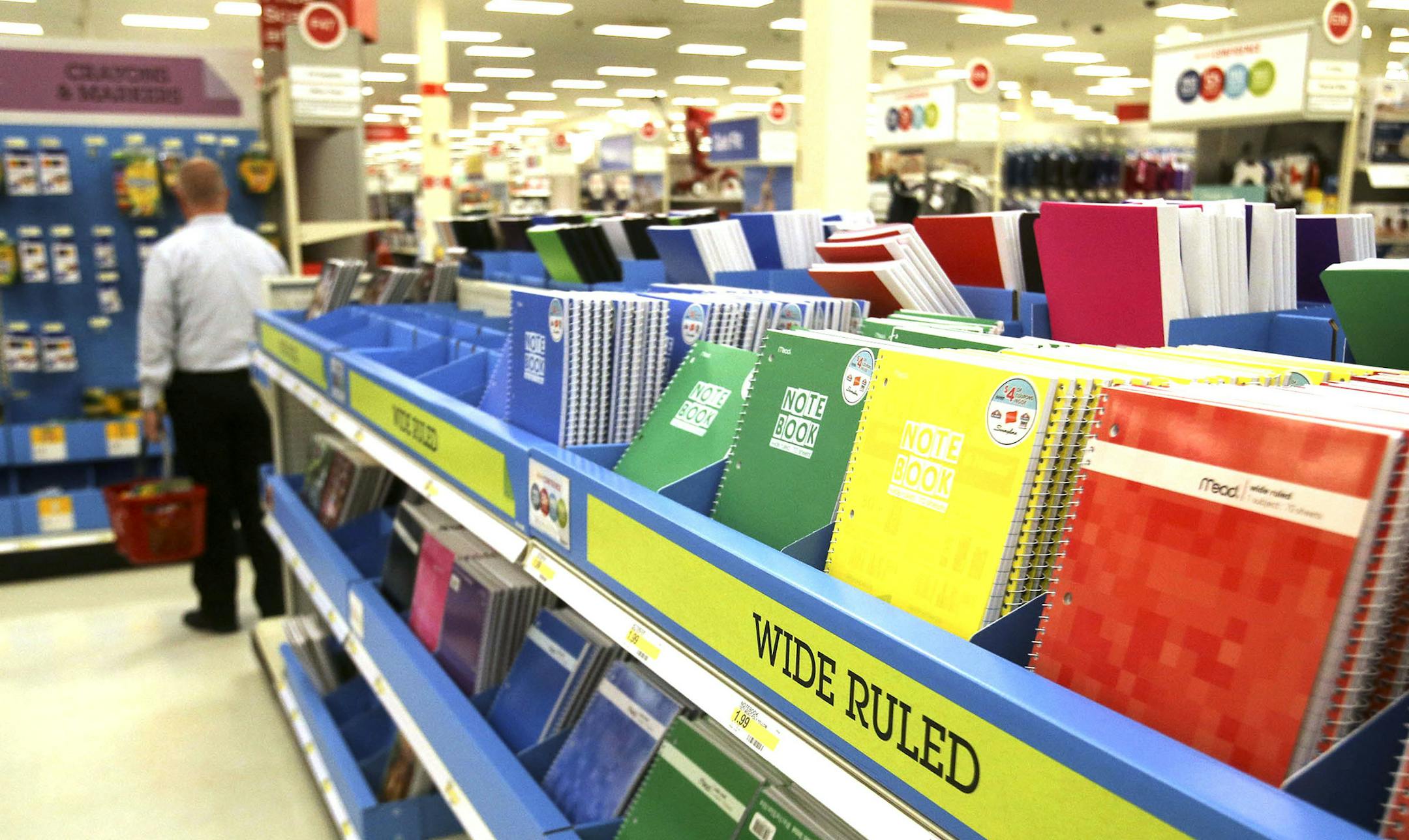
![The back-to-school section is taking shape, a mere few days past July 4th, and seen at Target Tuesday, July 9, 2014, in Bloomington, MN. Here, Amelia Blommel, rear, and Sarah Pitman, front, neither of whom are students, took advantage of fresh supplies that had yet to be picked over by back-to-school shoppers.]] (DAVID JOLES/STARTRIBUNE) djoles@startribune Target unveils a new back-to-school promotion this year.**Amelia Blommel and Sarah Pitman, cq](https://arc.stimg.co/startribunemedia/Y7IDXER6S7EUDIV2R7BHBWRVKE.jpg?&w=1080)
This back-to-school season, Target Corp. wants to tap the same sort of feel-good consumerism that helped put Toms Shoes on the map.
The Minneapolis-based retailer will announce Wednesday that for every purchase of certain school supplies, it will donate a similar item to students in need. The "buy one, give one" promotion will be good only on Target's private-label Up & Up brand and will run in stores between Sunday and Aug. 2.
The campaign, which will donate up to $25 million in products, is just one of the ways Target is trying to bring "newness" into its stores and energize its back-to-school season, the second-most-important sales period of the year. Target executives hope this promotion will help set the retailer apart from the pack by allowing it to tout its philanthropic efforts through specific purchases, much like Toms Shoes does with its "One for One" model that donates one pair of shoes for every pair sold.
"We have an opportunity to tell that story in a more bold and direct way that resonates with our guests," said Laysha Ward, Target's president of community relations.
The new initiative is part of Target's commitment to donate $1 billion to education by 2015. Target already allows customers to donate 1 percent of their Redcard purchases to a school of their choice, and through the end of last year, it had raised $875 million toward its education goal.
The inspiration for this year's campaign came in part from a new brand of school supplies Target began carrying in June called Yoobi, which donates an item to a classroom for every product sold through the Kids In Need Foundation. Target has partnered with the same foundation for its own promotion.
The "buy one, give one" concept has gained steam in recent years after the success of Toms Shoes. Now larger corporations have become interested in the concept, said Christopher Marquis, a Harvard business professor who has studied the trend. Skechers, for instance, launched a line of shoes a couple of years ago with a charitable twist.
However, there can be skepticism when big companies take on this kind of corporate citizenship, especially when there's no explicit link to the brand, Marquis said. But that shouldn't be a problem for Target, since it has a long track record of philanthropy, famously donating about 5 percent of its annual profit, he said.