

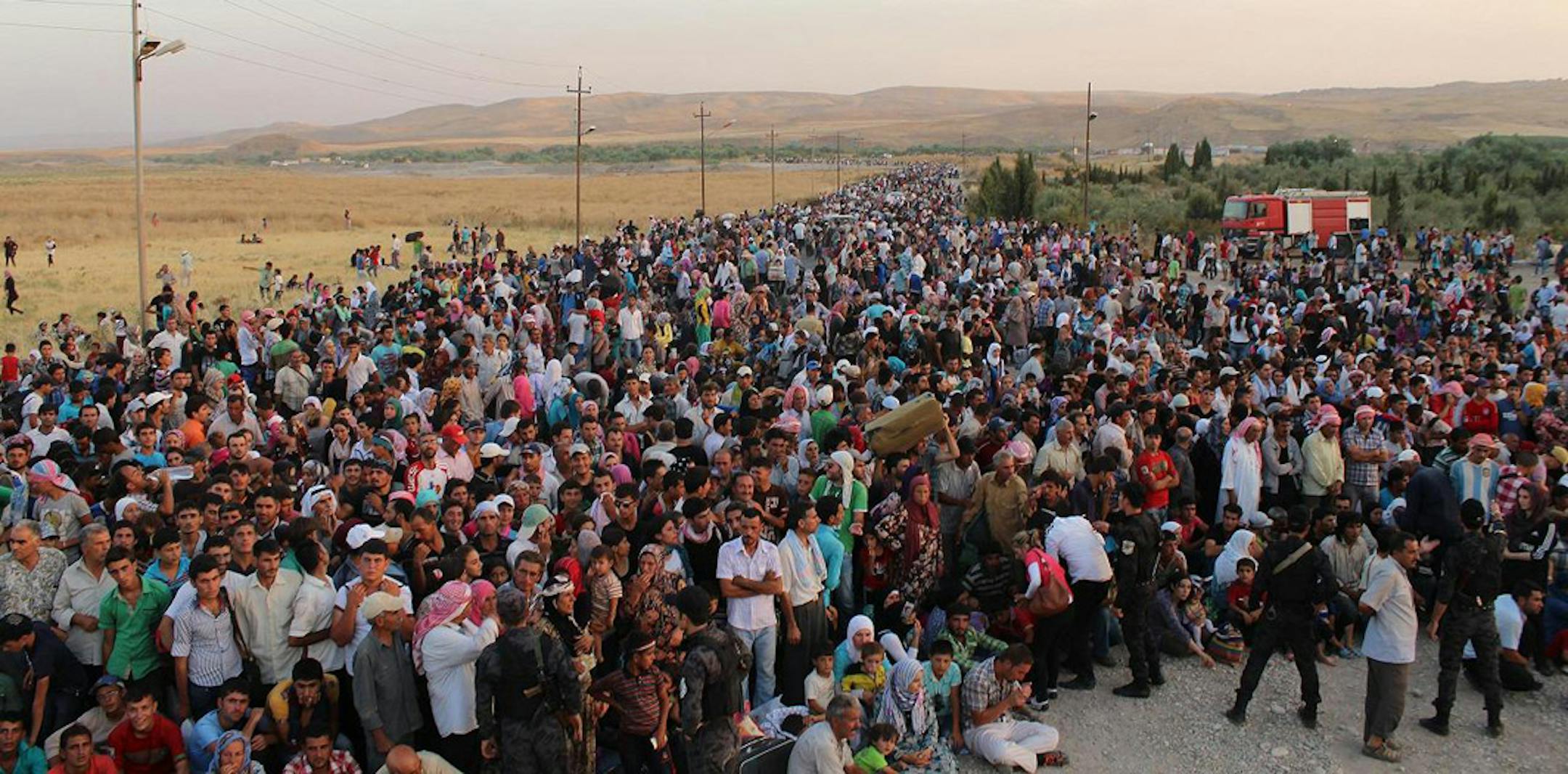
MAFRAQ, Jordan – A dozen Syrian women aged 12 to 16, mainly refugees from the flattened city of Homs, sit in a semicircle. Their heads are covered. They are naturally reticent dealing with a male foreigner. But they eventually warm up, talking about their escapes, their plans for school, and Syrian pop stars.
Have they witnessed any violence themselves? I ask. Every hand is raised.
"My grandmother was collecting her clothes, trying to escape. A sniper killed her right on the spot. We could not reach her because we were afraid of the sniper."
"Out of my balcony, I saw two people slaughtered with a knife. I can still see the details. They don't go away."
"Right outside our house, the soldiers would force girls to take off their clothes and decide who would be raped or killed. It is why we didn't look out."
Their tone is unsettlingly matter of fact. "When there is too much death around," one explains, "people stop feeling anything."
There is plenty of death around in Syria. Unlike, say, in Libya, where Moammar Gadhafi ended up friendless and hunted, every faction in the Syrian conflict has powerful outside sponsors, leading to a war without resolution.
Atrocities can be found on various sides. But the regime of Bashar Assad has made a systematic march across the moral boundaries of war: targeting schools during school hours, making use of what are believed to be chemical weapons against civilians, dropping barrel bombs (oil drums filled with TNT, oil and chunks of metal) from helicopters to destroy neighborhoods. When they first arrive, preschoolers at the Za'atri Refugee Camp dive to the ground when they hear an airplane overhead.


