As Syria's President Bashar Assad clings mercilessly to power, hopes that his regime will be replaced by a stable, tolerant democracy are being dwarfed by fears of prolonged sectarian strife and Islamist radicalism. The outcome will hinge in part on a simple question: Whom do Syria's diverse rebels hate more, the United States or Iran?
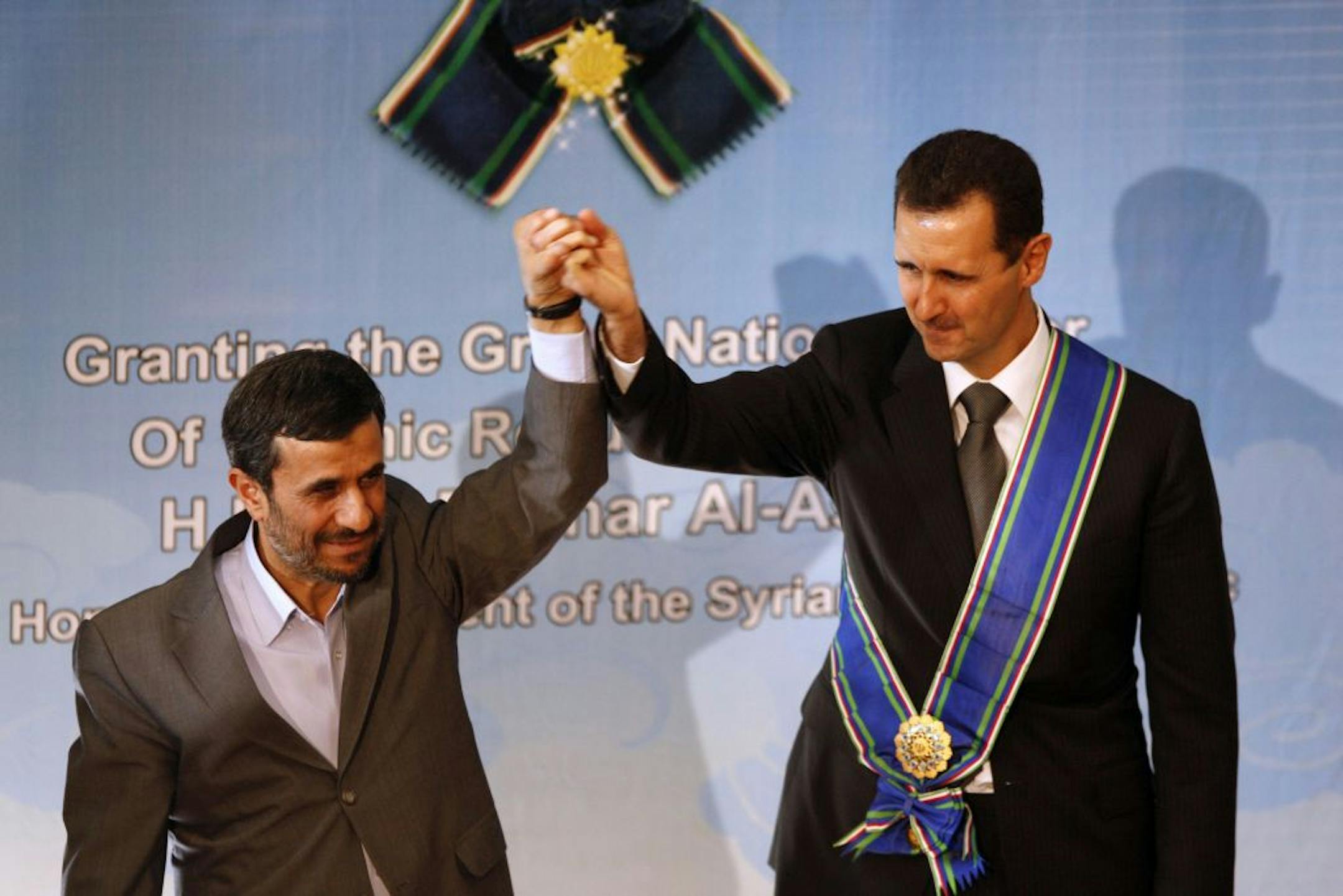
The anomaly of power in modern Syria - where an Alawite minority rules over a Sunni Arab majority - was never sustainable, and few countries stand to lose more from the regime's collapse than the Islamic Republic of Iran. Syria has been Iran's only consistent ally since the 1979 revolution, providing the leadership in Tehran with a crucial thoroughfare to Iran's most important regional asset, the Lebanese Shiite militant group Hezbollah.
As a result, Iran has done its utmost to keep Assad afloat, providing billions of dollars of support as well as strategic aid to crush dissent. To relieve pressure on the Syrian military, Iran's Islamic Revolutionary Guards Corps is reportedly training two paramilitary organizations, Jaysh al Sha'abi and the Shabiha, which boast 50,000 fighters and are modeled on the Bassij militia that violently quashed Iran's 2009 popular uprisings.
This support can only delay, not prevent, Assad's demise. Thereafter Iran will face a strategic decision: whether to continue supporting a predominantly Alawite militia that represents only a small fraction of Syrian society, or to engage the Sunni Islamists who are poised to wield power in Damascus once Assad falls. Iran's leaders will try to embrace the Sunni radicals, and if that fails they will work with the Shabiha to prevent the formation of a stable, anti-Iranian order in Syria.
What's most important for Iran is not the sectarian makeup of Syria's future rulers, but a like-minded ideological worldview premised on resistance to the U.S. and Israel. As Iranian Supreme Leader Ali Khamenei once said, "We will support and help any nations, any groups fighting against the Zionist regime across the world." Iran's Sunni allies Hamas and Palestinian Islamic Jihad are cases in point.
Despite sharing common enemies with some Syrian rebels, there is no guarantee that Iran will be able to befriend the same forces it has helped to massacre over the past two years. Anti-Shiite, anti-Persian sentiment is rife among Syria's rebels, and the attraction of Iranian petrolargesse is eclipsed by the deeper pockets of Saudi Arabia and Qatar.
The question for the U.S. and allies such as Turkey is what can they do to ensure that moderate factions in the Syrian opposition come to dominate in a post-Assad Syria, and that they will prefer to work with the U.S. and its friends in the region, rather than with Iran.
That outcome isn't guaranteed, either. Iranian influence tends to thrive in countries suffering power vacuums and tumult, which they can attribute to U.S. or Israeli policies. They helped create Hezbollah after the 1982 Israeli invasion of civil-war era Lebanon. And in the aftermath of the 2003 U.S. invasion of Iraq, they helped entrench an Iraqi political class that is closer to Iran than the U.S. As Israel's minister of strategic affairs, Moshe Ya'alon, put it last year: "The Iranians know how to exploit every area and country that isn't properly governed."