
Opinion | What we really inherit ― and what that American Eagle ad about ‘great jeans’ got wrong

Sydney Sweeney’s much-talked-about denim ad missed the mark because inheritance isn’t something you show off. It’s something you carry.

August 19, 2025 at 8:30PM
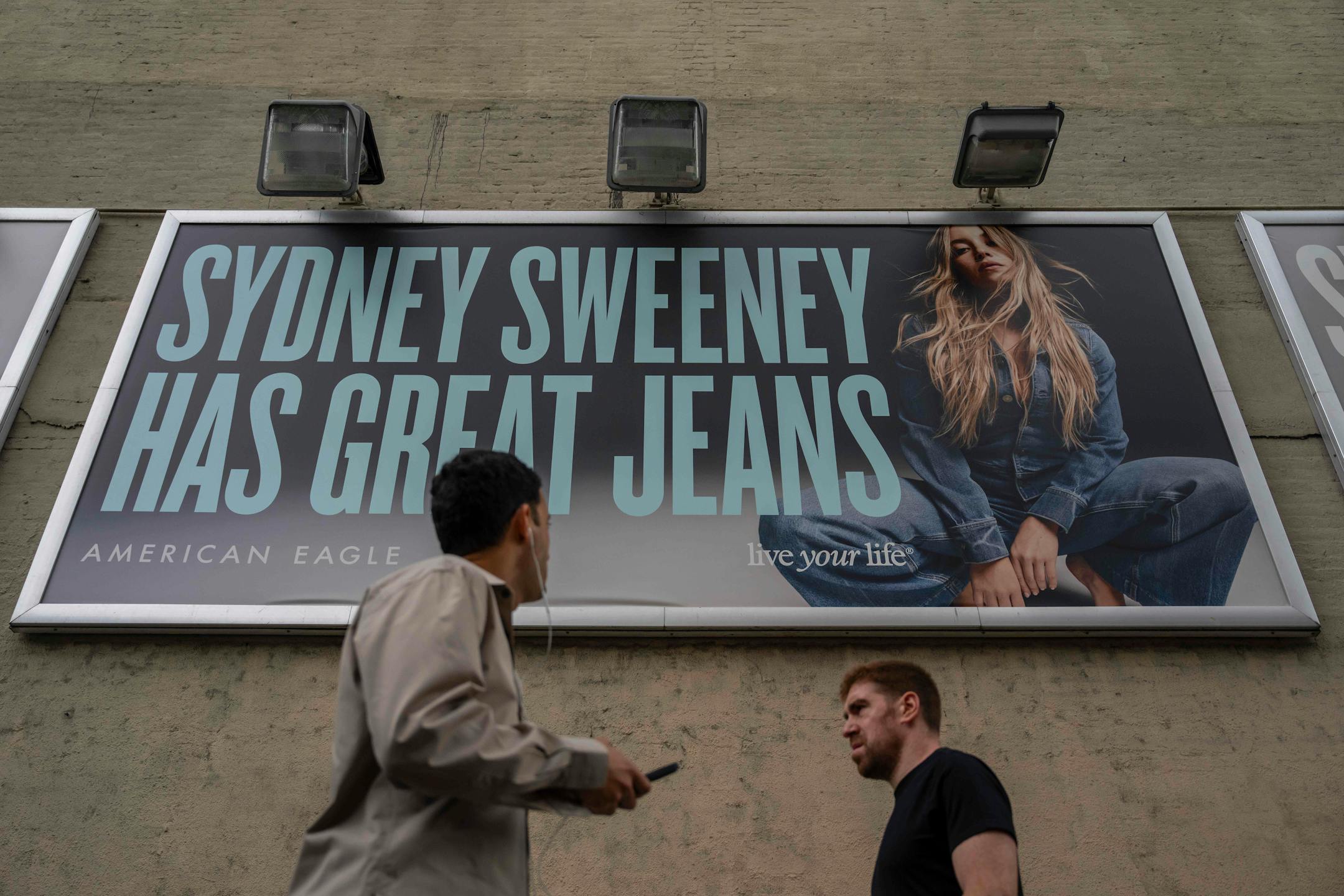
People walk past a campaign poster starring Sydney Sweeney which is displayed at the American Eagle Outfitters store on Aug. 1 in New York.
People walk past a campaign poster starring Sydney Sweeney, which is displayed at the American Eagle Outfitters store, Aug. 1 in New York. (Yuki Iwamura/The Associated Press)

Opinion editor’s note: Strib Voices publishes a mix of guest commentaries online and in print each day. To contribute, click here.

•••

When I first saw the American Eagle ad with actress Sydney Sweeney, I blinked. Then I watched it again. It was a simple line: “Sydney Sweeney has great jeans,” delivered with a wink and a whisper about her family traits. Blue eyes. Soft lighting. A pun, sure. But also a message. One that didn’t sit right.

And then it showed up in my group chat. That’s usually how the real conversations often start.

As my friends and I passed around TikTok videos breaking down the ad, we weren’t just critiquing branding. We were naming something deeper.

In one such video, @stefanie.renee.salyers explains how the backlash isn’t just outrage, it’s recognition. She says, “The fact that some don’t understand is the very mechanism of the dog whistle itself.” She’s right. That’s what makes a message like this so slippery. The people it flatters don’t see the harm. The people it erases can’t unsee it.

What struck me most was not just the slogan, but the idea behind it: that some people are born with the “right” kind of genes. That what we inherit — in appearance, in status, in legacy — should be soft, visible and marketable. The ad suggested inheritance could be worn like denim. My generation knows better.

Because for many of us, inheritance isn’t something you show off. It’s something you carry.

Earlier this month while that conversation was unfolding online, I was in Billings, Mont. I had traveled there to spend time with my grandfather Harry and my father, William — both white men who love me deeply. We weren’t off the grid. We were in a quiet neighborhood, the kind that could exist almost anywhere in America. Lawns trimmed. Neighbors waving. The kind of place that feels familiar even if it’s your first time visiting.

Somehow, that setting made the moment feel even more symbolic. It reminded me that the story of inheritance isn’t just something that lives in textbooks or politics. It lives in living rooms. It lives in places like this.

To sit between my grandfather and my father is to feel a rare kind of safety. A full circle of protection that the world doesn’t always offer women like me. There is something sacred about being in a space where every glance affirms you. Where the air itself seems to remember your name.

I listened to my grandfather’s stories, small and tender. Memories of family trips, Vikings football games and his dog sled team. I watched my father smile in agreement. They nodded at the same parts of the story, the way family sometimes does without thinking. And I felt held. Not just by them, but by the rhythm of shared memory.

Even in that peace, I felt the shape of absence. This August marks 12 years since my grandmother Carolyn passed away. She was Black, brilliant, steady. She didn’t live to see this version of me: an attorney, a writer, a woman learning to stand on her own. But I carry her everywhere. Not like a ghost, but like the warmth in a quilt. The kind you can’t see but you know is wrapped around you. She is in my posture, in my choices, in the way I speak with conviction when no one asks me to.

If she had been in that house with us, I think she and my grandfather would have traded stories about me. About my childhood, my fire, my loyalty. They would have smiled at the ways I’ve become exactly who I was meant to be.

That’s why the ad stung. Not because it was offensive in the loud, obvious way. But because it was hollow. Because it tried to dress up inheritance as aesthetic. As denim. As blue eyes and soft lighting. When what we inherit — what I’ve inherited — is so much heavier and so much more sacred than that.

My grandfather’s father was the first in our family born in the United States. Their name was recorded at Ellis Island. They came here seeking freedom. They found it, mostly. They built a life. They passed down values. That’s one part of my story.

The other part is Carolyn and the people who came before her. They didn’t get processed at Ellis Island. They were stolen, shackled and sold. And somehow, they survived long enough for me to be born into both stories.

That is what I mean when I talk about inheritance. Not just genes, but memory. Not just family trees, but family wounds. The kind you don’t speak about at first, because they hurt. The kind you eventually speak about anyway because they deserve to be remembered.

What I’ve inherited cannot be measured in eye color or stitched into fabric. I’ve inherited my grandfather’s steadiness, my father’s principles and my grandmother’s power. And I carry them all without needing to say a word.

That is what American Eagle missed. They wanted to sell something clever. But my generation is not interested in clever. We are interested in context. In truth. In honoring what we carry, even when it is too heavy to name.

Gen Z does not just wear our inheritance. We live it. And we are not here to be branded. We are here to tell the story whole.

Haley Taylor Schlitz is an attorney, writer and former public school teacher based in St. Paul.

about the writer

about the writer

Haley Taylor Schlitz

More from Commentaries

See More
card image
Leila Navidi/The Minnesota Star Tribune

When did we decide that the proper consequence for deep systemic failure is a soft landing?

card image
card image