

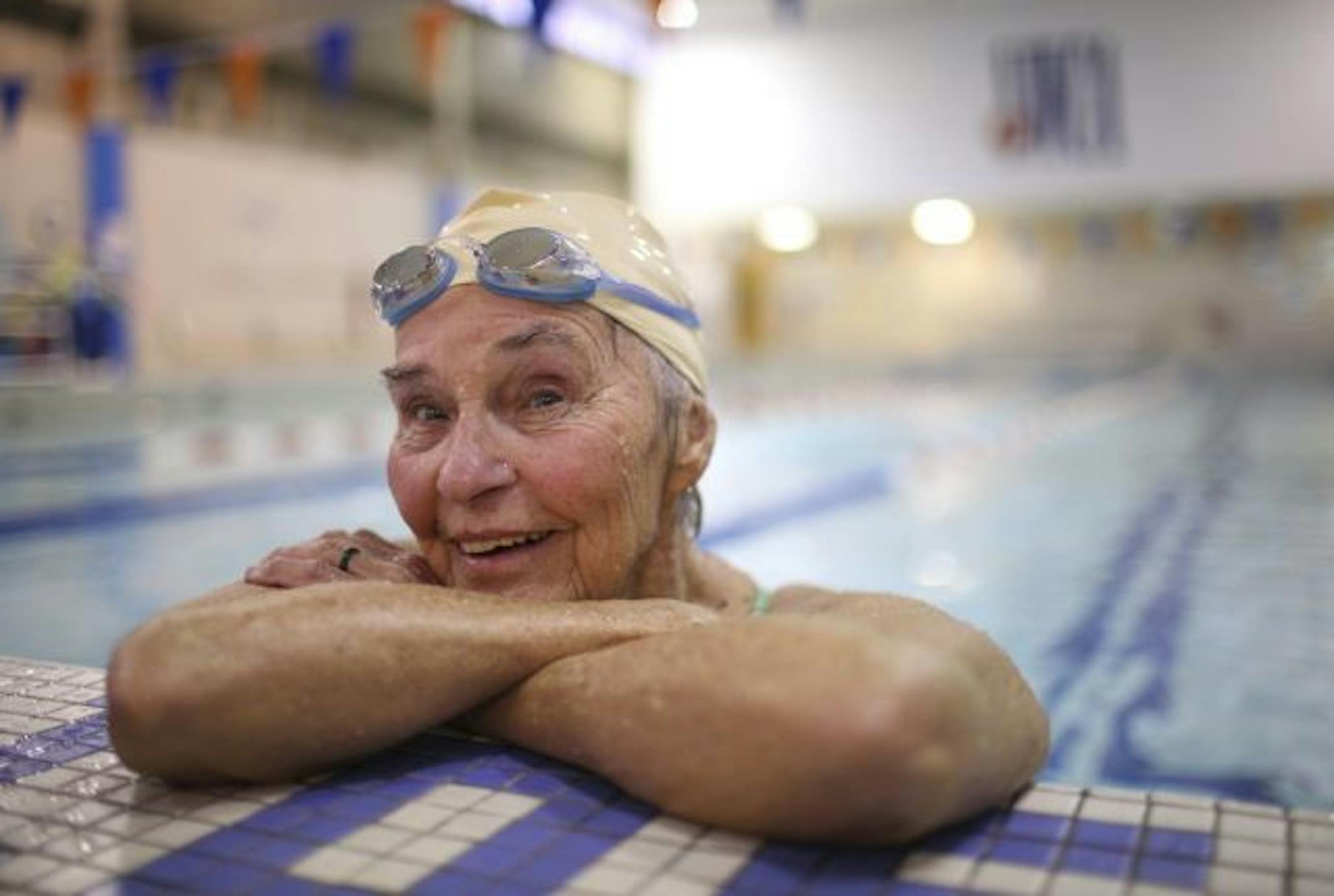
Gail Roper was fearful of making a scene.
Poised on the lip of a pool after swimming laps seven years ago, the former Olympic swimmer "knew something was wrong. It was like I was having an out-of-body experience. But it was scary." She crawled out of the pool, rattled. A month later she experienced a second episode -- her doctor later said her heart was beating irregularly. He suggested a pacemaker.
"I'm an athlete," she said. "They're for sick people."
By anyone's standards, the now-80-year-old Roper, one of the world's top female swimmers, seems an unlikely heart patient. The marine biologist from Healdsburg, Calif., swims at least three days a week and recently broke nine world swimming records. But it was the tiny device, the size of two quarters smooshed together, that enabled her to continue her lifelong love affair with water.
The petite mother of seven and grandmother, resplendent in a bejeweled Christmas sweater, spoke to several hundred Medtronic Inc. employees at the company's cardiac rhythm disease management headquarters in Mounds View on Tuesday. The 15-minute talk prompted a standing ovation and a few misty eyes as she greeted representatives of the Medtronic team that made her device.
If Roper represents a remarkable chapter in Medtronic's past, patients like her also represent a valuable chapter in the company's future.
Each year, close to 1 million people worldwide are implanted with a pacemaker -- a once-groundbreaking technology that doesn't get much attention these days. Medtronic co-founder Earl Bakken invented the first battery-powered pacemaker in 1957, establishing Minnesota as ground zero for the technology and helping create the state's highly coveted med-tech industry. Today, however, the $4 billion global industry is a mature business, said Tim Nelson, an analyst at FAF Advisors in Minneapolis. "It's a segment of the business that has been growing silently, but steadily."
Demographics may work in the device's favor -- as Gail Roper's example shows.



