

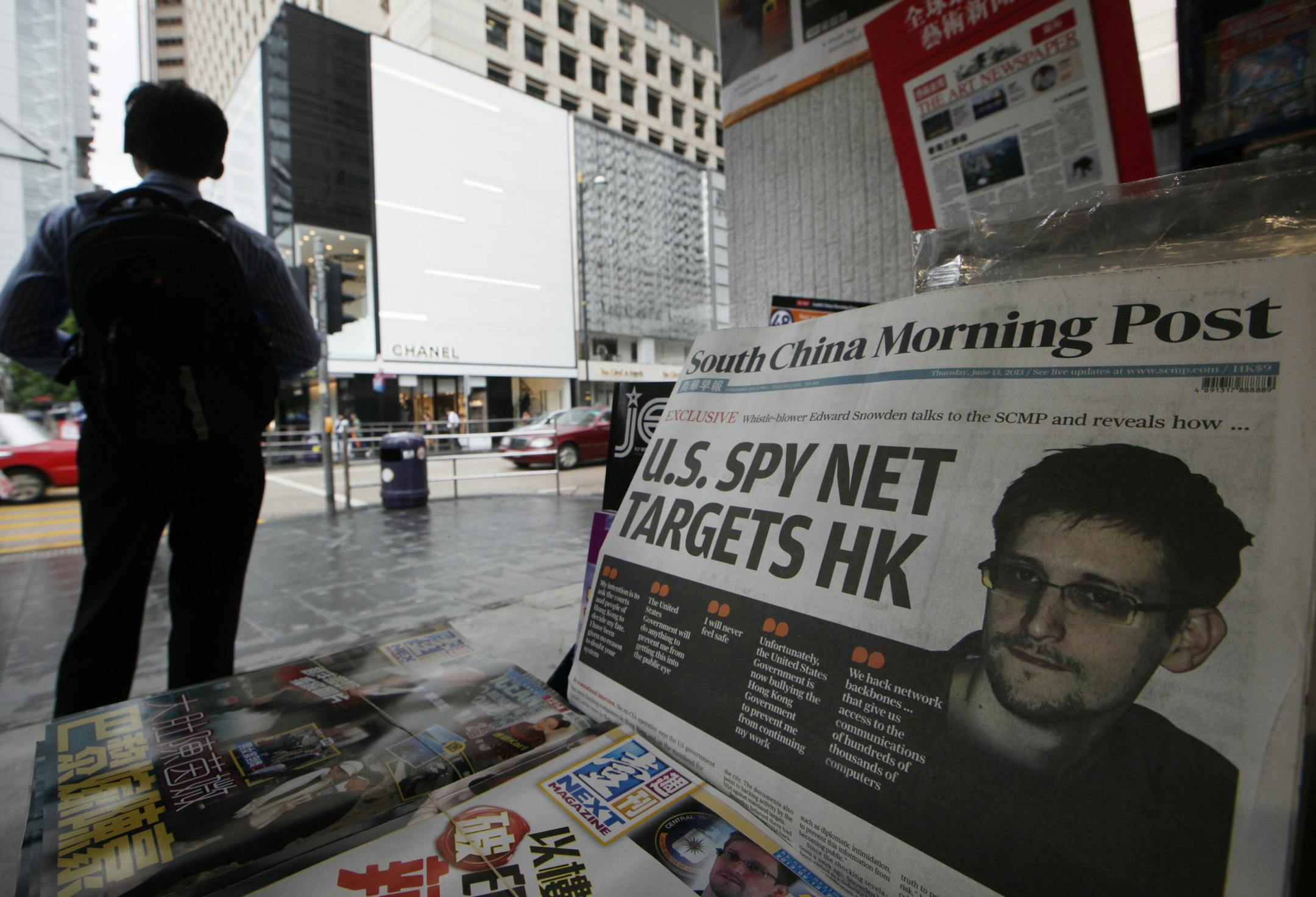
Recently, Americans have learned of a dizzying array of heretofore unrevealed surveillance programs, part of a hidden security structure ostensibly designed to prevent terrorist attacks from ever occurring on U.S. soil again.
Reactions from commentators have ranged from furious outrage to reasoned concern to outright dismissal of the programs' implications. Those in the latter camp have begun to rail against former Booz Allen Hamilton contractor Edward Snowden for his release of the National Security Agency documents that have sparked a debate over the balance between privacy and security in the digital age. Opponents have dismissed him as an unhinged narcissist or a sociopathic nerd.
Whether Snowden's actions are justifiable is up for debate, but Snowden himself made his motivations clear in his e-mail correspondence with Washington Post reporter Barton Gellman. In his view, America's security state has simply become too large and intrusive in the face of the relatively minor threat of terrorism. "We managed to survive greater threats in our history … than a few disorganized terrorist groups and rogue states without resorting to these sorts of programs," he told Gellman.
It's a fascinating quote. But does his statement — so compelling on its surface — hold true after an examination of U.S. history? Precisely when was the period when a threat greater than those we face today was bravely met without any serious infringements on liberty?
We can quickly dispense with the last 12 years. Following 9/11, President George W. Bush's administration enacted policies that will likely become synonymous with executive overreach — the policies many of President Obama's supporters are now disappointed he didn't do more to rein in. These included the NSA's program of illegally wiretapping American citizens without a warrant, first revealed in 2005, which set the stage for today's concerns about whether the agency is in the habit of using its vast infrastructure to find and store every crumb of data about millions of people in the country.
Muslim Americans also saw themselves the frequent victims of assaults on their civil liberties, finding themselves on the receiving end of enhanced scrutiny and frequent harassment from law enforcement.
It's equally doubtful that Snowden was thinking of the 1960s and '70s when he spoke to Gellman. Befitting a period of social change and upheaval, many of the threats the government sought to counter then were internal. It was also a time when U.S. security agencies, both domestic and foreign, held more power than they ever have, as Congress routinely ignored its oversight responsibilities. The work of the Federal Bureau of Investigation is best remembered for the harassment of civilians taking part in the civil-rights movement or other activities deemed subversive.
Even as lauded a peace advocate as the Rev. Martin Luther King Jr. found himself the target of FBI snooping, as agents gathered dirt to potentially discredit him and his movement. The FBI's Counterintelligence Program — better known as COINTELPRO — reached into the lives of people across the ideological spectrum, from the Black Panthers to the Ku Klux Klan, all in the name of protecting security.


