Surprise Brexit vote may keep U.S. interest rates near zero

Reuters
June 25, 2016 at 7:00PM
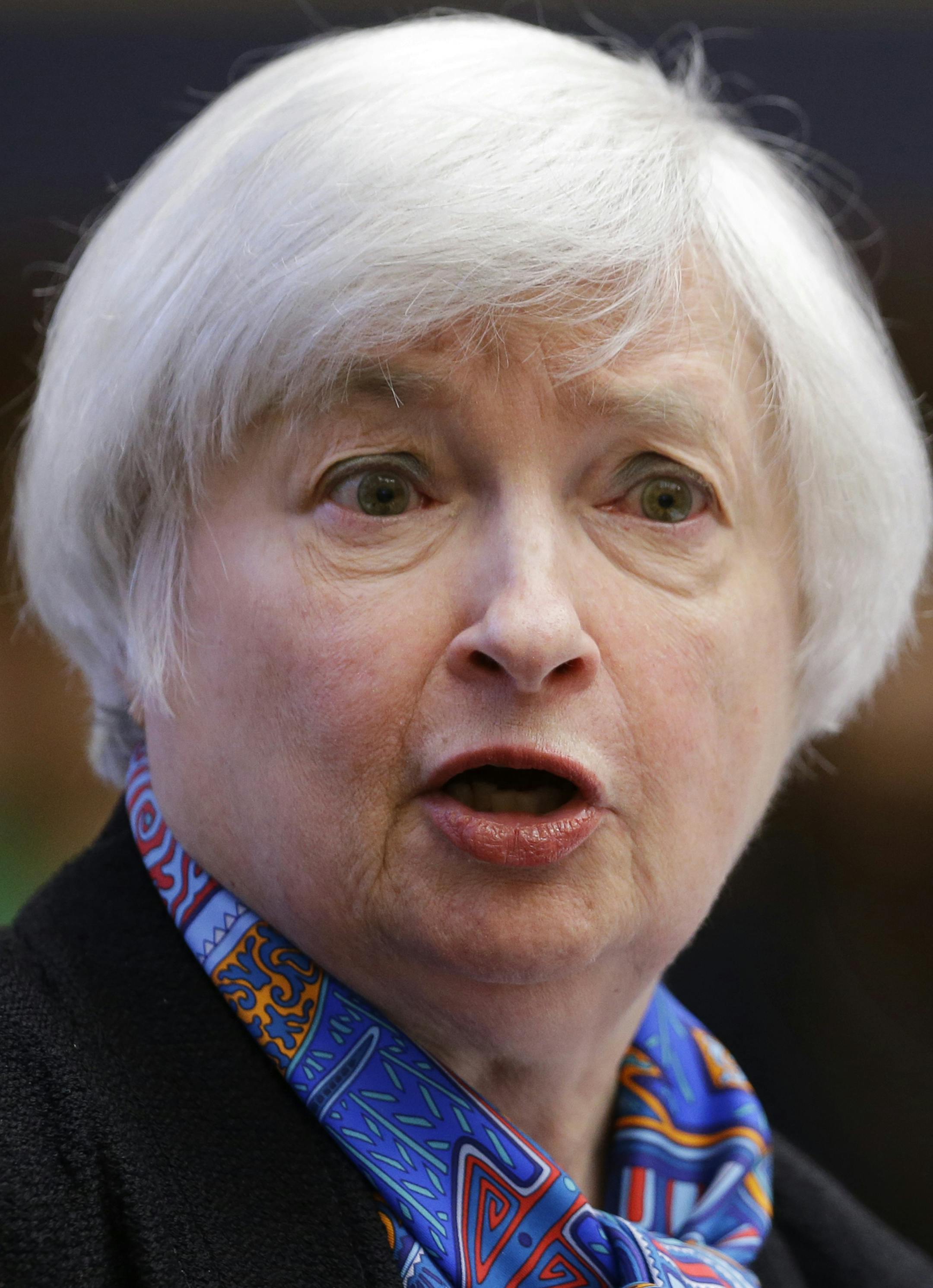
Federal Reserve Chair Janet Yellen testifies on Capitol Hill in Washington, Wednesday, June 22, 2016, before the House Financial Services Committee hearing on U.S. monetary policy. (AP Photo/Manuel Balce Ceneta)
Before the vote, Janet Yellen said global conditions didn’t “mean we can never escape zero interest rates.” (The Minnesota Star Tribune)

WASHINGTON – Britain's shock vote to leave the European Union may tie the U.S. Federal Reserve to near-zero interest rates for far longer than expected, according to new research indicating the U.S. central bank is now tightly bound to international economic conditions.

Over the past 18 months the Fed has blinked more than once, and refrained from raising interest rates when global market volatility has darkened the economic outlook, but the Fed has still maintained that U.S. monetary policy could ultimately "diverge" toward higher rates even in a weakened world economy.

That idea may now have suffered its final blow.

Fed research published last week found a strong link between the movement of the long-run "natural" rate of interest in the United States and other developed countries, meaning the Fed may be forced to keep short term interest rates near zero until economic growth in other developed economies accelerates and the uncertainty around "Brexit" passes.

Other research has begun documenting abnormally sharp moves in the U.S. dollar in response to monetary conditions around the world also.

With the U.S. dollar rising sharply on Friday after the Brexit vote as investors poured money into safe-haven assets, the Fed may be faced with a fresh drag on U.S. exports and job growth and another hurdle to reaching its inflation target. The dollar rose more than 2 percent on Friday against a basket of major currencies.

Taken together, the conclusions are bad news for a central bank that has staked its credibility on the need to nudge U.S. borrowing costs higher. The research is especially bad news for the Fed's ability to raise rates if the rest of the world remains a depressed amalgam of negative interest rates and slow economic growth.

The Fed's position is "extremely challenging … In the current global setting it will be extremely hard for the Fed to move long rates," said Massachusetts Institute of Technology economics professor Ricardo Caballero.
Research by Caballero and colleagues at MIT and Harvard is among a number studies indicating that monetary policy, instead of acting through its influence on short and long-run borrowing costs, is being felt more acutely on currency markets. In the case of the United States that has meant a strong dollar, resulting in a drag on exports, manufacturing activity and job growth.

"I think the Fed is going to be worried about the second round consequences for the European Union," said Thomas Costerg, a New York-based economist with Standard Chartered Bank.

"Even with stronger U.S. data, I don't think the Fed will tighten policy. It has already been anxious about the global picture, it is increasingly behaving like the central bank of the world, and it will likely remain really worried about what it means for the E.U.," he said.

It remains an article of faith at the Fed that U.S. monetary policy can follow its own course. On Wednesday of last week Fed Chairwoman Janet Yellen told a Congressional committee that while conditions in the rest of the world matter to the Fed, "it doesn't mean we can never escape zero interest rates."

However the difficulties of divergence have increasingly worked their way into Fed research, internal debate and public pronouncements.

A day after Yellen spoke, the Fed released a new paper co-authored by Fed board economist Kathryn Holston, Monetary Affairs director Thomas Laubach, and San Francisco Fed President John Williams suggesting that while the Fed might escape zero interest rates, its pace of monetary tightening and the long-run destination of the target overnight rate was to some degree anchored by what happens in Europe, the United Kingdom and elsewhere.

Estimates of the long-run natural rate of interest are imprecise, but form an important guide for policymakers as the point at which the economy grows at potential without accelerating inflation.

Using methods often cited in Fed debate, they found that natural rates in the euro region, the United Kingdom and Canada had all fallen alongside the U.S. rate over the last quarter century, and that interest rates in all four were likely to rise and fall together in the future.

Though noting the difficulties of estimating an economic variable that cannot be observed, the paper concluded that as much as a third of the variation in the U.S. natural rate of interest came from abroad.

One implication: as long as Europe remains stuck with slow economic growth and negative rates, the tougher it will be for the U.S. interest rates to move higher and allow Fed tightening to proceed. Economists say the European Central Bank may have to further loosen policy in response to Britain's leave vote.

There were similar implications in recent studies of how the U.S. dollar is reacting to international events, including yet-to-be published Fed research cited by Fed Governor Lael Brainard recently, along with Caballero's findings, urging the Fed to be cautious in any rate hike.

"The feedback loop through exchange rate and financial market channels appears to be elevated," Brainard said. "Several factors suggest that the appropriate path to return monetary policy to a neutral stance could turn out to be quite shallow."


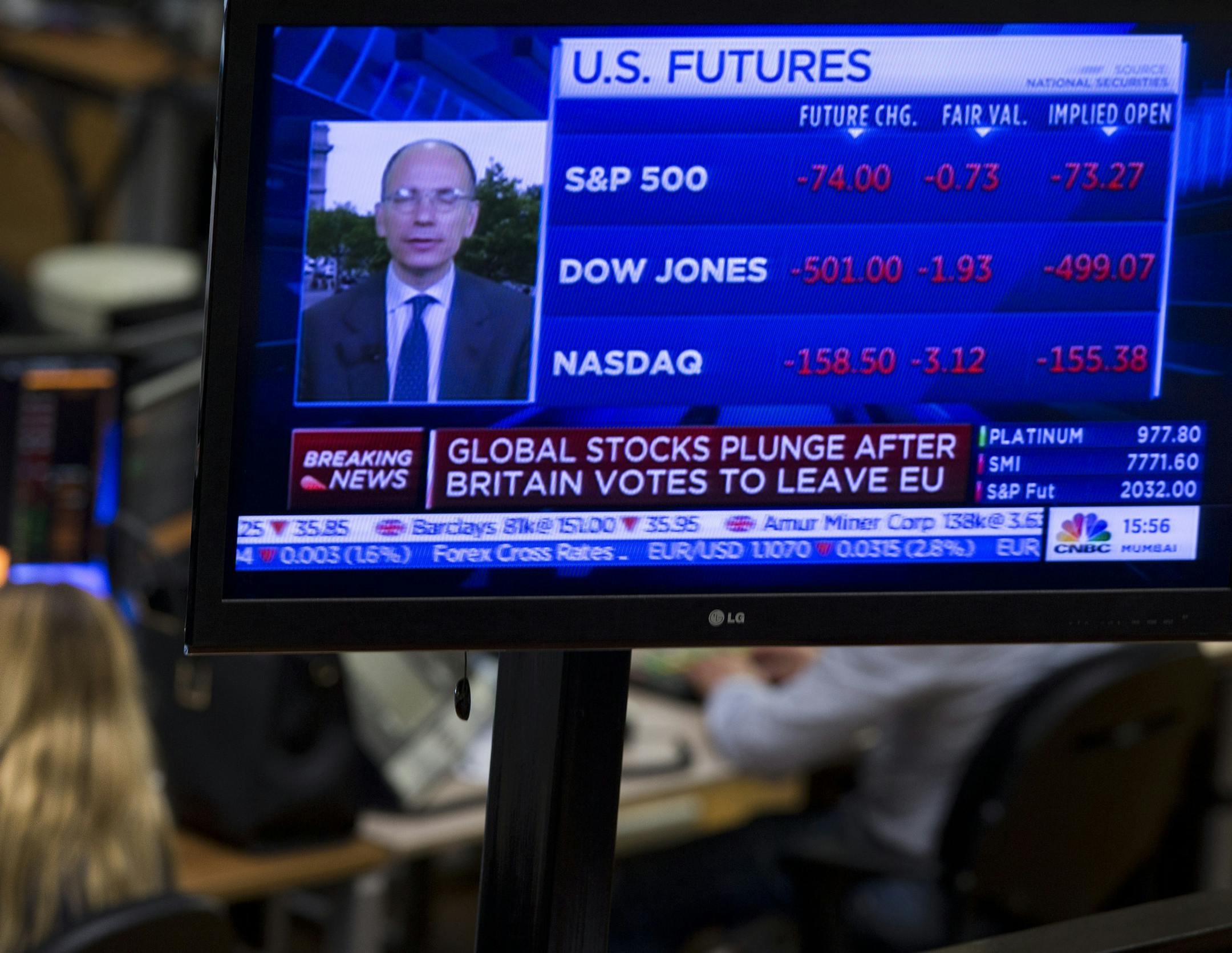
A TV screen shows global stocks plunging following the British Brexit vote as traders, background, work at the Euronext Amsterdam Stock Exchange, Netherlands, Friday, June 24, 2016. The British vote to leave the EU shook up financial markets around the globe on Monday, leading to sharp falls in stocks and the British pound.(AP Photo/Peter Dejong)
A TV screen shows global stocks plunging following the British Brexit vote as traders, background, work at the Euronext Amsterdam Stock Exchange, Netherlands, Friday, June 24, 2016. The British vote to leave the EU shook up financial markets around the globe on Monday, leading to sharp falls in stocks and the British pound.(AP Photo/Peter Dejong) (The Minnesota Star Tribune)
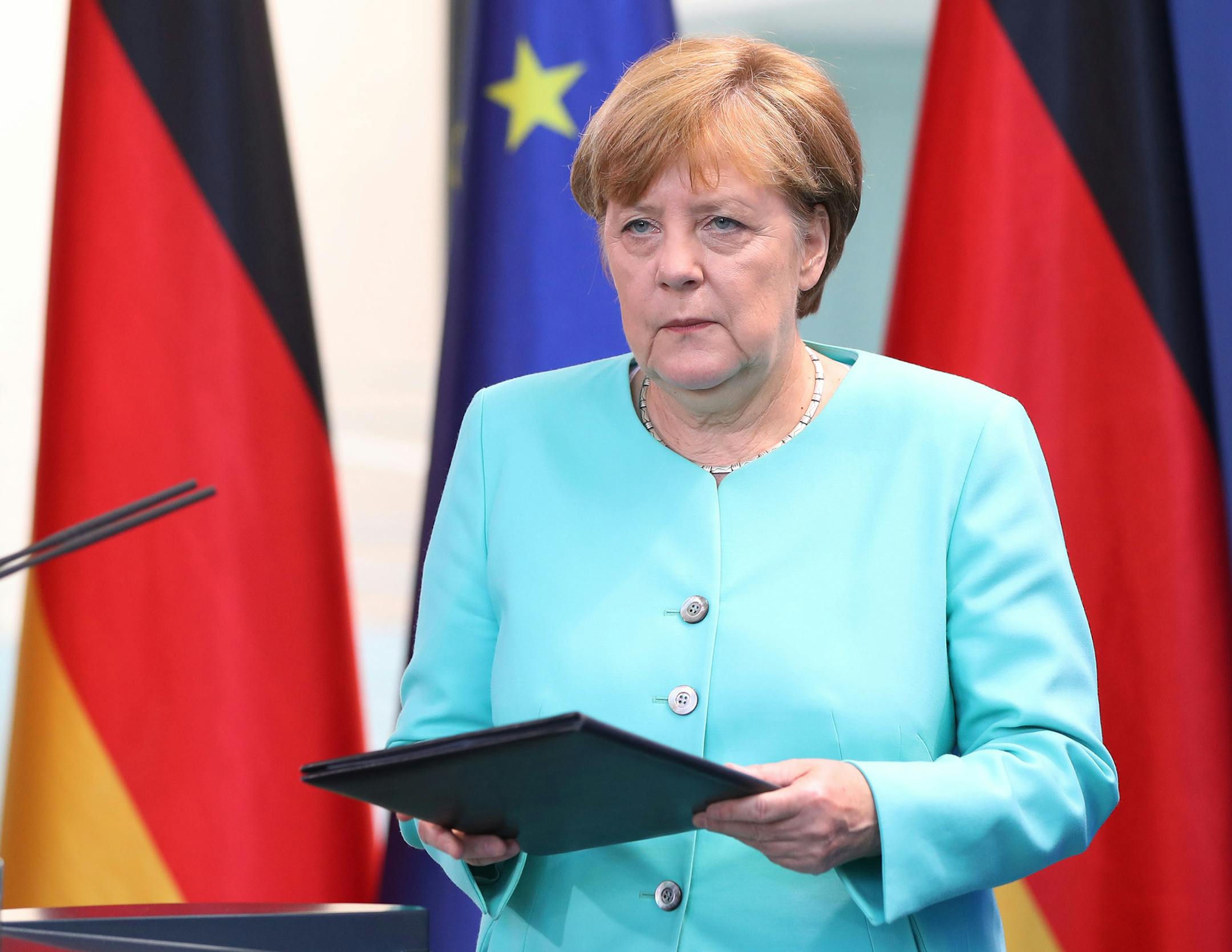
German Chancellor Angela Merkel delivers a statement on the results of Britain's EU referendum at the Federal Chancellery on June 24, 2016 in Berlin, Germany. Britons have voted by a narrow margin to leave the European Union (EU). (Kay Neitfeld/DPA/Abaca Press/TNS)
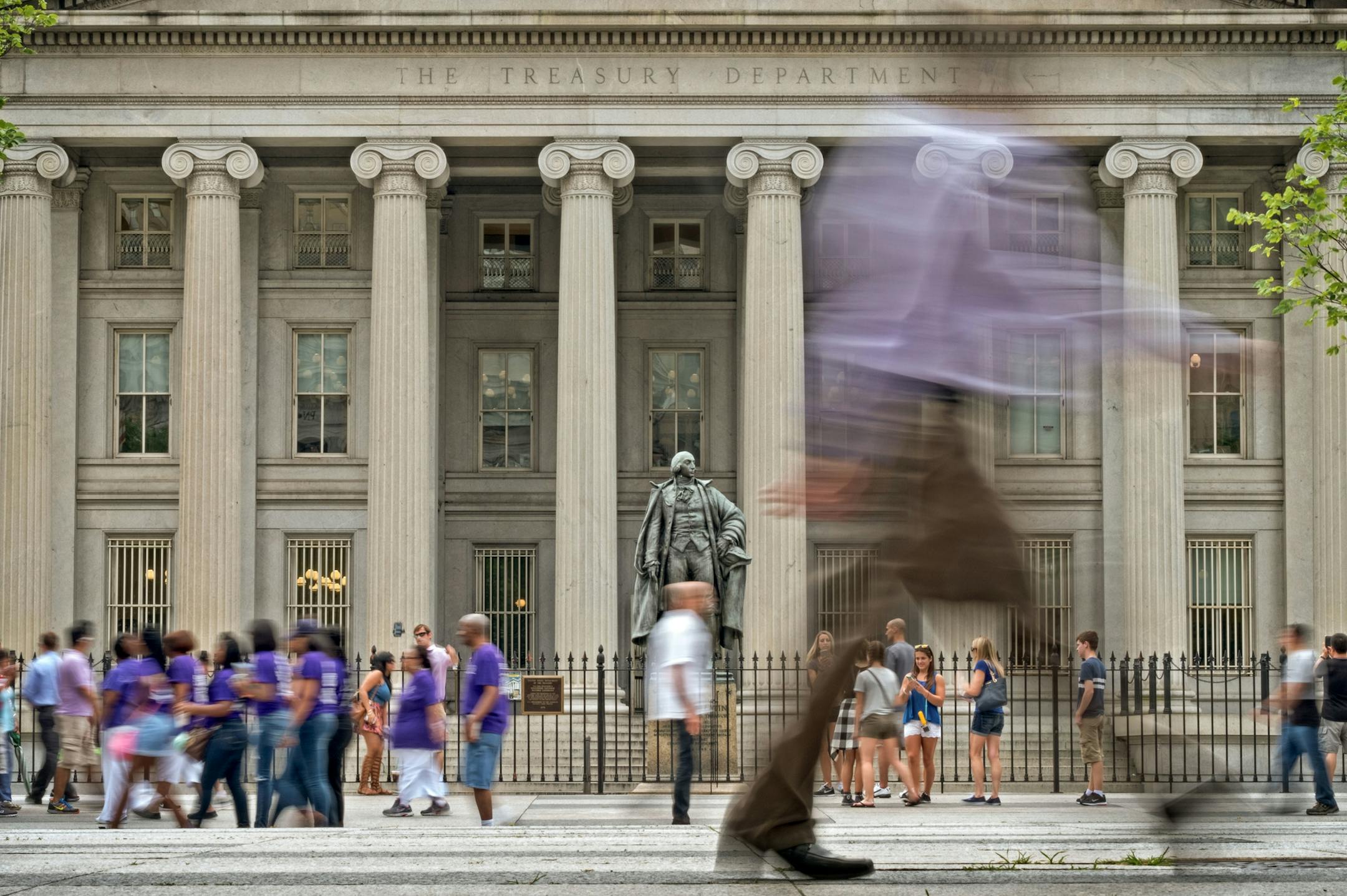
U.S. interest rates may be tied to the Brexit vote, as the markets plunged in response to the vote to leave. Top, the U.S. Treasury headquarters. Left, global stocks plunged following the vote. Right, German Chancellor Angela Merkel delivered a statement on the results. (The Minnesota Star Tribune)
Pedestrians and tourists go about their usual lunchtime routine in front of the United States Treasury headquarters building in Washington, Friday, June 24, 2016, as the U.S. government and the financial markets analyze and react to Britain's vote to withdraw from the European Union. (AP Photo/J. David Ake)
Pedestrians and tourists go about their usual lunchtime routine in front of the United States Treasury headquarters building in Washington, Friday, June 24, 2016, as the U.S. government and the financial markets analyze and react to Britain's vote to withdraw from the European Union. (AP Photo/J. David Ake) (The Minnesota Star Tribune)
about the writer

about the writer

Howard Schneider

More from Business

See More
card image
card image