

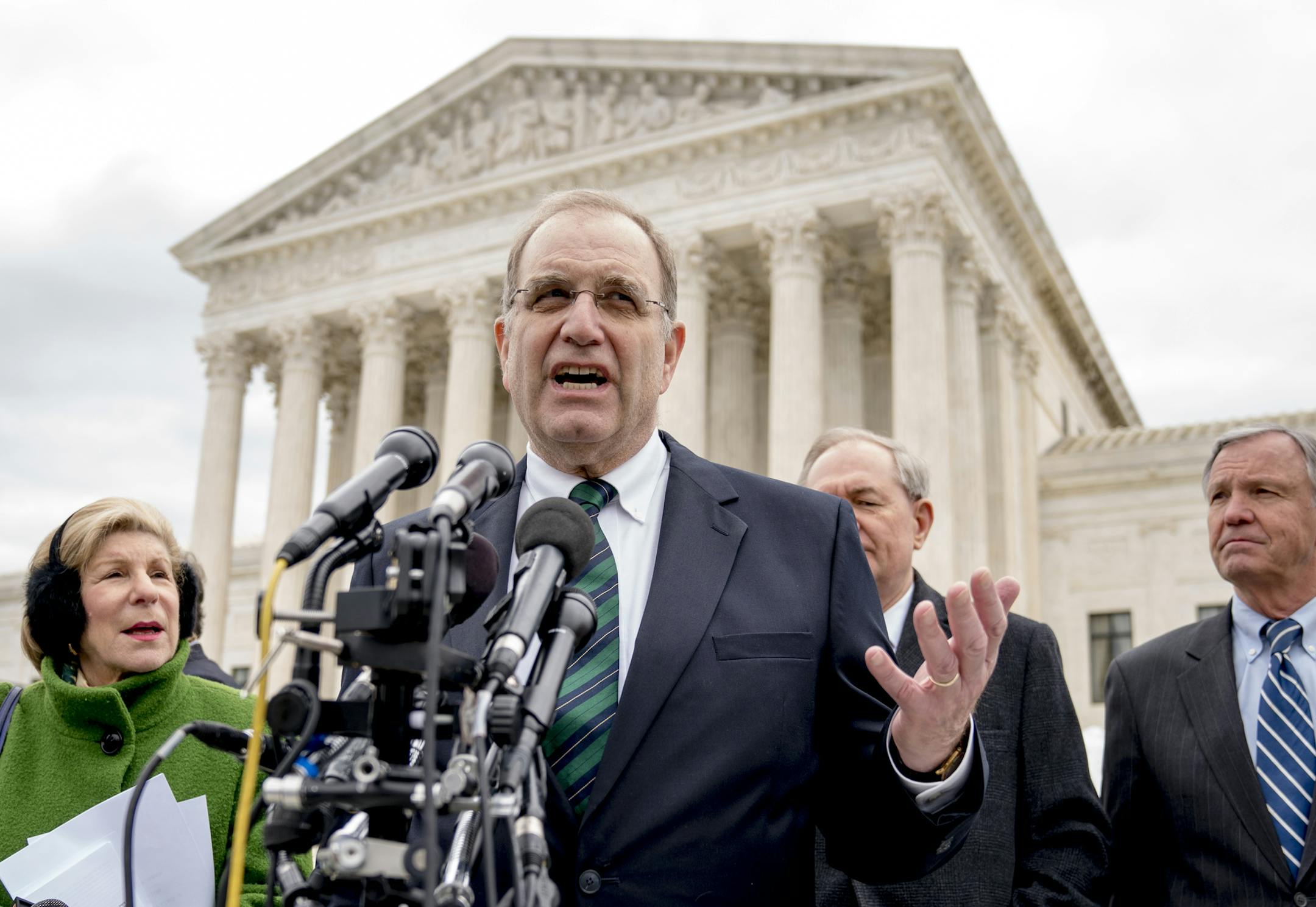
WASHINGTON – The Supreme Court took up a huge sales tax case on Tuesday with the expectation that it was ready to bring online shopping under the same rules that apply to ordinary retailers.
But that outcome was less certain after Tuesday's argument. The justices were clearly divided, but in unusual coalitions of conservatives and liberals. One side said Congress, not the courts, should set the rules for taxing interstate commerce.
At issue is a 1992 ruling involving mail-order catalogs when the justices found that states may not require out-of-state mailers to collect sales taxes on behalf of their residents. Now, in the era of online shopping, that decision in Quill v. North Dakota is said to cost states and municipalities $8 billion to $13 billion a year in lost tax revenue.
Chief Justice John Roberts and Justices Samuel Alito and Elena Kagan said Congress is better suited to devise a new system. Roberts worried that requiring people who run their own websites to collect sales taxes for an estimated 12,000 taxing jurisdictions across the nation would be overly burdensome. There needs to be a minimum threshold, he said.
Kagan added, "Congress can craft a compromise in a way that we cannot."
Justice Sonia Sotomayor said she is worried that "overturning precedents will create a massive amount of lawsuits."
But Justice Ruth Bader Ginsburg said it should not be left to Congress to grapple with the court's previous decision. "If time and changing conditions have rendered [the Quill decision] obsolete, why should the court say: Well, we'll let Congress fix it?"
Justice Anthony Kennedy agreed that the Quill ruling was "incorrect" and should be overruled. And Justice Neil Gorsuch said it was unfair to traditional retailers who must collect sales taxes. "Why should this court favor a particular business model?" he asked.


