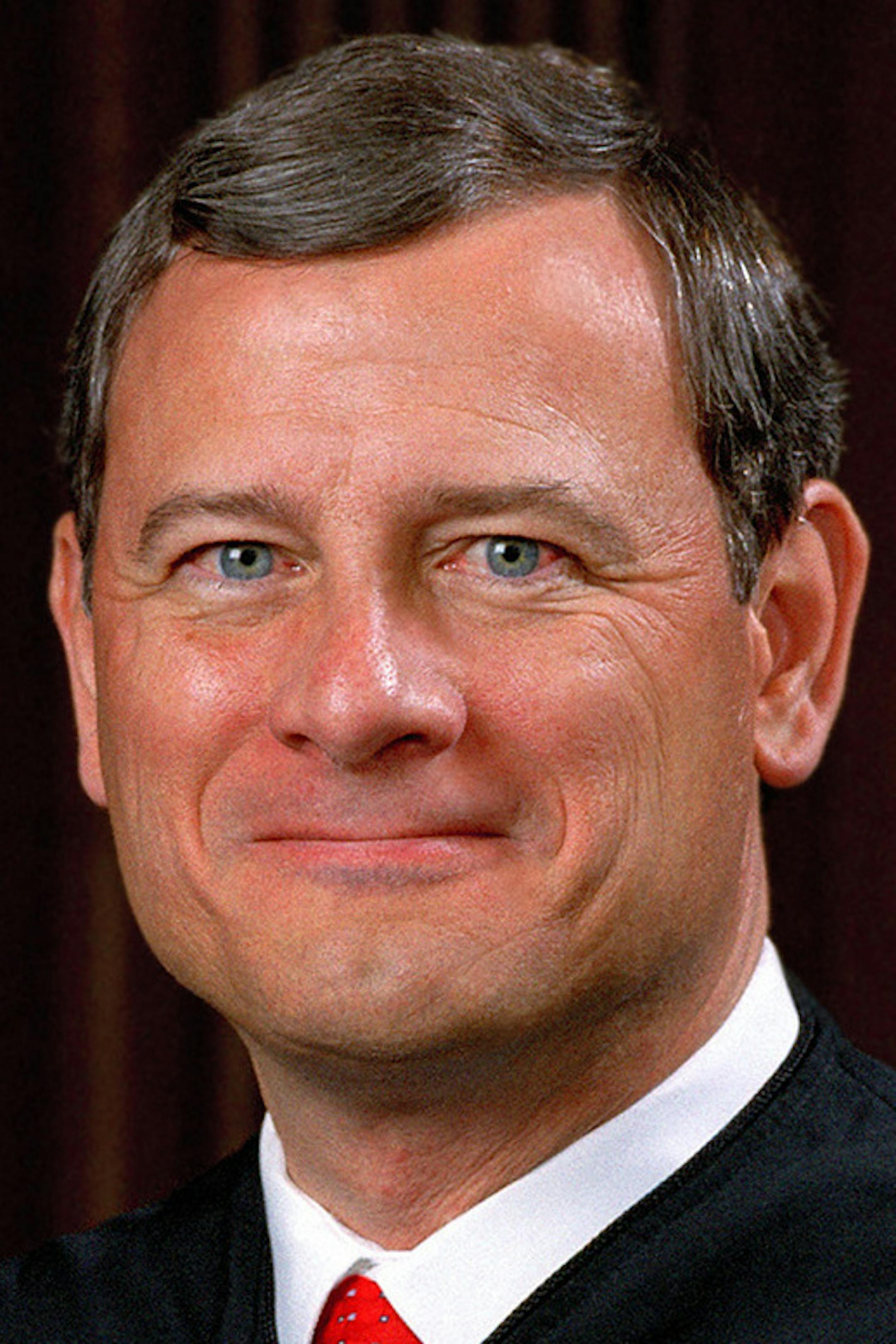
It's becoming a June ritual: Chief Justice John Roberts joins the U.S. Supreme Court's liberals to issue a moderate, centrist opinion, and leaves his erstwhile conservative admirers flailing.
Roberts' latest foray into moderation came in Thursday's free-speech case involving a 35-foot no-access zone around hospitals or abortion clinics imposed by Massachusetts law.
True, Roberts' opinion, joined by the court's four doubtless relieved liberals, struck down the Massachusetts buffer as a violation of the free-speech rights of pro-life activists who seek to converse with women who might be seeking abortions. But the crucial element in the opinion — the element that got the liberals on board and enraged the conservatives — is that Roberts said the law was neutral with respect to the content of speech as well as the viewpoint of the speakers.
That conclusion protected the possibility of other laws protecting women seeking abortions that pay more attention to what Roberts said was missing here, namely proof that the law was narrowly tailored. For the liberals, that was enough.
To understand the weirdness of the case, and how striking down the buffer law is still a victory for liberals, you need Free Speech 101, which is luckily very simple. Speech in a traditional public forum such as a sidewalk is protected by the First Amendment. But the government can regulate the time, place and manner of the use of public streets. The only requirement the government must satisfy is to show that the law is "narrowly tailored to serve a significant governmental interest" and that it leaves open "ample alternative channels for communication."
This standard is challenging to meet, but by no means impossible. Consider a law banning sound trucks blaring on your street at night. It would probably be constitutional, because the government has a significant interest in citizens' sleep, and there would be plenty of other times for sound trucks to operate, leaving ample alternatives for communication. It is this standard that Roberts applied to the buffer zone — and that will therefore be applied to other, similar buffer laws in the future.
If, however, a government law burdens speech based on its content, not its time, place or manner, the law is very different. Then the law would be subject to what's called "strict scrutiny," which would require that there be not merely a "significant" governmental interest but a "compelling" one. In addition, the government would have to show that it was using the least restrictive means possible. In practice, when it comes to the First Amendment, applying strict scrutiny is almost always enough to kill a law — as the saying goes, such scrutiny is "strict in theory, fatal in fact."
If the law favors one viewpoint over another, strict scrutiny would also apply — and the buffer law would almost certainly go down.