

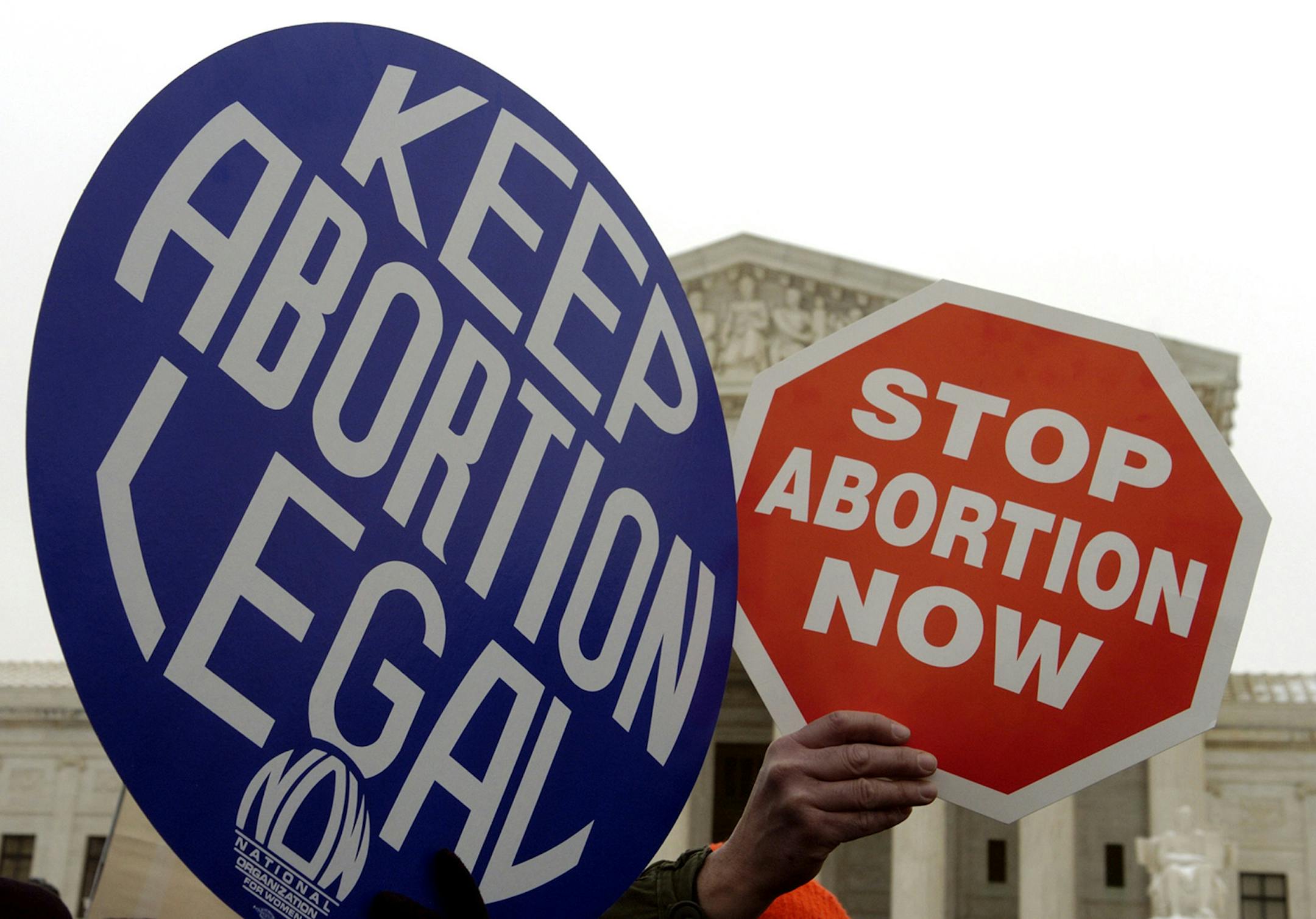
Roe v. Wade polls very well in broad outline, and the Supreme Court has affirmed many times its basic holding that abortion must be legal. Yet it still has a problem of democratic legitimacy. Chief Justice John Roberts, perhaps inadvertently, highlighted the problem in his controlling opinion in the court's latest abortion case.
In our form of government, the people are supposed to be the ultimate earthly source of authority. A judicial power to set aside laws that conflict with the Constitution need not undermine this truth. The courts in such a case are giving priority to the people's permanent will, expressed in the constitutional provisions that supermajorities of them ratified, over the transient will of majorities. (We should pause a moment when we label the courts "countermajoritarian.")
That authority and that democratic legitimacy are lacking when the courts strike down laws on the basis of principles or policies that the people can't plausibly be said to have ratified. So it is in the case of abortion, the alleged right to which cannot be found in the text, original understanding, structure, history, or purpose of the Constitution.
"An exercise in raw judicial power" is what Justice Byron White, a John F. Kennedy appointee, called it in his Roe v. Wade dissent. John Hart Ely, a legal scholar who favored legal abortion, saw the defects of Roe right away, writing shortly after it was handed down in 1973, "It is bad because it is bad constitutional law, or rather because it is not constitutional law and gives almost no sense of an obligation to try to be."
Roe's weakness haunted Planned Parenthood v. Casey in 1992. In that decision, a plurality of the court more or less conceded that the older decision could not be justified as an interpretation of the Constitution, but upheld a modified version of it anyway on the explicit ground that "to overrule under fire" would inflict too much damage on the court's reputation. People would stop believing "in the court's good faith."
The justices expended an enormous amount of rhetorical effort to try to persuade Roe's opponents to quit challenging it already. The Casey decision declared that Roe "calls the contending sides of a national controversy to end their national division by accepting a common mandate rooted in the Constitution."
Millions of Americans who considered abortion a grave injustice were being asked to abandon this conviction, and not in the name of anything actually in the Constitution. They were being asked to abandon it because of something vaguely "rooted in" it, and because the court's refusal to admit error in consequential cases was too important for the operation of our government. It is safe to say, 28 years later, that the gambit didn't work.
The contending sides have kept on contending, which is how June Medical v. Russo came before the justices to be decided this term. In 2016, a bare majority of justices struck down abortion-clinic regulations in Texas. Chief Justice Roberts had voted with the dissenters that time, in Whole Woman's Health v. Hellerstedt. This time, however, he voted to strike down Louisiana's regulations because of respect for the 2016 precedent.


