

Opinion editor's note: Star Tribune Opinion publishes a mix of national and local commentaries online and in print each day. To contribute, click here.
•••
With the start of the Supreme Court's new term, we will see and hear much debate lavished on blockbuster cases — the controversial opinions that play an outsize role in the public's perception of the court and that tend to split the justices, and the country, in predictably ideological ways. In recent terms, these include the Dobbs decision overturning Roe v. Wade, the affirmative action decisions, the student debt relief case, the vaccine mandate case, the Centers for Disease Control eviction moratorium case and the Clean Air Act case about climate change.
The Dobbs and the affirmative action cases are among the relatively small number of primarily constitutional cases before the court each term. The others are among the much larger side of the docket primarily about the interpretation of acts passed by a legislature.
Broadly, these cases have come to define the Supreme Court for Americans who now see it as overly politicized and question its legitimacy. The cases often affect millions of people and, as with the Dobbs decision, touch deeply held convictions.
But the ideologically charged opinions are not the only cases the Supreme Court decides. It might surprise many people to know that in a majority of the cases the court hears, liberal and conservative justices frequently come together on the decisions. Looking closely at a major portion of the court's past few dockets — in cases that also affect millions of people — tells a different story about its work.
In short, the Supreme Court operates much more functionally and consensually across its partisan divide than most people realize — and that fact ought to figure into how Americans judge a court that often gets caricatured.
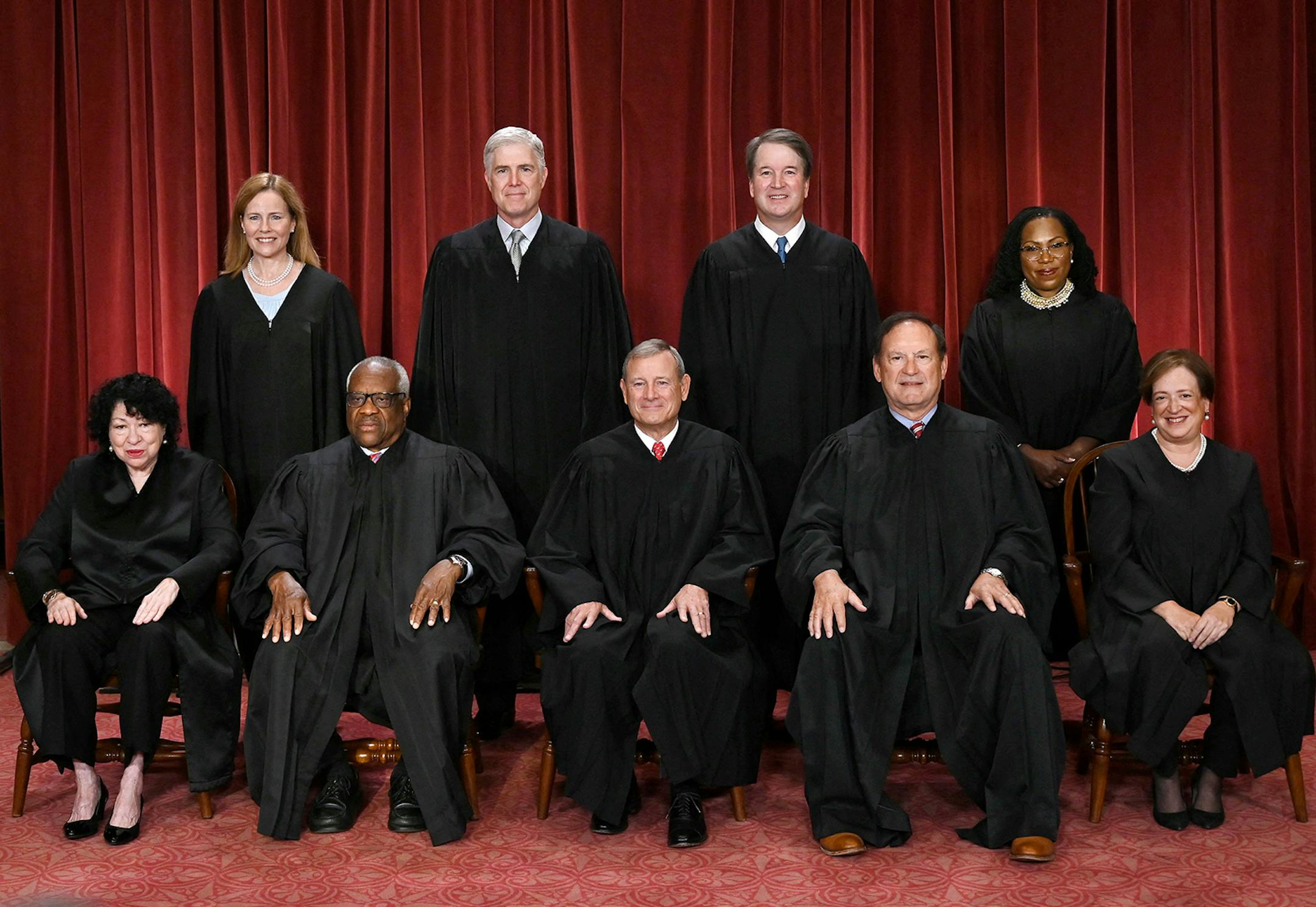
Judged by a close look at the opinions of recent terms, the Roberts court is closer to a 9-to-0 court than it is a 6-to-3 court.


