

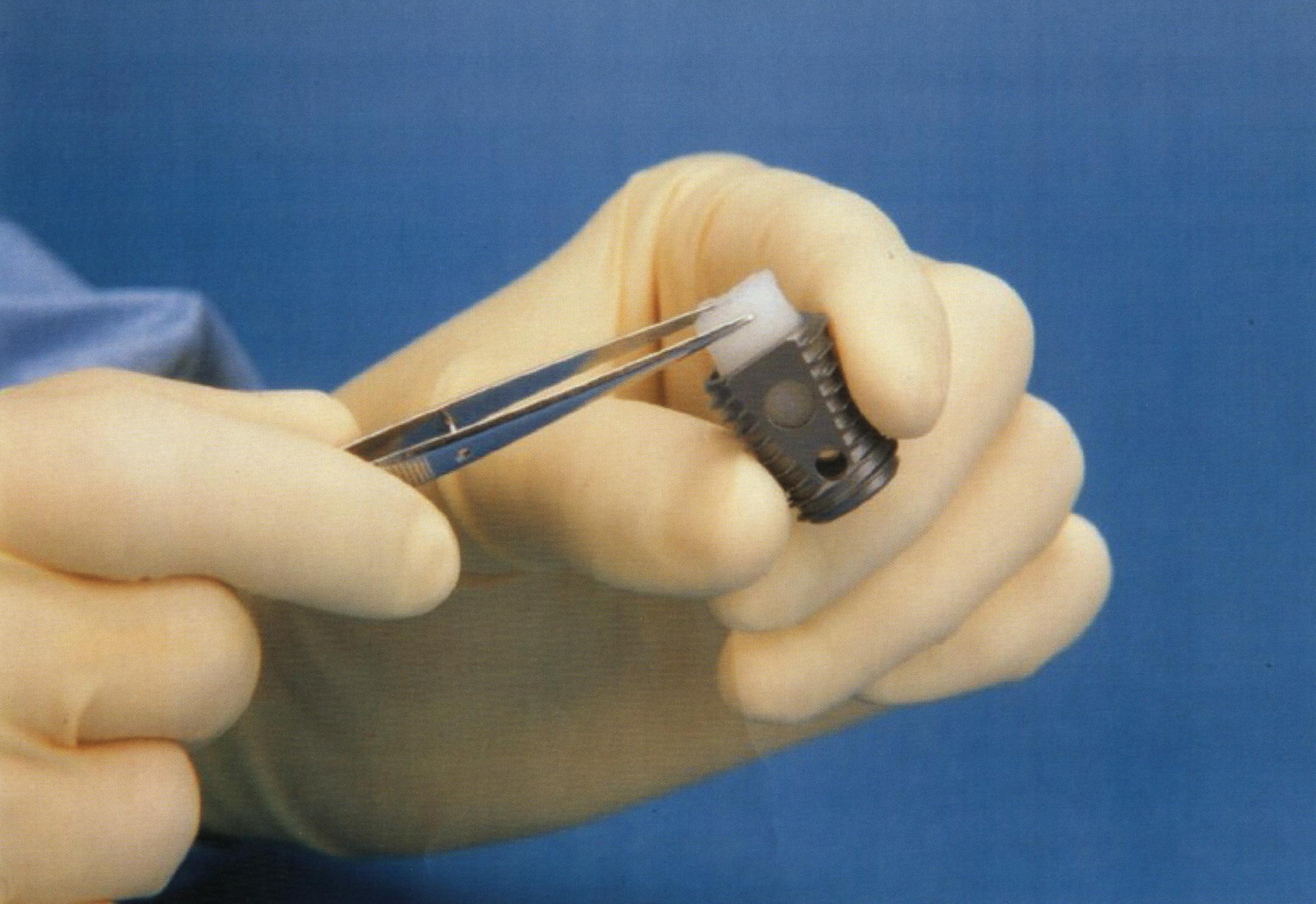
For the second time in three years, the U.S. Supreme Court has opted not to grant arguments in a lawsuit involving Medtronic's bone-growth product Infuse.
The court on Monday denied a request from a Medtronic shareholder to hear arguments over whether to reinstate her case against officers and directors of the world's largest medical device company.
The lawsuit from shareholder Charlotte Kokocinski, which was dismissed by a lower court in Minnesota, claimed Medtronic executives inflicted hundreds of millions of dollars of damage on shareholders by illegally promoting Infuse for unapproved surgeries.
Medtronic has long denied allegations that it inappropriately marketed the synthetic human protein component of Infuse for uses not approved by the Food and Drug Administration.
Company executives argued in court filings that Kokocinski's allegations were thoroughly investigated by an independent committee appointed by Medtronic. The committee concluded it would not benefit the company to sue the company officers, and asked for the case to be dismissed, which it was.
Kokocinski argued that the committee didn't investigate all the evidence, including a 2007 internal study of Infuse surgeries that documented adverse events, malfunctions and deaths among more than 1,100 of the roughly 3,600 patients whose records were reviewed. (Doctors judged that the deaths were not related to Infuse.)
The Supreme Court didn't comment specifically on the litigation. Rather, it included the case among a lengthy list of cases in which petitions for arguments were denied on Monday.
In January 2016, the Supreme Court similarly passed on an appeal to reinstate a lawsuit filed by an Oklahoma spine-surgery patient named Patricia Caplinger.


