

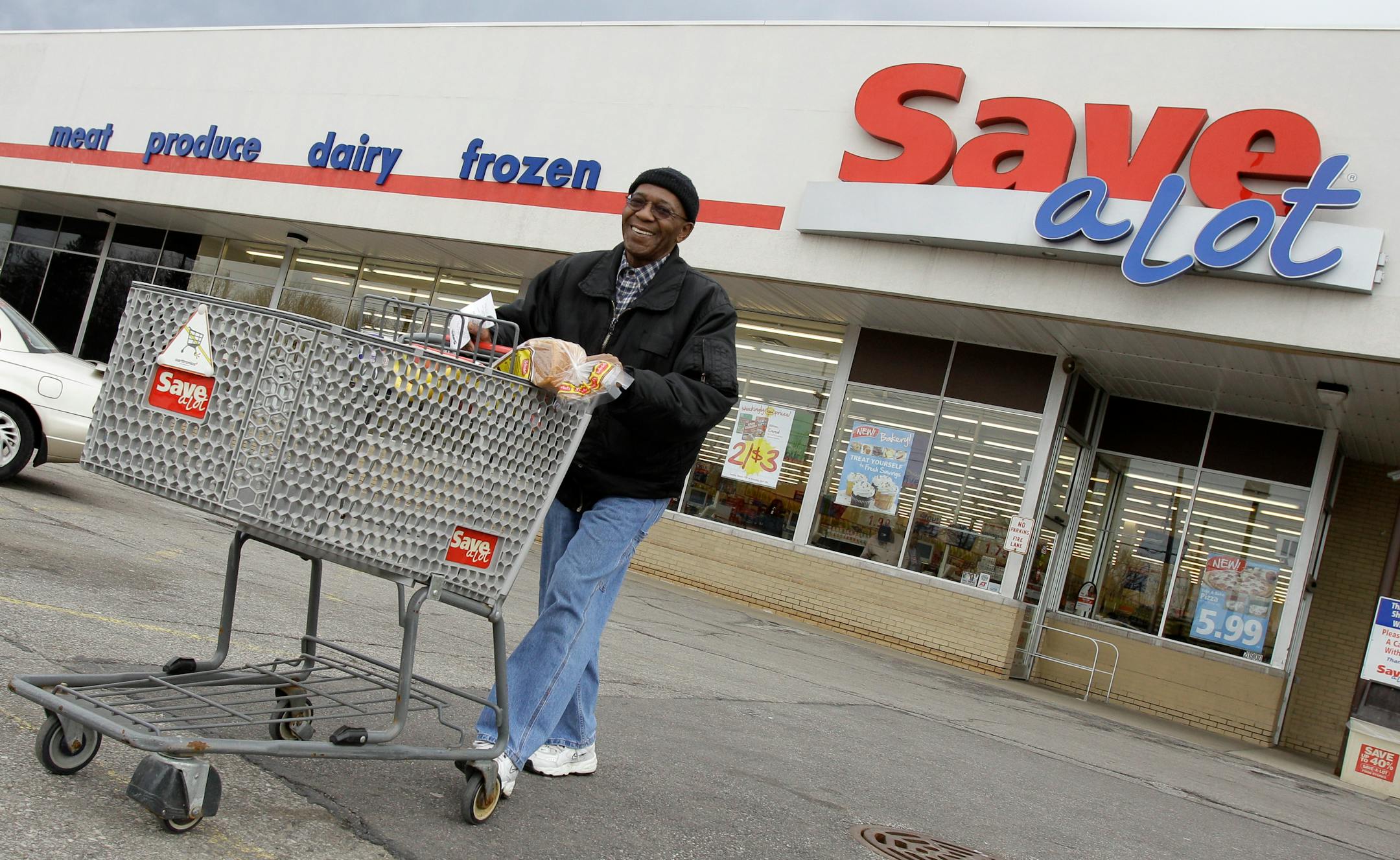
Supervalu — not long ago the nation's third largest supermarket operator — would shrink even further if its Save-A-Lot chain is successfully transformed into an independent publicly traded company.
From an investors' perspective, that's just fine: Supervalu's announcement Tuesday that it aims to spin off Save-A-Lot, a national discount grocery chain, sent the company's shares soaring 10 percent. A decent Supervalu earnings report Tuesday also helped the stock.
Save-A-Lot, with 1,300 stores nationwide though only one in Minnesota, has been seen as Supervalu's crown jewel for years. Analysts have regarded it as Supervalu's best bet for growth, but also as a potential sale or spinoff candidate.
"We have long been believers in the attractiveness of the Save-A-Lot's hard discount concept and the potential value of separating it from (Supervalu)," John Heinbockel, a Guggenheim Securities analyst, wrote in a note Tuesday. "That said, what is this business worth?"
A spinoff of Save-A-Lot would "unlock value" in Supervalu's stock, as analysts put it. Save-A-Lot, which Supervalu has owned for more than 20 years, is in one of the few parts of the grocery business that could be called fast-growing.
It's an ultralow price chain, which relies heavily on private-label goods, and competes particularly with Aldi, Wal-Mart and dollar stores. Save-A-Lot, like Aldi, has small stores that are about 15,000 square feet — compared to 50,000 square feet or more for a conventional supermarket.
"A separation of Save-A-Lot could allow for greater management focus on each of our wholesale, retail food and Save-A-Lot business units," Supervalu CEO Sam Duncan told stock analysts in a conference call.
Save-A-Lot comprised $4.6 billion of the company's $17.8 billion in sales during its last fiscal year. Supervalu was doing about $36 million in revenue before 2013 when the ailing company dumped its four largest grocery chains for $3.3 billion.



