

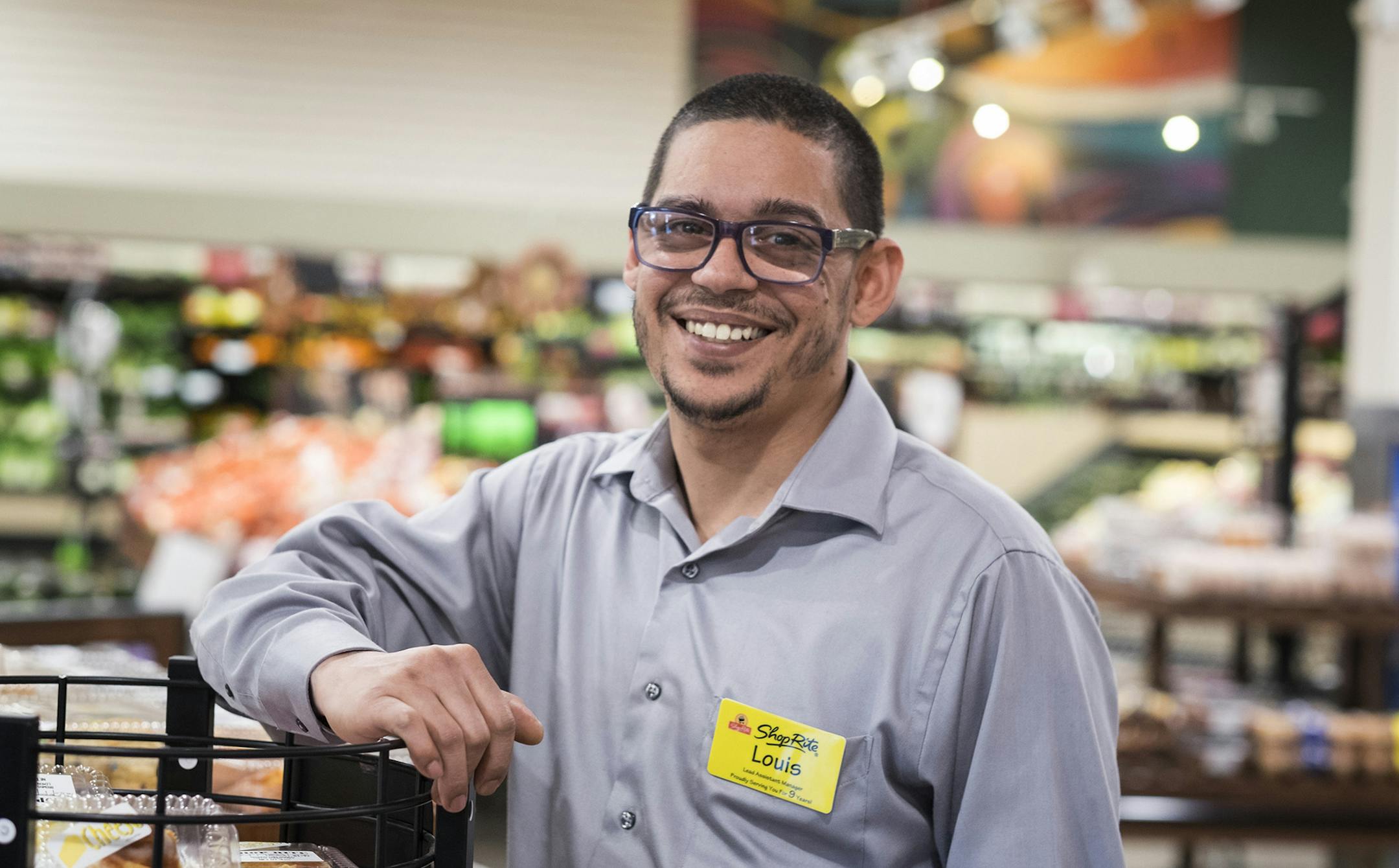
PHILADELPHIA – When Jeffrey Brown looks to promote employees within his 13-store supermarket chain, he looks for people with hustle, ability and commitment.
There's another unlikely attribute that has turned out to be a predictor of success at Brown's ShopRite and Fresh Grocer stores: drug dealing.
"What we realized is that a lot of the people we hired were in the drug trade," said Brown, founder and chief executive of Brown's Super Stores Inc. "We were surprised that some of the people we hired have fairly good business skills. The drug trade is a business. It's an illegal business. You are buying. You are selling. You have inventory. You have some of the common problems that any retailer has. A lot of them are accelerating into management."
That's the kind of insight that Brown would never have imagined in 2008, when, at the urging of an outspoken customer, he decided to make it his company's mission to hire people coming out of prison.
"Now it's not crack or dope. It's broccoli and ice cream," said former drug dealer Anthony Jackson, 43, who manages the frozen-food department at a ShopRite store in Philadelphia. In the past, he said, he'd pay $20,000 for a kilo of cocaine, and then "you flip it. Now we have 123 cases of macaroni and cheese on one pallet. That's a $7,000 order. We have to retail it for $14,000 or $15,000. I've got to make that profit."
Many experts say employment is key to keeping people from returning to prison. But what's in it for the employer? Isn't the company just hiring trouble?
Brown's loss-prevention people thought so. "The loss-prevention side of the business, they were saying, 'They're criminals,' " Brown said.
But "We hired the first batch," he said. "And the first problems were not the problems we thought. They were conflict resolution, what's appropriate to say or not say."


