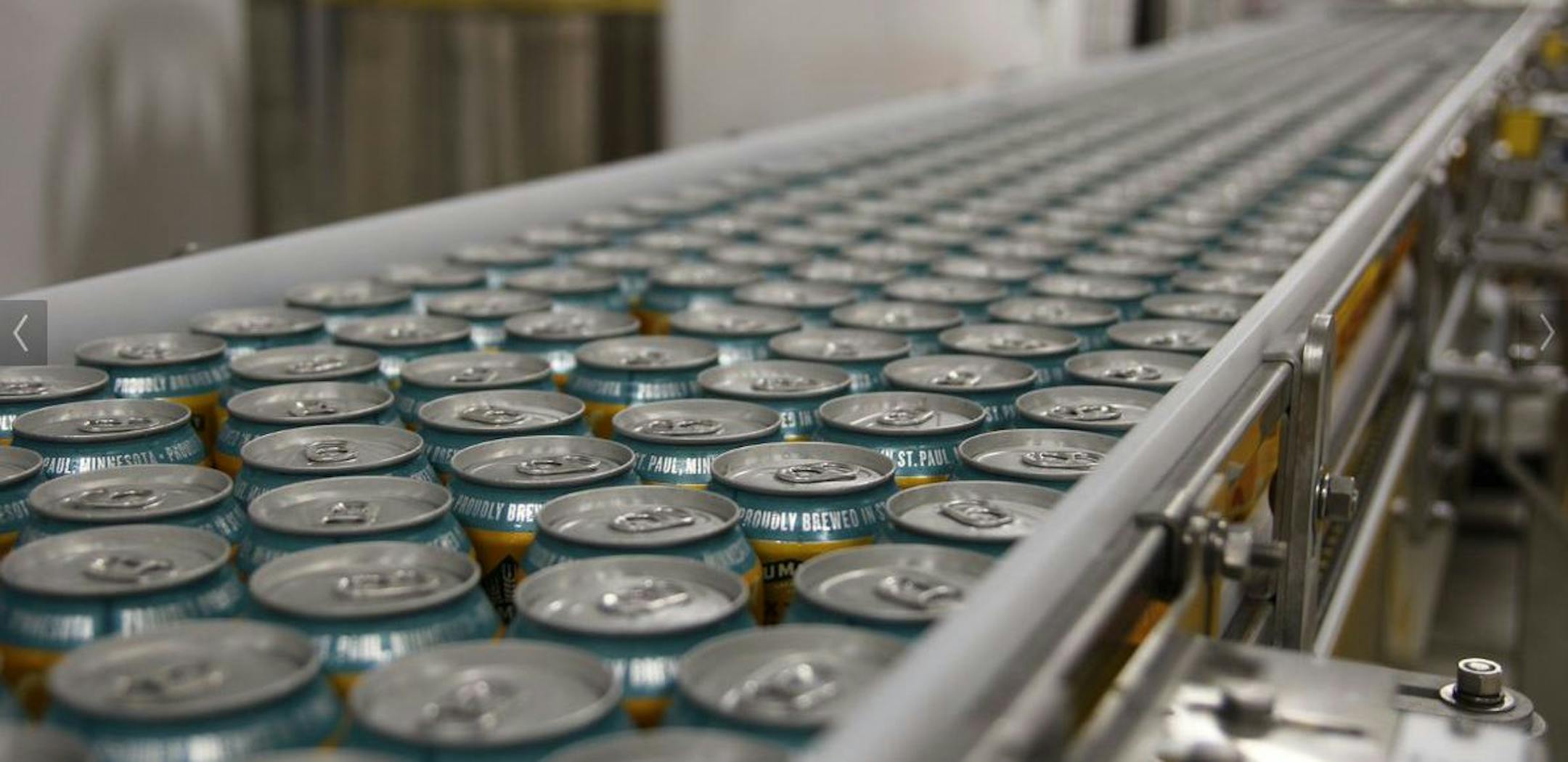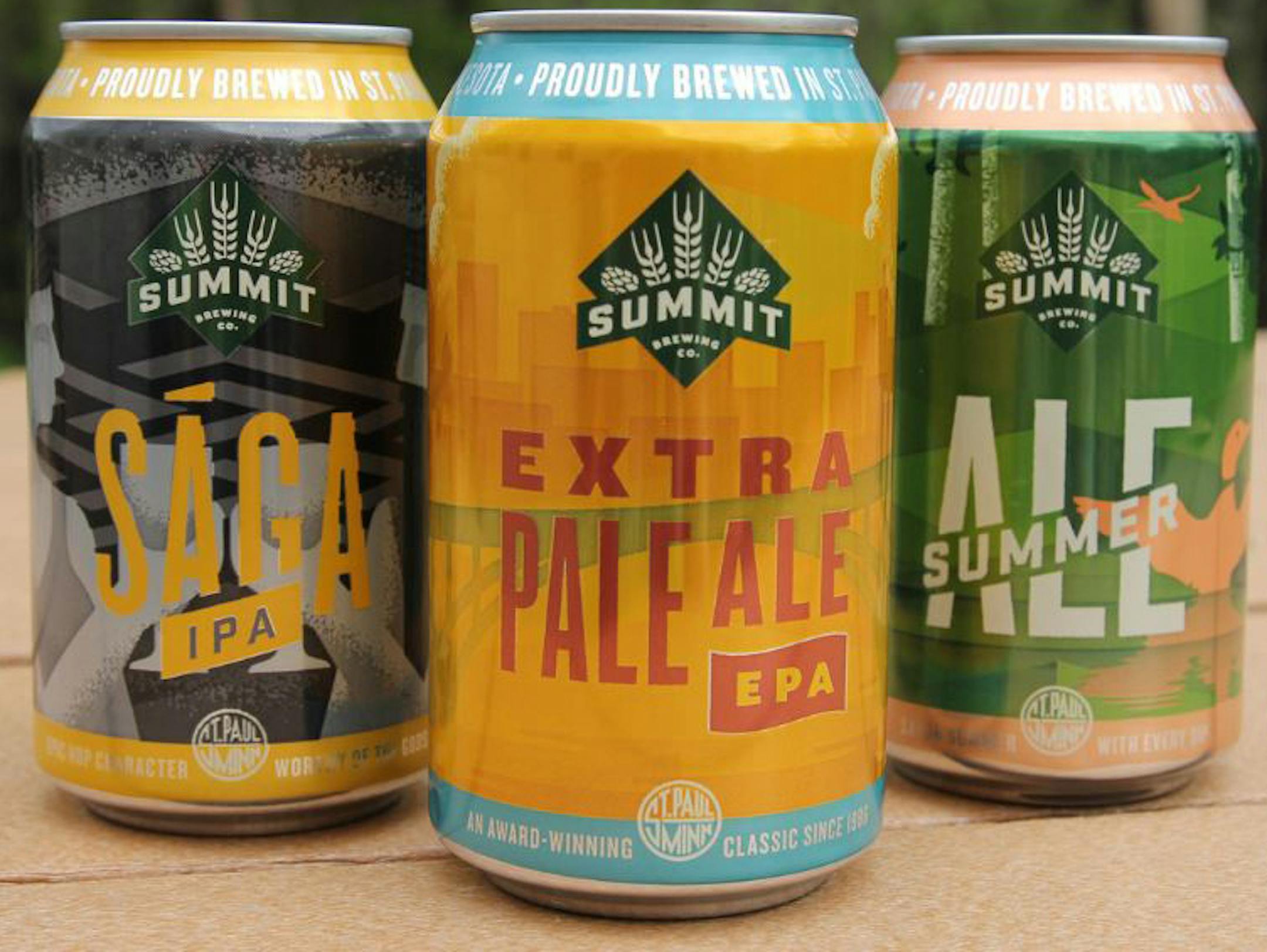
Summit Brewing Co. will be serving up beer in cans next week, joining the growing ranks of craft brewers that have moved beyond the bottle.
Summit's new canning line is churning out three of the St. Paul brewery's offerings — Extra Pale Ale, Saga IPA and Summer Ale — in 12-ounce aluminum cans. They'll supplement traditional bottled versions of the same brews.
Craft brewers have long stuck mostly to bottles. Cans were seen as containers for mainstream beer, the target of the craft brewing revolution. But cans have become increasingly popular in the craft industry in recent years.
Minneapolis-based Surly Brewing made its name in cans, as well as on tap, while Duluth's Bent Paddle Brewing extols the virtues of cans on its website. New Ulm's August Schell Brewing has been dipping deeper into cans over the last year for its craft brews, too.
"There was this myth that beer in a can wasn't quite as good," said Eric Shepard, executive editor of the trade publication Beer Marketer's Insights.
Bottles still rule: Recent surveys show that canned beer makes up 4 to 5 percent of the craft market. But that's up from 2 to 3 percent just a few years ago, according to the Brewers Association, a craft trade group. And canning lines entail significant investments.
Last year, the largest U.S. craft brewer, Boston Beer Co., rolled out the first canned version of its flagship Sam Adams lager. The nation's second-largest craft brewer, California-based Sierra Nevada, started up a canning line in 2012. There's even a website, CraftCans.com, devoted to canned craft beer.
For beermakers, cans provide an economic advantage over bottles because they are lighter. "Your freight costs are actually lower," said Mark Stutrud, Summit's founder. Indeed, an aluminum beer can weigh only about one-sixth of a glass bottle.