
Study rates Minnesota a bargain

A new index finds that costs in Minnesota's biggest cities are near the national average.

May 27, 2012 at 9:41PM
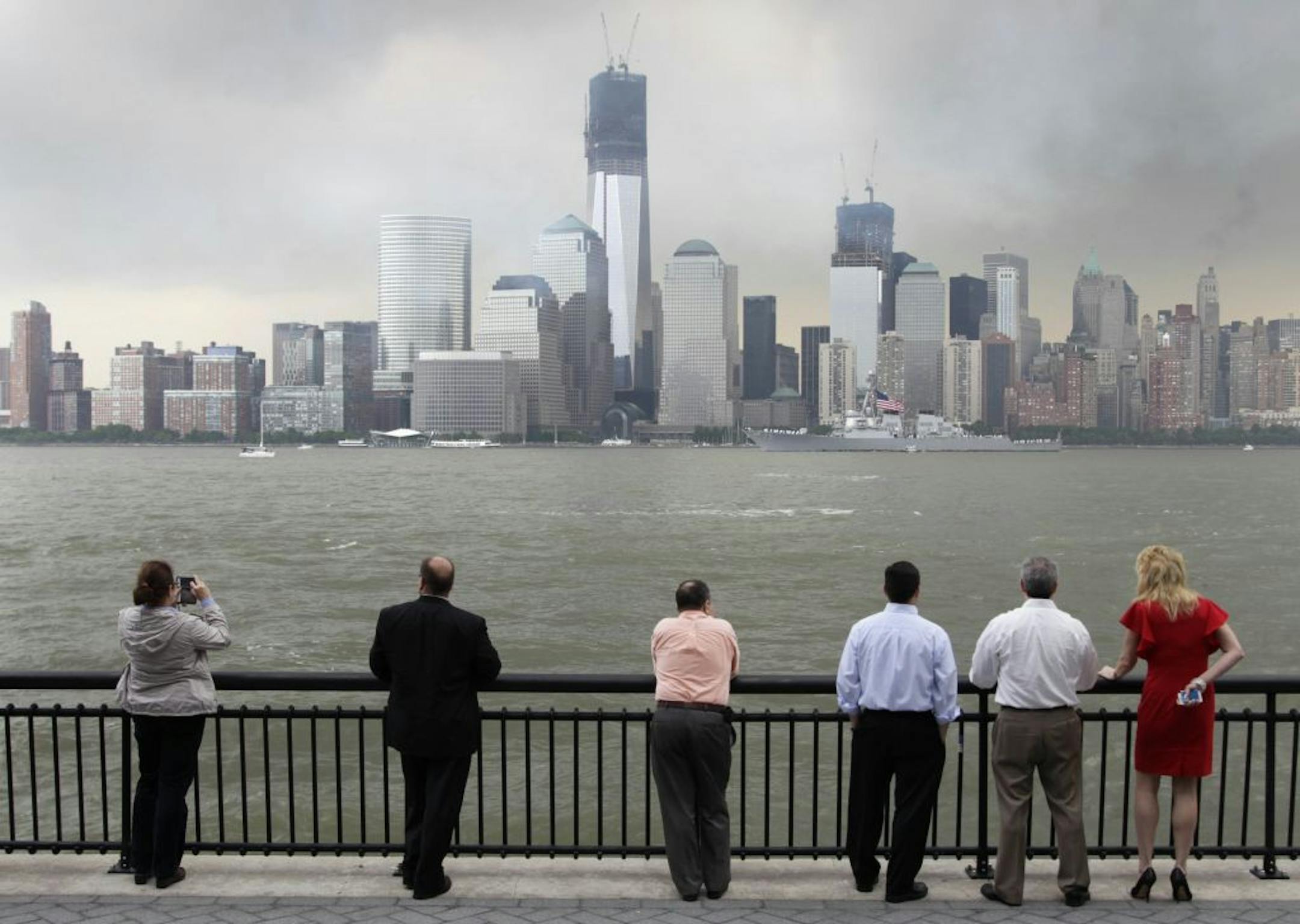
People watch the USS Donald Cook pass lower Manhattan and the World Trade Center site from Jersey City, N.J., Wednesday, May 23, 2012. Naval vessels ranging from a U.S. amphibious assault ship to a Finnish minelayer are participating in New York City's Fleet Week.
A view of lower Manhattan from Jersey City, N.J. In New York City, enormous housing costs make the cost of living more than twice what it is in the Twin Cities. So the same paycheck buys decidedly different lifestyles in Minneapolis and Manhattan. (Associated Press - Ap/The Minnesota Star Tribune)

WASHINGTON - The children of Lake Wobegon may all be above average, but their cost of living is not.

A new index from the Council for Community and Economic Research (C2ER) ranks Minneapolis, St. Paul, Rochester, St. Cloud and Mankato within a few percentage points of the national average for living costs. The index measures prices for groceries, housing, utilities, transportation, health care and miscellaneous goods and services among 310 communities of various sizes.

The voluntary data submissions from across the country show Minneapolis as the most expensive place to live in Minnesota with an index score of 108.4, where 100 represents the national average. St. Paul checks in 107.8, Rochester at 101.5, St. Cloud at 94.7 and Mankato at 94.

The Twin Cities rank 54th and 56th nationally in the cost of living index. Rochester is 80th, St. Cloud 162nd and Mankato 173rd.

Economic experts caution that the costs of living alone don't predict a community's attractiveness for businesses.

"It's one tool for marketing," said Neal Young, economic analysis director at the Minnesota Department of Employment and Economic Development. "It's not a first consideration, but it is a consideration."

Businesses deciding where to locate or relocate are most interested in wage levels, Young said. In 2010, Minneapolis ranked ninth in per capita income among the nation's top 25 metropolitan areas. If the salary structure works, companies then look at what those dollars can buy for employees.

"We get pretty good wages relative to the cost of living," Young said of Minnesota. "We're actually a pretty good value."

The C2ER data show that the same paycheck buys decidedly different lifestyles in Minneapolis and Manhattan. In New York City, enormous housing costs make the cost of living more than twice what it is in the Twin Cities. With other cities, the margin narrows. Miami (110.3) and Madison, Wis. (110.6), have slightly more expensive living costs. Denver (104) is slightly cheaper.

How this plays into economic competitiveness is more complex.

"If I cut Manhattan out, I can lower everybody's index numbers," said Dean Frutiger, the cost of living project director at C2ER. "We encourage people not to see the data as competitive, but we can't seem to convince them." Still, for the Twin Cities, Frutiger admitted, "you're looking at a major metro top-tier with very livable costs."

Young and others involved in economic development use such pronouncements to gain an advantage over cities such as Boston (139.4) in attracting medical technology companies and other professional employers.

Driven by a meltdown in the housing market, the Great Recession has caused some hiccups in the C2ER index's applicability. The index measures new home costs and weighs them heavily in the composite index.

"Housing prices have been all over the place the last three years," Frutiger said.

Shrinking home costs drive down a community's cost of living the way C2ER figures it. So it appears to make communities hit hardest by the recession more affordable.

But crumbling home values do not a business magnet make.

As Young pointed out: "The businesses I talk to don't want to be in a place that's in economic distress."

Jim Spencer • 202-408-2752

about the writer

about the writer

Jim Spencer

Washington Correspondent

Washington correspondent Jim Spencer examines the impact of federal politics and policy on Minnesota businesses, especially the medical technology, food distribution, farming, manufacturing, retail and health insurance industries.  

See Moreicon

More from Business

See More
card image
Spencer Platt

The U.S. stock market roared back on Friday, as technology stocks recovered much of their losses from earlier in the week and bitcoin halted its plunge, at least for now.

Attendees of Frostbike made their way through the convention Saturday at the Quality Bike Products campus in Minneapolis. ] (AARON LAVINSKY/STAR TRIBUNE) aaron.lavinsky@startribune.com Frostbike 2016 was held at the Quality Bike Products Campus on Saturday, Feb. 27, 2016 in Bloomington, Minn.
card image
