

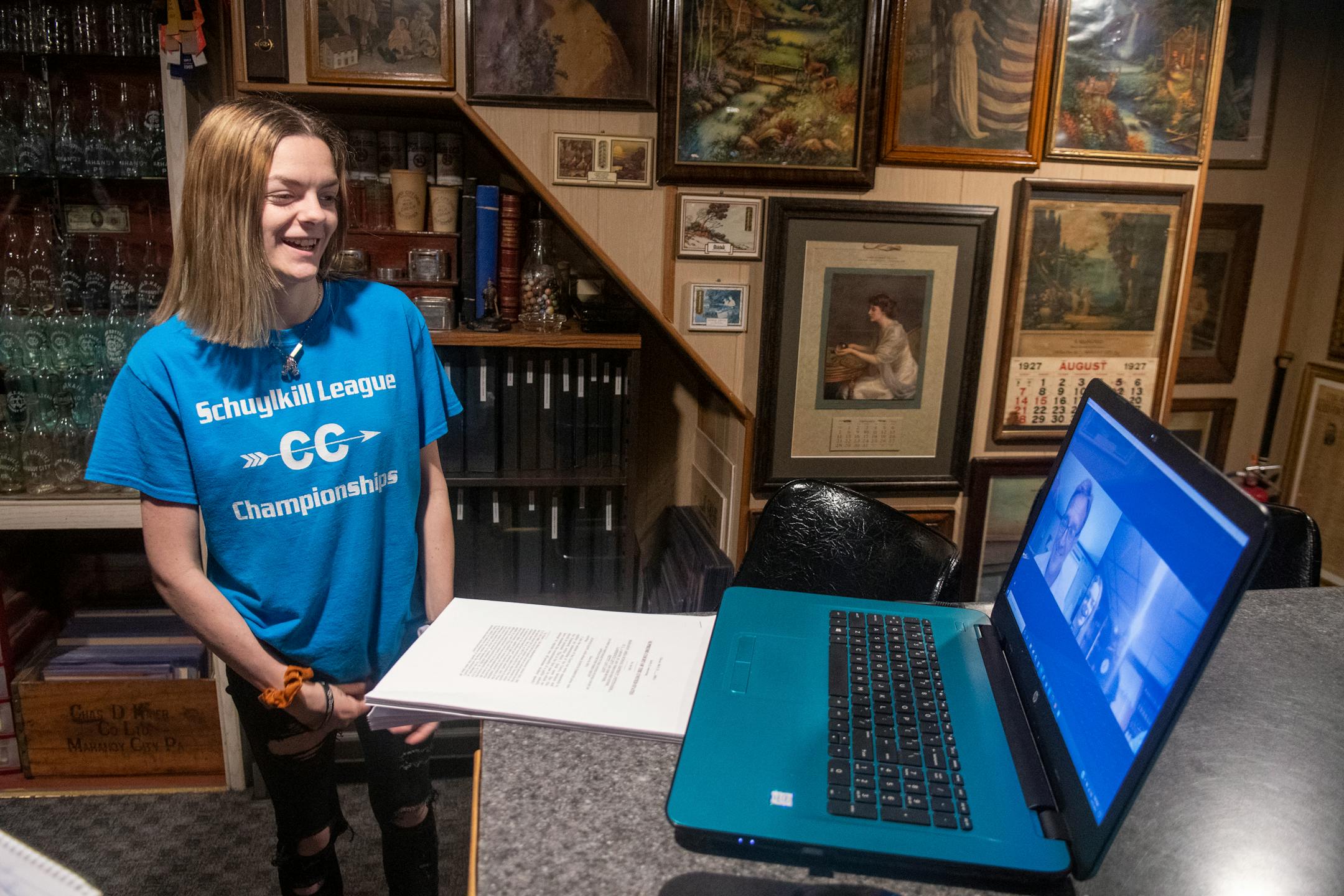
In a landmark First Amendment opinion, the Supreme Court has limited schools' ability to punish students for off-campus speech. In a case involving a cheerleader who was suspended from her team after criticizing her coaches and the cheer program in a profane Snapchat post, the court held that the school had gone too far.
While the court said that some off-campus speech — like bullying and harassment — could still be regulated by schools, it laid out general guidelines that were intended to protect students from having their online speech monitored and regulated 24-7 by the schools they attend.
Part of what makes the decision so important is that it reaffirmed the core holding of the famous 1969 case of Tinker v. Des Moines School District, where the justices for the first time recognized that students had free speech rights in school. That case said, essentially, that students were entitled to free speech in school provided they were not disrupting the school's legitimate activities.
Since then, the court has gradually chipped away at the Tinker precedent, granting schools greater and greater latitude to regulate student speech. Wednesday's decision, Mahanoy Area School District v. B.L., is the first major Supreme Court decision actively protecting student speech in half a century.
In the run-up to the decision of the cheerleader's case, many anti-bullying advocates worried that if the court went too far in protecting off-campus speech, it would become difficult or impossible for schools to enforce anti-bullying and anti-harassment policies in the era of nonstop social media. The court's opinion, written by Justice Stephen Breyer and joined by all the justices except for Justice Clarence Thomas, addressed this concern by saying that there may be circumstances that "call for" school regulation of off-campus speech.
The court listed "serious or severe bullying or harassment targeting particular individuals" as well as school-related activities like writing papers or using school computers that take place off campus.
The anti-bullying advocates may not be happy about this suggested list, but it is clearly better than nothing from their perspective. And they will be relieved that the justices did not adopt a bright line rule protecting all off-campus speech.
Breyer's opinion went on to provide three general guidelines for why off-campus speech should receive fully robust constitutional protection, not the lower standard that applies in schools.


